
Steep Lots Are the Norm, Not the Exception
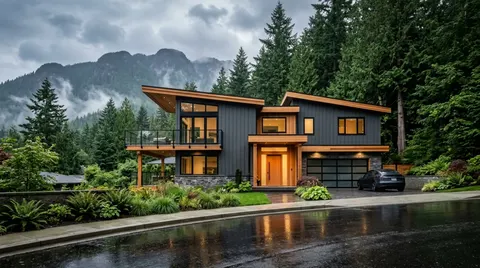
In Edgemont, grades of 20 to 30% are common. Upper Lynn Valley, Blueridge, and the upper reaches of Pemberton Heights are similar. Building on a 25% grade isn't the same as building on flat ground. The excavation is deeper on the uphill side, you need engineered retaining walls, and site access for equipment is often restricted by the slope itself.
We start every steep-lot project with a detailed site survey and geotech investigation. The survey tells us the grades, setbacks, and where the buildable area sits. The geotech tells us what's in the ground: clay, till, rock, or some combination. On the North Shore, you can hit bedrock at 3 feet in one spot and not find it at 15 feet just 20 metres away. That variability makes geotech investigation non-negotiable.
Excavation costs on steep North Vancouver lots typically run 2 to 4 times what you'd pay on a flat lot in the Fraser Valley. That's not a markup. It's the reality of moving more material, working on difficult terrain, and sometimes blasting or hammering rock. We price it accurately from the start so it doesn't blow your budget later.
Drainage and Stormwater Management
North Vancouver gets roughly 2,000mm of rain per year at upper elevations. That water has to go somewhere, and both the City and District have strict requirements about where it goes. You can't just pipe your stormwater to the street. You need on-site management, which typically means rock pits, infiltration galleries, or detention systems depending on your soil conditions and lot size.
Poor drainage is the single most common cause of foundation problems on the North Shore. Water that isn't properly directed away from the building will find its way in: through the footing-to-wall joint, through cracks in the slab, or through the permeable concrete itself. We design perimeter drainage systems with redundancy: weeping tile at the footing, dimple membrane on the foundation wall, granular backfill, and surface grading that directs water away from the building. It's not glamorous work, but it's the most important site development decision you'll make.
Tree Protection and Environmental Requirements
The District of North Vancouver has some of the most restrictive tree protection bylaws in Metro Vancouver. Significant trees, generally those over 30cm diameter, require an arborist assessment before removal, and removal isn't always approved. Even if a tree isn't being removed, construction activity within its drip line can damage roots and kill it years later, triggering a bylaw violation.
We work with certified arborists to develop tree protection plans before we start any site work. That includes protective fencing at the drip line, root-sensitive excavation methods where needed, and sometimes hand digging near significant trees instead of using an excavator. It's slower, but it keeps you compliant and keeps the trees healthy.
The City of North Vancouver has tree protection requirements as well, though they're somewhat less restrictive than the District's. Either way, we factor tree protection into our site development plan from the beginning, not as an afterthought when the bylaw officer shows up.
Servicing and Utility Connections
Connecting your new home to municipal water, sanitary sewer, and storm sewer involves coordination with the City or District engineering department. On steep lots, the service connections can be complicated: gravity sewer may not work if your building sits below the municipal main, requiring a pump system. Water pressure at upper elevations may need a booster.
We coordinate with BC Hydro, FortisBC, and the local municipality for all utility connections. Each has its own timeline and requirements. BC Hydro in particular can take 8 to 12 weeks to schedule a service connection, so we apply early and build it into the project schedule. Waiting until the last minute for utility connections is a common mistake that delays occupancy.
Retaining Walls and Structural Earthwork
On a steep North Vancouver lot, you'll likely need at least one retaining wall, and often several. These aren't decorative garden walls. They're engineered structures that hold back thousands of pounds of soil and need to last the life of the building. We build them with concrete, concrete block, or soldier pile systems depending on the height, the soil conditions, and the loads.
Retaining walls over 4 feet high require engineering and a building permit. We work with structural engineers who specialize in North Shore soil conditions and design walls that account for seismic loading. This is earthquake country, and a retaining wall that doesn't account for lateral seismic forces is a liability.
Proper drainage behind retaining walls is just as important as the wall itself. Without drainage, hydrostatic pressure builds up behind the wall and can cause failure even in a well-engineered structure. We install filter fabric, granular drain rock, and weeping tile behind every retaining wall: standard practice, no shortcuts.
- Site survey and geotechnical investigation
- Excavation and grading on slopes up to 30%
- Engineered retaining wall design and construction
- Stormwater management and perimeter drainage
- Tree protection planning and compliance
- Utility servicing and municipal coordination
Frequently asked questions
Why is excavation so much more expensive on a steep North Vancouver lot?
In Edgemont, Upper Lynn Valley, Blueridge, and upper Pemberton Heights, grades of 20 to 30% are normal, and you can hit bedrock at 3 feet in one spot and not find it at 15 feet just 20 metres away. That variability, plus deeper excavation on the uphill side and engineered retaining walls, means excavation on steep North Van lots typically runs 2 to 4 times what you would pay on a flat Fraser Valley lot.
What triggers a tree removal permit in North Vancouver?
The District has some of the most restrictive tree protection bylaws in Metro Vancouver. Trees over roughly 30cm in diameter generally need an arborist assessment before removal, and removal is not always approved. Even construction activity within a tree's drip line can damage roots and kill it years later, which is treated as a bylaw violation. The City's rules are similar but somewhat less strict.
How does stormwater get managed on a North Vancouver lot?
You cannot simply pipe runoff to the street. With roughly 2,000mm of annual rain at upper elevations, both the City and District require on-site management, usually rock pits, infiltration galleries, or detention systems depending on soil conditions and lot size. Poor drainage is the single most common cause of foundation problems here, so we build in weeping tile, dimple membrane, granular backfill, and grading that directs water away from the building.
Looking to hire
This page covers the rules and the process. For scope, pricing and how we run the work, see site work and drainage in north vancouver .