
Permits and the two municipalities
A like-for-like bathroom refresh needs no permit in either the City or the District of North Vancouver. Moving fixtures, converting a tub to a curbless shower, or adding a bathroom where none existed requires a building permit with plumbing inspection. Both municipalities process straightforward bathroom permits in roughly 4 to 6 weeks.
Where the municipalities differ is on anything that touches structure or the building envelope: a new window in an exterior wall, a skylight over a new shower, or floor reinforcement for a freestanding tub. District lots with watercourse setbacks occasionally complicate even interior work. We flag the requirements during scoping so the permit package is complete on first submission.
Waterproofing built for this climate
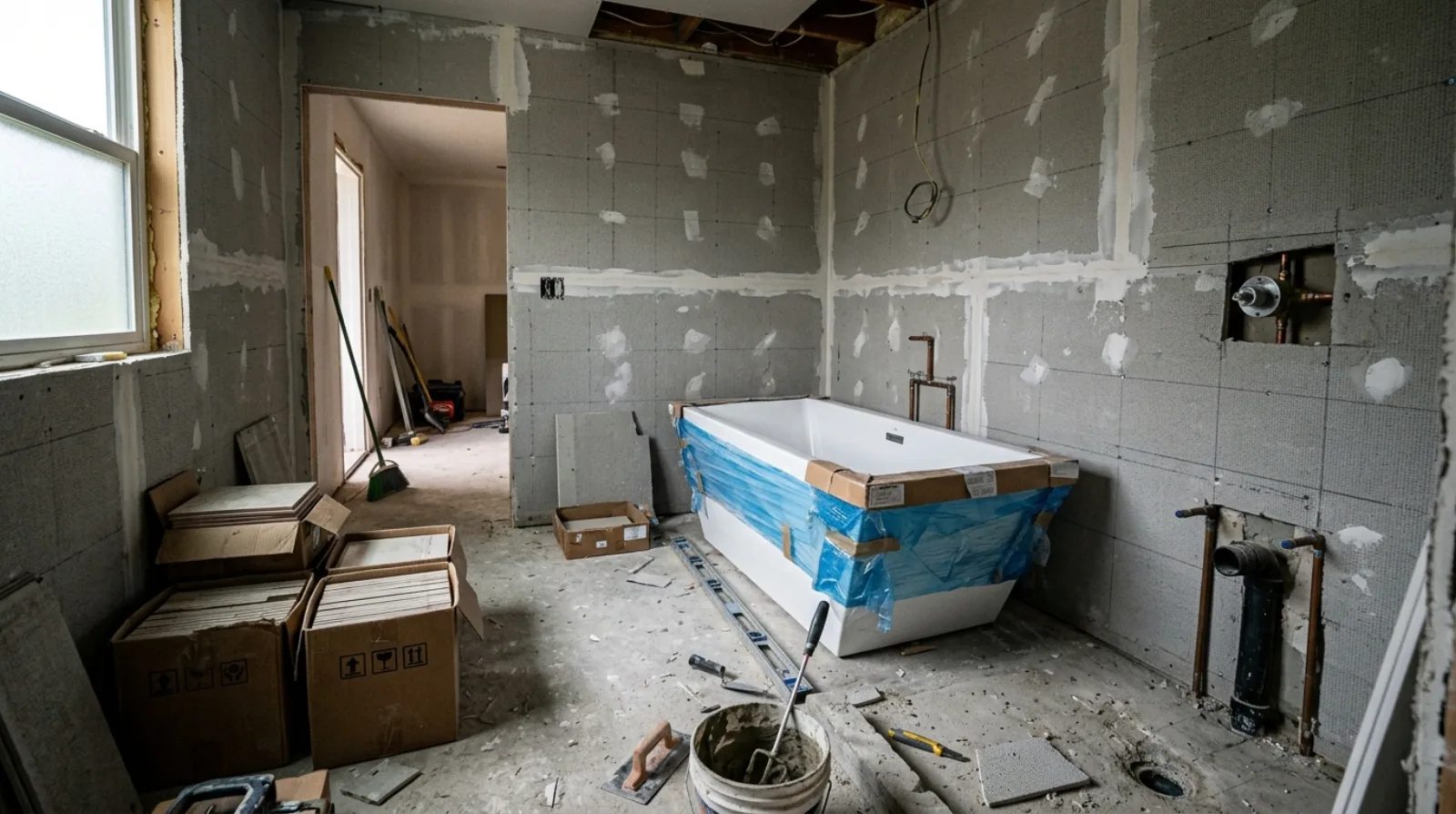
Every shower and tub surround we build gets a full membrane system behind the tile, sloped correctly to drain, with flood testing before tile goes on. Ventilation gets the same attention: a properly sized fan on a timer or humidity sensor, ducted to the exterior, not into the attic. These details cost little during construction and prevent the rot and mould repairs that dominate renovation horror stories on the North Shore.
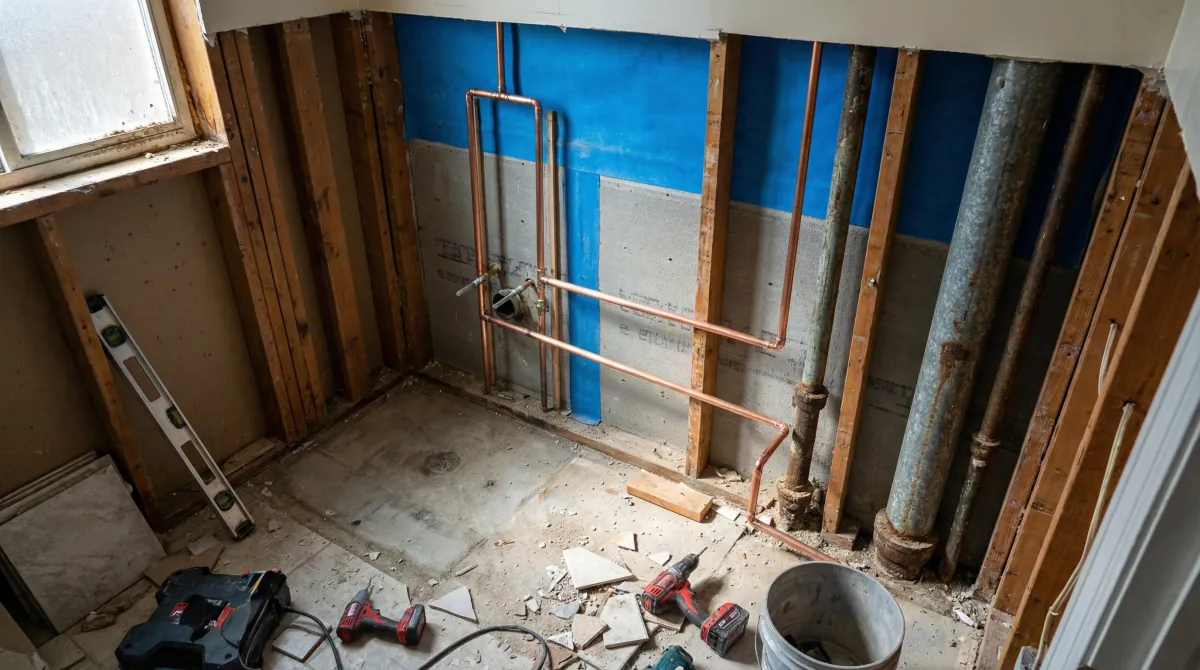
North Vancouver bathroom renovations range from $25,000 for a compact refresh to $80,000+ for a primary ensuite with heated floors, a curbless shower, and premium tile. Homes from the 1960s and 1970s should budget for drain line and supply pipe replacement while the walls are open.
Timeline and living through it
A full bathroom renovation takes 3 to 6 weeks on site once materials are in hand. When it is the home's only bathroom, we sequence the work to keep a toilet and shower functional for all but a few days, and we tell you exactly which days those are before demolition starts.
Why bathrooms cost the most per square foot in the house
A bathroom is a small room with more trades in it than any other space in a home. Plumbing, electrical, waterproofing, tiling, glass, ventilation, and finish carpentry all have to happen in sequence inside 40 square feet, and each one waits for the last. That is why a bathroom prices at $600 to $1,100 per square foot while a bedroom prices at a fraction of that.
Tile is usually the largest single material cost. Porcelain runs $8 to $25 per square foot for the material. Natural stone starts around $20 and can pass $80. Labour follows the same curve, because a large-format porcelain slab and a mosaic feature wall are not the same day's work. A tiler alone runs $3,000 to $8,000 on a primary bathroom depending on layout complexity.
The other swing factor is whether fixtures move. Keeping the toilet, tub, and vanity in place holds plumbing costs to $2,000 to $4,000 for connections and supply line updates. Moving a toilet or a shower drain adds $3,500 to $9,000, because it means opening the floor structure and re-routing drainage at the correct slope.
- Under 25 sq ft, typical powder room: $9,000 to $18,000
- Full three-piece bathroom in the existing layout: $28,000 to $48,000
- Full four or five-piece bathroom in the existing layout: $38,000 to $70,000
- Primary ensuite with layout change and custom tile: $60,000 to $120,000
- Curbless wet room conversion: add $4,000 to $9,000 over a standard tiled shower
What goes wrong in North Shore bathrooms, and when
A waterproofing failure does not announce itself. Water passes through grout, which is not waterproof and was never meant to be, and reaches whatever is behind the tile. If that is a membrane system, nothing happens. If it is drywall or cement board with no membrane, the assembly stays damp, and roughly two years later a tile moves or a stain appears on a ceiling below. By then the repair is $20,000, not $2,000.
Ventilation failures work the same way. A fan ducted into an attic rather than through the roof or wall dumps warm moist air into a cold space every day. On the North Shore, where indoor humidity is high through a long wet season, that produces mould in the attic sheathing within a few years. We duct every fan to the exterior and size it to the room, on a timer or a humidity sensor rather than the light switch.
Neither of these details is expensive during construction. They are simply invisible afterward, which is exactly why they get skipped by contractors pricing to win a job on the lowest number.
Aging in place, designed in rather than retrofitted
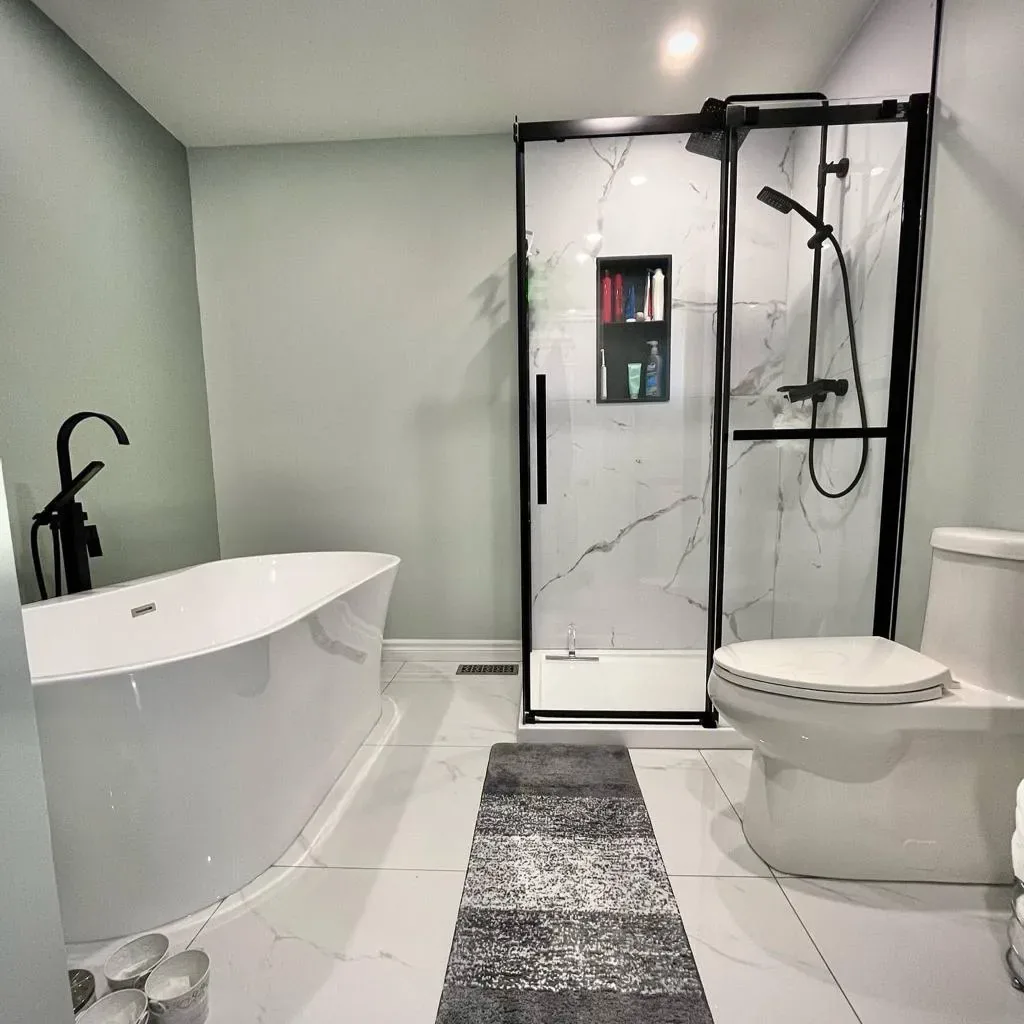
More of our clients are renovating a bathroom they intend to use for the next twenty or thirty years. That changes a few decisions, and almost none of them cost much at the design stage. A curbless shower removes the step that causes falls. Blocking in the walls means a grab bar can be added later anywhere it is needed, without opening tile. A comfort-height toilet, a wider door, better lighting levels, and a bench in the shower all read as design choices rather than medical equipment.
Retrofitting the same features later means removing tile, opening walls, and often redoing the waterproofing, which costs several times what it would have cost to build in. If you are renovating the bathroom anyway, this is the cheapest time you will ever have to do it.
How a bathroom renovation project runs in North Vancouver
- 1
Assessment and moisture check
We look at the existing waterproofing, the fan and where it actually vents, the supply lines, and any staining below the bathroom. Anything pre-1990 gets an asbestos test before demolition.
- 2
Design, selections, and permit if required
Like-for-like replacement needs no permit. Moving fixtures, adding a bathroom, or converting to a curbless shower does, and both municipalities process those in roughly 4 to 6 weeks.
- 3
Demolition and rough-in
Plumbing and electrical rough-in, floor structure work where a drain moves, then municipal inspection before anything is covered.
- 4
Waterproofing and flood test
Full membrane system behind tile, correctly sloped pan, and a flood test before a single tile goes on. This is the step that decides whether the bathroom lasts.
- 5
Tile, fixtures, and glass
Tile, then vanity and fixtures, then shower glass measured and fabricated to the finished opening rather than ordered in advance.
- 6
Ventilation, finishing, and punch list
Fan ducted to the exterior on a timer or humidity sensor, paint, hardware, and a punch list walked with you before we call it done.
Frequently asked questions
Does moving a bathroom fixture require a permit in North Vancouver?
A like-for-like refresh needs no permit in either the City or District. But moving fixtures, converting a tub to a curbless shower, or adding a bathroom where none existed requires a building permit with plumbing inspection. Both municipalities process straightforward bathroom permits in roughly 4 to 6 weeks.
Why does waterproofing matter so much for North Vancouver bathrooms specifically?
The North Shore records some of the highest rainfall in Metro Vancouver, and indoor humidity follows. Every shower and tub surround we build gets a full membrane system behind the tile, sloped correctly to drain, with flood testing before tile goes on, plus ventilation ducted to the exterior. Skipping these details is what leads to the rot and mould repairs common in older North Shore bathrooms.
What should I budget for plumbing in a 1960s or 1970s North Vancouver bathroom renovation?
Homes from this era should plan on replacing drain lines and supply pipes while the walls are already open, since that plumbing is typically near the end of its life. Where fixtures stay in place, plumbing costs hold at $2,000 to $4,000 for connections and supply line updates. Moving a toilet or shower drain adds $3,500 to $9,000 because the floor structure has to open and the drainage re-route at the correct slope.
Why is a bathroom the most expensive room per square foot?
It is a small room with more trades in it than anywhere else in the house. Plumbing, electrical, waterproofing, tiling, glass, ventilation, and finish carpentry all happen in sequence inside about 40 square feet, and each waits on the one before. That is why bathrooms price at roughly $600 to $1,100 per square foot. Tile is usually the largest single material cost, running $8 to $25 per square foot for porcelain and $20 to $80 or more for natural stone.
How do bathroom waterproofing failures actually show up?
Slowly, and then expensively. Grout is not waterproof, so water reaches whatever is behind the tile. With a proper membrane system nothing happens. Without one, the assembly stays damp and roughly two years later a tile moves or a stain appears on the ceiling below, and the repair is $20,000 rather than $2,000. Ventilation fails the same way: a fan ducted into an attic instead of through the roof or wall produces mould in the sheathing within a few years.
Can you build aging-in-place features into a bathroom renovation?
Yes, and this is the cheapest time to do it. A curbless shower, blocking in the walls so grab bars can be added later without opening tile, a comfort-height toilet, a wider door, a shower bench, and better lighting all read as design choices rather than medical equipment. Retrofitting the same features later means removing tile, opening walls, and often redoing the waterproofing, which costs several times as much.
Looking to hire
This page covers the rules and the process. For scope, pricing and how we run the work, see bathroom renovation in north vancouver .