

The short answer
A whole home renovation in North Vancouver costs $250 to $450 per square foot, or $625,000 to $1,125,000 for a typical 2,500 square foot house, and takes 6 to 10 months to build. If more than 60 to 70 percent of the house needs work, doing it all at once is usually cheaper than phasing it, which can add 20 to 30 percent to the total cost.
What counts as a whole home renovation
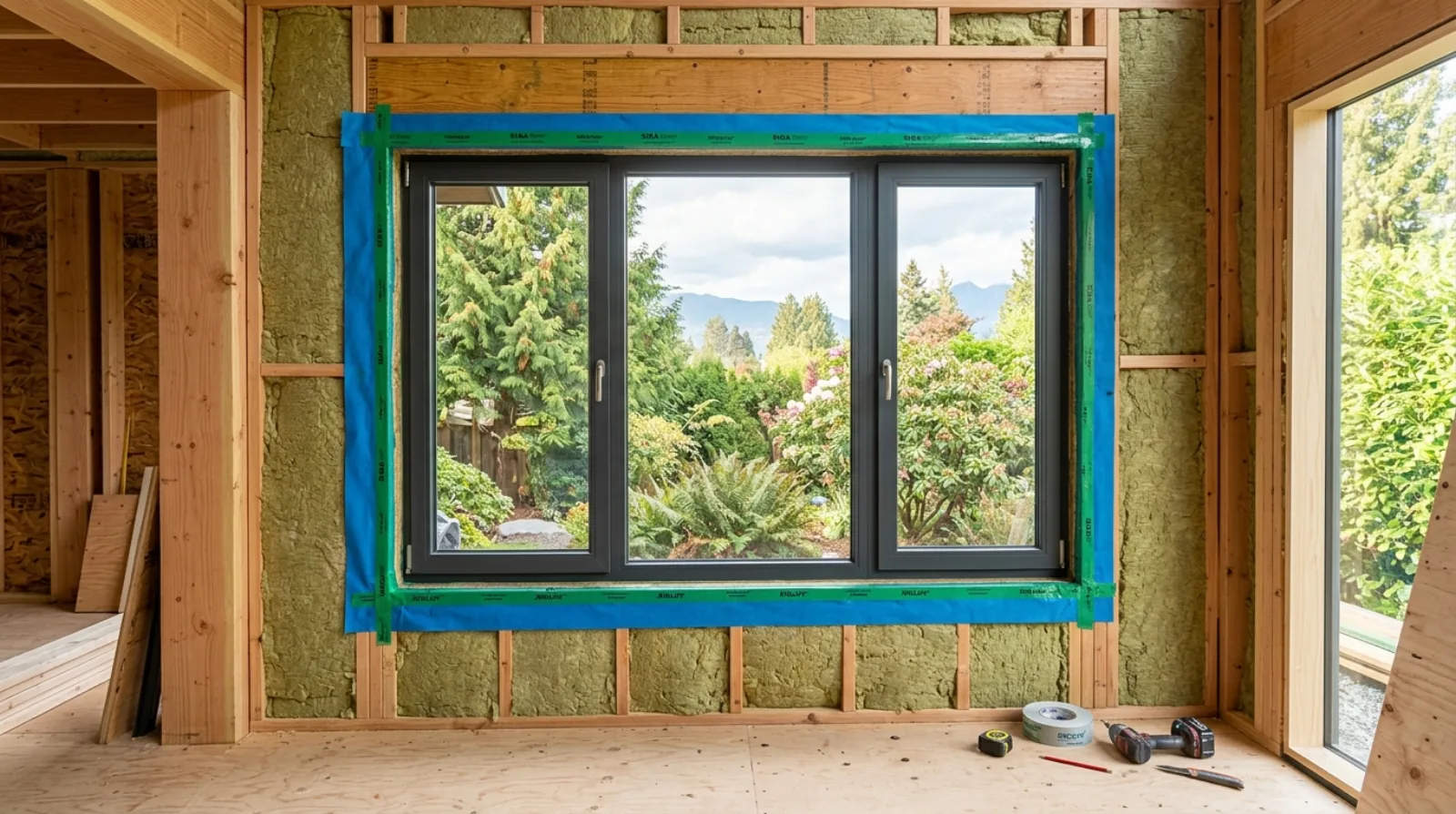
A whole home renovation means you're touching every major system in the house. That includes gutting the interior to the studs, upgrading or replacing electrical, plumbing, and HVAC, addressing structural deficiencies, upgrading the building envelope (insulation, air barrier, vapour barrier), and then rebuilding everything: new drywall, new flooring, new kitchens and bathrooms, new fixtures and finishes throughout.
That's different from a phased renovation where you redo the kitchen this year and the bathrooms next year. In a whole home renovation, the house is essentially unlivable during construction. Everything is open at once, trades work in sequence across the entire house, and the efficiencies of doing it all together are significant. You're not protecting finished rooms from dust while demolishing the next one. Everything is demo'd, then everything is rebuilt.
The threshold question is usually this: if more than 60-70% of the house needs work, it almost always makes more financial sense to do it all at once rather than in phases. Mobilizing trades multiple times, protecting finished areas, and working around occupied spaces adds 20-30% to the total cost compared to doing it as one continuous project.
Typical scope on a North Shore whole home renovation
On the North Shore, a whole home renovation usually involves most or all of the following:
- Complete interior demolition to studs (all finishes, cabinets, fixtures removed)
- Structural upgrades: beam replacements, post additions, wall removals for open floor plans, seismic upgrading
- Full electrical rewire and panel upgrade (200 amp minimum, often required for modern loads)
- Full replumb: new supply lines, new drain lines, new fixture connections
- HVAC replacement: furnace or heat pump, new ductwork or ductwork modification, HRV system
- Insulation upgrade to current code (R-22 walls, R-40+ ceiling)
- New windows and exterior doors
- Envelope repairs: sheathing, house wrap, flashing, and in many cases new siding
- New drywall, taping, and finishing throughout
- All new kitchens, bathrooms, flooring, trim, paint, and fixtures
Cost per square foot in 2026
Whole home renovation costs on the North Shore in 2026 run $250-$450 per square foot, depending on the scope and finish level. That's a wide range, so here's what drives it to each end.
At $250-$300 per square foot, you're doing a solid renovation with good-quality but not luxury finishes. Quartz countertops, stock or semi-custom cabinets, engineered hardwood flooring, mid-range plumbing fixtures, and standard tile in bathrooms. The mechanical and structural work is the same regardless of finish level. Those costs are relatively fixed. It's the finishes and fixtures that move you up the scale.
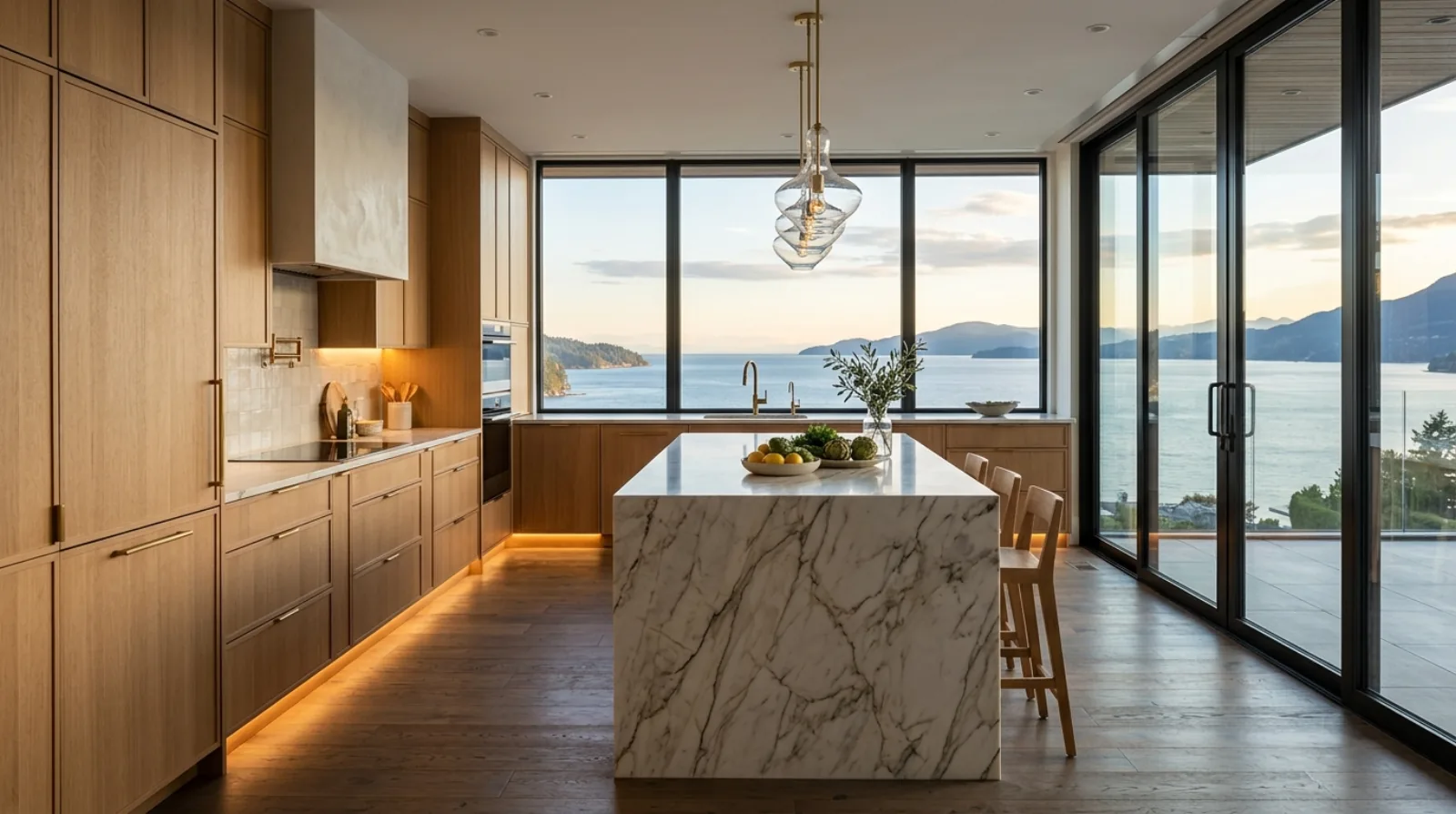
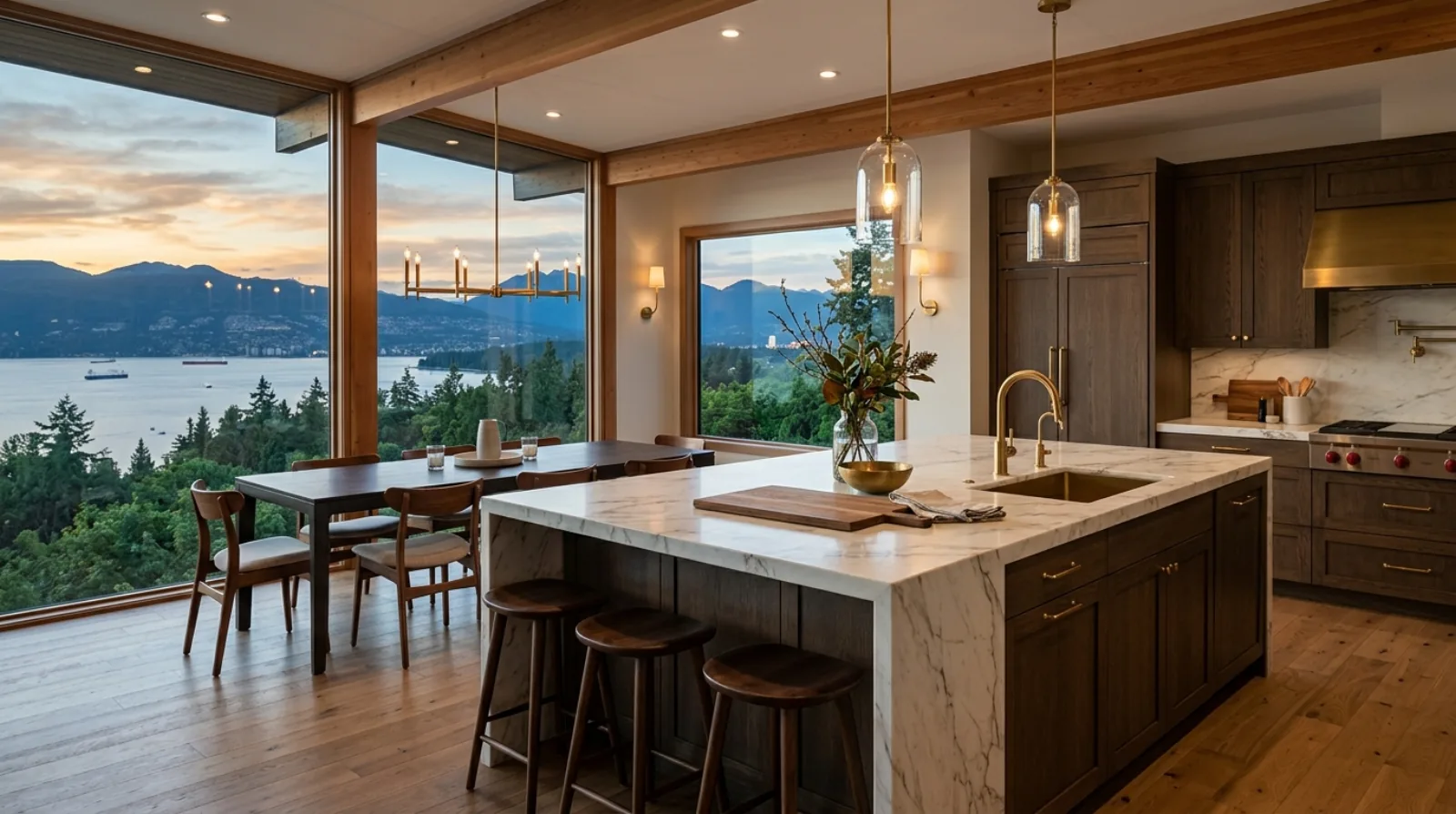
At $350-$450 per square foot, you're into custom cabinetry, natural stone countertops, wide-plank solid hardwood, designer plumbing fixtures, custom tile work, built-in millwork, and premium appliances. The construction quality is the same: what changes is the material and fixture budget.
For a 2,500-square-foot home, that translates to $625,000-$1,125,000 for a whole home renovation. And yes, those numbers are correct. A common reaction is "I could build new for that." Sometimes you can, sometimes you can't, but the comparison isn't that simple, which brings us to the next section.
Renovation vs tear-down: how to decide
The renovation-versus-tear-down decision comes down to five factors: cost, time, what you want to end up with, what the existing house gives you, and zoning.
A new custom build on the North Shore runs $350-$550 per square foot for construction, plus $40,000-$80,000 for demolition and site prep, plus design and permit fees. If the existing house has serious structural or foundation issues, a new build might actually cost less than a renovation once you factor in the repair work. We've seen projects where the foundation alone would have cost $120,000 to fix: at that point, tearing down and building new on a proper foundation makes more sense.
But renovation has advantages new construction doesn't. If the existing home is non-conforming under current zoning (maybe it's closer to the property line than today's setbacks allow, or it exceeds the current lot coverage maximum), a renovation lets you keep that non-conforming footprint. A tear-down means you build to current zoning, which on many North Shore lots means a smaller house. In neighbourhoods like Delbrook or Norgate, where lots are 50 feet wide and zoning is tight, this is a real consideration.
Timeline matters too. A whole home renovation takes 6-10 months of construction. A new custom build takes 12-18 months. If you're renting while the work happens, those extra months add $24,000-$48,000 in living expenses at current North Vancouver rental rates.
| Factor | Whole home renovation | New custom build |
|---|---|---|
| Construction cost per sq ft | $250 to $450 | $350 to $550 |
| Demolition and site prep | Part of the renovation scope | $40,000 to $80,000 extra |
| Construction time | 6 to 10 months | 12 to 18 months |
| Zoning | Can keep a non-conforming footprint | Must build to current zoning |
Phasing a whole home renovation: when it makes sense
Some homeowners can't afford to do everything at once, or they want to stay in the home during construction. In those cases, phasing is an option, but it needs to be planned carefully or it ends up costing more than doing it all at once.
The logical phasing for a whole home renovation is:
- Phase 1: Mechanical and structural (electrical, plumbing, HVAC, structural upgrades, insulation). This is the foundation everything else builds on
- Phase 2: Kitchen and main living areas, the spaces you use most
- Phase 3: Bathrooms, which can run alongside or after Phase 2
- Phase 4: Bedrooms, secondary spaces, and exterior, the least disruptive work last
What to expect during construction
A whole home renovation is loud, dusty, and disruptive. Even with dust barriers and dedicated trade entrances, your life will be affected for the duration. Most homeowners who try to live in the house during a whole home renovation wish they hadn't. We strongly recommend moving out (into a rental, a family member's home, or even a furnished Airbnb) for at least the demolition, structural, and mechanical phases.
Expect 2-4 inspections from the City or District throughout the project: foundation (if applicable), framing, rough-in (electrical and plumbing before drywall), and final. Each inspection is a potential hold point, if the inspector requires corrections, work stops in that area until the fix is made and re-inspected. A good contractor builds inspection timing into the schedule and doesn't drywall over rough-in work until the inspector signs off.
Communication is everything on a project this size. You should be getting weekly updates with photos, a current schedule, and a list of upcoming decisions. If weeks go by without hearing from your contractor, that's a problem. The best whole home renovations are the ones where the homeowner and the builder are in constant, organized communication, not texting at 10 PM about tile colours, but structured check-ins where decisions get made and documented.
Frequently asked questions
How much does a whole home renovation cost in North Vancouver?
Whole home renovation costs on the North Shore in 2026 run $250 to $450 per square foot depending on scope and finish level. For a 2,500 square foot home, that's $625,000 to $1,125,000. Solid, good-quality finishes fall at the $250 to $300 range, while custom cabinetry, natural stone, and premium appliances push the cost to $350 to $450 per square foot.
What counts as a whole home renovation versus a phased renovation?
A whole home renovation means gutting the interior to the studs and touching every major system at once: electrical, plumbing, HVAC, structure, and the building envelope, then rebuilding everything together. A phased renovation tackles one area at a time, like the kitchen this year and bathrooms next year, while the rest of the house stays livable.
How long does a whole home renovation take in North Vancouver?
A whole home renovation typically takes 6 to 10 months of construction, plus permit review time before the first wall comes down. Expect 2 to 4 inspections from the City or District throughout the project, covering foundation, framing, rough-in, and final sign-off, and each one is a potential hold point if corrections are needed.
Is it cheaper to renovate the whole house at once or in phases?
If more than 60 to 70% of the house needs work, doing it all at once is almost always cheaper. Mobilizing trades multiple times, protecting already-finished areas, and working around occupied spaces adds 20 to 30% to the total cost compared to one continuous project.
Should I renovate or tear down and build new on the North Shore?
It depends on cost, zoning, and the condition of the existing structure. A new custom build runs $350 to $550 per square foot plus $40,000 to $80,000 for demolition, and can cost less than renovating if the foundation needs major repair. But renovation lets you keep a non-conforming footprint under older zoning, which matters on narrow North Shore lots where a rebuild would have to meet today's smaller setbacks.
What mechanical and envelope upgrades come standard in a North Shore gut renovation?
A whole home renovation on the North Shore usually includes a full electrical rewire with a panel upgrade to a 200 amp minimum, a complete replumb with new supply and drain lines, a furnace or heat pump replacement with an HRV system, and insulation brought up to current code at R-22 in the walls and R-40 or better in the ceiling. New windows and exterior doors, plus envelope repairs such as sheathing, house wrap, and flashing, are typically part of the scope as well.
How much does renting cost during a North Vancouver renovation versus a rebuild?
A whole home renovation takes 6 to 10 months of construction while a new custom build takes 12 to 18 months, and at current North Vancouver rental rates those extra months of a rebuild add $24,000 to $48,000 in living expenses. That rental gap is one of the practical arguments for renovating rather than tearing down when the existing structure is sound.
What order should a phased whole home renovation follow?
Mechanical and structural work comes first: electrical, plumbing, HVAC, structural upgrades, and insulation, because everything else builds on it. The kitchen and main living areas come second since those are the spaces you use most, bathrooms third, and bedrooms, secondary spaces, and exterior work last because they are the least disruptive. Phasing needs careful planning, or it ends up costing more than doing everything at once.
Can we stay in the house during a whole home renovation?
The house is essentially unlivable during a whole home renovation, since everything is demolished at once and trades work in sequence across the entire home. Most homeowners who try to stay wish they had not, and we strongly recommend moving out to a rental, a family member's home, or a furnished Airbnb for at least the demolition, structural, and mechanical phases.
Does finish level or mechanical work drive the cost of a gut renovation?
The mechanical and structural work costs roughly the same regardless of finish level, so finishes and fixtures are what move the price. At $250 to $300 per square foot you get quartz countertops, stock or semi-custom cabinets, engineered hardwood, and standard bathroom tile, while $350 to $450 per square foot buys custom cabinetry, natural stone, wide-plank solid hardwood, designer fixtures, and premium appliances.
How often should my contractor update me during a whole home renovation?
Weekly. On a project this size you should receive weekly updates with photos, a current schedule, and a list of upcoming decisions, delivered through structured check-ins where decisions get made and documented. If weeks go by without hearing from your contractor, that is a problem.
Related service
Home Renovation
See how we handle home renovation projects across the North Shore.
Learn about home renovationRelated articles