

The short answer
Costs differ by neighbourhood. In North Vancouver, a substantial renovation runs $200 to $320 per square foot in Lynn Valley, where slope and drainage add cost, $220 to $350 in Deep Cove, where access is the main driver, and $190 to $300 in Edgemont, where cost comes more from finish level than site difficulty.
Lynn Valley: slope, creeks, and drainage
Lynn Valley runs up the hill toward Lynn Canyon, and the elevation change tells you most of what you need to know about building there. The housing stock is largely 1960s and 70s split-levels and ranchers, with a layer of 1990s and 2000s infill and a growing amount of newer construction around the town centre.
Slope is the first constraint. A sloped lot changes foundation design, drives up excavation cost, complicates access for material delivery, and on steeper properties triggers a geotechnical review from the District of North Vancouver. On a project involving any foundation work, budget $2,500 to $6,000 for the geotechnical report and expect the findings to influence the design rather than just confirm it.
Water is the second. Lynn Valley has watercourses running through and beside many properties, and the District applies riparian and creek setbacks that can substantially reduce the buildable envelope. Some of these creeks are piped or seasonal and don't look like creeks at all, which is why checking the District's mapping for your specific parcel matters before design starts.
Perimeter drainage is the third, and it's the one that hits basements. Water moving downhill through the soil arrives at the uphill foundation wall under pressure. A drainage system that would be adequate on a flat lot in Norgate is not adequate here. On Lynn Valley basement projects we scope the existing drain tile before quoting, every time, and full replacement at $18,000 to $40,000 comes up more often than in any other North Shore neighbourhood we work in.
Trees are the fourth. Mature second-growth cedar and fir are everywhere, they're protected, and their root protection zones frequently cover exactly where a homeowner wants to put an addition or a detached unit. Arborist report early.
What Lynn Valley renovations tend to cost
The housing stock means most projects here are working on 1960s and 70s construction, with everything that implies: potential asbestos, aluminum wiring, galvanized supply, an undersized panel, and a foundation that predates seismic provisions.
A whole-home renovation on a Lynn Valley split-level runs at the higher end of the general North Shore range, at $200 to $320 per square foot for a substantial renovation, because access and slope add cost to nearly every trade. Basement projects carry the drainage risk described above. Additions carry the geotechnical and tree considerations.
The offset is that these are excellent houses to renovate. Big lots, good siting, solid old-growth framing, and floor plans that open up well. A properly renovated Lynn Valley rancher is one of the best houses on the North Shore, and there are a lot of them waiting for it.
Deep Cove: access is the whole story
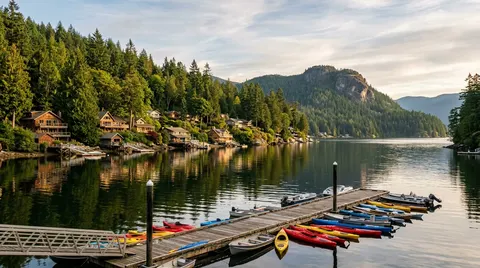
Deep Cove is beautiful and it is difficult to build in. Both of those things come from the same source, which is that it's a small waterfront community wedged between the ocean and a mountain, reached by roads that were not designed for construction traffic.
Access is the defining cost factor. Narrow winding roads, steep and often short driveways, limited street width for parking, and neighbours close on both sides. A concrete truck that can back into a Norgate driveway in five minutes may need a pump truck in Deep Cove, and a pump adds $1,500 to $4,000 per pour. Material delivery takes longer, disposal takes longer, and trades charge for the time.
On the steepest Deep Cove properties, we've had projects where materials came down to the house by hand or on a track barrow because nothing else could reach, and it costs accordingly. On those lots, expect a 15 to 30 percent premium on labour-intensive work compared to a flat, accessible lot.
The housing stock is mixed and interesting: original modest cottages from the 40s and 50s, west coast modern houses from the 60s and 70s, and substantial newer builds. The older cottages in particular often have foundations, wiring, and plumbing that predate anything we'd consider adequate, and a renovation of one is frequently closer to a rebuild in scope.
Marine exposure matters here in a way it doesn't inland. Salt air is harder on exterior metal, fasteners, and finishes. We specify stainless or hot-dip galvanized hardware on exterior work in Deep Cove as a default, and it's worth the premium.
Deep Cove: what to plan for
Beyond access, three specific items come up on most Deep Cove projects.
Parking and staging. There is often nowhere to put a bin, a material stack, or six trade vehicles. Planning this before day one, sometimes including a rented staging spot or a schedule that limits how many trades are on site at once, is part of the project rather than an afterthought.
Neighbour proximity. Lots are tight and houses are close. Construction noise, dust, and access have a real effect on the people next door, and the projects that go smoothly are the ones where the homeowner had a conversation with their neighbours before the first truck arrived. We help with this and we recommend it strongly.
Watercourse and foreshore rules. Properties near the water or near a creek carry additional setbacks and approvals, and some involve provincial or federal review on top of municipal. That adds months, not weeks, and it needs to be identified at the start.
Deep Cove renovation costs run at the top of the North Shore range because of all of the above. A substantial renovation typically prices $220 to $350 per square foot, and the variance between an accessible lot and a difficult one within the same neighbourhood is larger than in any other area we work.
Edgemont: the most straightforward of the three
Edgemont Village and the surrounding streets sit on the gentler terrain west of the Capilano River, and construction there is materially easier than in Lynn Valley or Deep Cove. Roads are wider, lots are flatter and more regular, and driveways generally accommodate trucks.
The housing stock is largely 1950s through 1970s, with a substantial amount of newer construction and a strong ongoing trend of renovation and rebuild. Lots are generous by North Shore standards, and there's a well-established pattern of homeowners staying in the neighbourhood and renovating rather than moving.
Trees are still protected and still matter, but the terrain means fewer of the slope and drainage complications that define Lynn Valley. Geotechnical reports are less frequently required. Basements are less often taking on water.
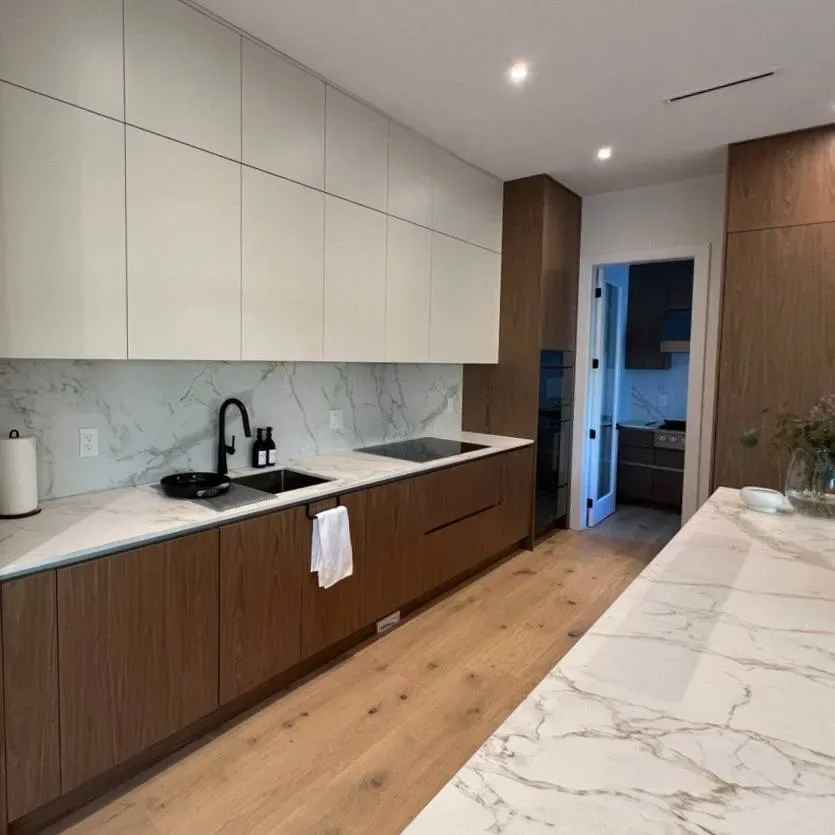
What Edgemont does have is a higher expectation of finish. It's an established, higher-value neighbourhood with an active renovation market, and homeowners here are generally building to a standard that reflects it. Projects skew toward custom millwork, higher-end appliances, and more design involvement. That pushes budgets up through selections rather than through site difficulty, which is a much more pleasant way for a budget to be high.
A substantial Edgemont renovation typically runs $190 to $300 per square foot, with the range driven more by finish level than by site conditions.
What's the same across all three
All three are in the District of North Vancouver, so the zoning bylaw, tree protection bylaw, permit process, and inspection regime are identical. Permit review runs 4 to 8 weeks for interior work and 8 to 14 weeks for additions and structural work regardless of neighbourhood.
All three have housing stock concentrated in the 1955 to 1980 window, which means the same set of investigations applies: hazardous materials survey, electrical assessment, plumbing condition, and drainage. That package costs $2,500 to $5,000 and it is worth doing in every one of these neighbourhoods.
And all three are subject to the District's tree protection requirements, which apply to trees over a defined size and require permits and replacement planting for removal. On any project touching the site outside the existing footprint, an arborist report at $2,000 to $8,000 belongs at the start of the process rather than in response to a permit comment.
Choosing where to spend
A useful way to think about it: in Lynn Valley and Deep Cove, a larger share of the budget goes into things you will never see. Drainage, foundations, access, structure. In Edgemont, more of it goes into things you look at every day.
That isn't a reason to prefer one over another. It's a reason to build the budget differently. A Deep Cove renovation with a Edgemont-style finish allowance and no allowance for site difficulty is a project that will run over, and we've been asked to take over a couple that did exactly that.
The recommendation we give clients in all three neighbourhoods is the same: spend the money on the investigation phase before you spend it on design. On a sloped, treed North Shore lot with a sixty-year-old house on it, the site tells you what the project is. Not the other way around.
Frequently asked questions
What makes renovating in Lynn Valley more expensive?
Slope, watercourses, and drainage. Sloped lots drive foundation and excavation cost and often trigger a geotechnical review, creek setbacks can reduce the buildable envelope, and water moving downhill arrives at the uphill foundation wall under pressure, so perimeter drainage replacement at $18,000 to $40,000 comes up more often than elsewhere on the North Shore.
Why do Deep Cove renovations cost more?
Access. Narrow winding roads, short steep driveways, limited staging space, and close neighbours mean concrete often needs a pump truck at $1,500 to $4,000 per pour, deliveries take longer, and trades charge for the time. On the steepest lots, labour-intensive work carries a 15 to 30 percent premium over an accessible lot.
Is Edgemont easier to build in than other North Vancouver neighbourhoods?
Generally yes. Flatter, more regular lots, wider roads, and driveways that accommodate trucks mean fewer site-driven costs and fewer geotechnical requirements. Budgets in Edgemont tend to be higher because of finish level and design involvement rather than site difficulty or access constraints on the lot itself.
Do I need an arborist report to renovate in North Vancouver?
For any work touching the site outside the existing footprint, plan on one. The District of North Vancouver protects trees over a defined size and requires permits and replacement planting for removal. An arborist report costs $2,000 to $8,000 and belongs at the start of the process, since root protection zones frequently determine where a building can go.
What should I investigate before renovating a North Shore home?
A hazardous materials survey, an electrical panel and wiring assessment, a plumbing condition check, and a camera scope of the perimeter drain tile. The package costs $2,500 to $5,000 and applies across Lynn Valley, Deep Cove, and Edgemont because all three have housing stock concentrated between 1955 and 1980.
What does a renovation cost per square foot in Lynn Valley, Deep Cove, and Edgemont?
A substantial renovation runs $200 to $320 per square foot in Lynn Valley, where slope and access add cost to nearly every trade, $220 to $350 per square foot in Deep Cove, the top of the North Shore range, and $190 to $300 per square foot in Edgemont. In Edgemont the range is driven by finish level rather than site conditions, while in Deep Cove the gap between an accessible lot and a difficult one is larger than in any other area we work.
Do I need a geotechnical report to renovate on a sloped Lynn Valley lot?
If the project involves any foundation work on a sloped Lynn Valley lot, plan on one, since steeper properties trigger a geotechnical review from the District of North Vancouver. Budget $2,500 to $6,000 for the report, and expect the findings to influence the design rather than just confirm it.
How long do renovation permits take in the District of North Vancouver?
Permit review in the District of North Vancouver runs 4 to 8 weeks for interior work and 8 to 14 weeks for additions and structural work. The timeline is the same whether the property is in Lynn Valley, Deep Cove, or Edgemont, since all three fall under the same District zoning bylaw, tree protection bylaw, permit process, and inspection regime.
Do creek setbacks apply if the creek on my Lynn Valley property is piped?
Yes. Some Lynn Valley watercourses are piped or seasonal and do not look like creeks at all, but the District of North Vancouver still applies riparian and creek setbacks that can substantially reduce the buildable envelope. Check the District's mapping for your specific parcel before design starts, not after.
Why does exterior hardware need upgrading on Deep Cove renovations?
Salt air. Marine exposure in Deep Cove is harder on exterior metal, fasteners, and finishes than anything inland, so we specify stainless steel or hot-dip galvanized hardware on exterior work there as a default. The premium is worth it compared to replacing corroded hardware within a few years.
What extra approvals apply to waterfront or creekside properties in Deep Cove?
Properties near the water or a creek in Deep Cove carry additional setbacks and approvals, and some involve provincial or federal review on top of the municipal process. That review adds months to the timeline, not weeks, so it needs to be identified at the start of planning rather than discovered partway through.
How do you stage materials and trades on a tight Deep Cove lot?
On many Deep Cove lots there is nowhere to put a bin, a material stack, or six trade vehicles, so staging gets planned before day one rather than treated as an afterthought. Sometimes that means renting a staging spot, and sometimes it means a schedule that limits how many trades are on site at once. It is part of the project, and one reason Deep Cove costs sit at the top of the North Shore range.
Related service
Home Renovation
See how we handle home renovation projects across the North Shore.
Learn about home renovationRelated articles