
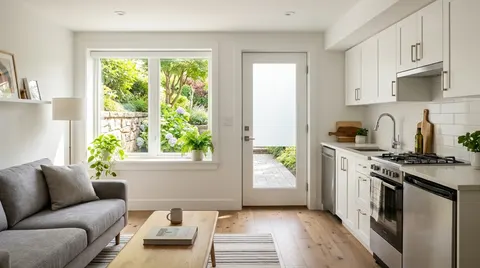
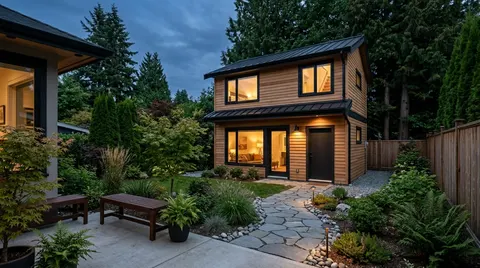
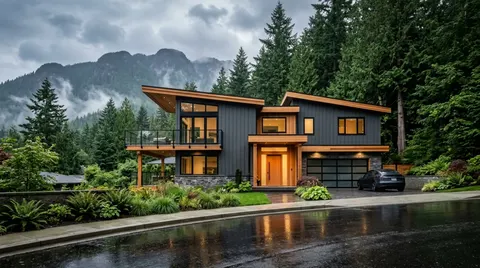
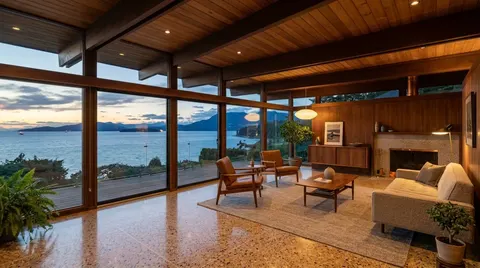
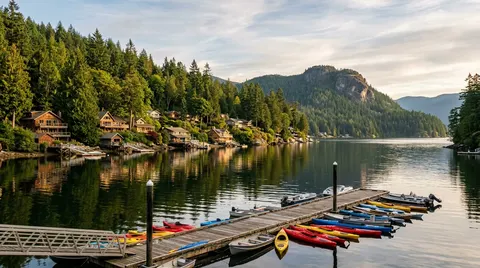
The housing stock near the water
Both neighbourhoods started as summer cottage communities served by the ferries that once crossed from Vancouver, and some of those cottages are still standing. The District's own heritage records include a 1923 cottage on Haywood Avenue near Dundarave village and a 1925 waterfront cottage on Argyle Avenue in Ambleside that now houses the Silk Purse Arts Centre. Around them sit Craftsman houses from the 1910s through the 1930s, then a broad band of 1940s to 1960s homes built as West Vancouver became a year-round municipality.
For a renovator, the important line is not the style, it is the era of the systems. A pre-1940s house almost certainly carries knob-and-tube wiring, galvanized supply plumbing, and a foundation poured or stacked to standards that no longer exist. A 1950s or 1960s house is better, but often not by as much as owners hope. The finishes have usually been updated once or twice over the decades. The bones and services frequently have not.
What West Vancouver actually has for heritage protection
Owners hear the word heritage and assume a single set of restrictions. In West Vancouver there are really three different instruments, and they carry very different weight.
The Community Heritage Register is a formal list of properties the District recognizes as having heritage value. Being on the register does not legally prevent renovation or demolition on its own. It is recognition, and it makes the property eligible for conservation incentives, but the legal restrictions are limited.
Municipal heritage designation is the strong tool. A designated property is legally protected by bylaw, and changes to the protected elements need District approval. The third instrument, the Heritage Revitalization Agreement, is a negotiated deal: the owner accepts legal protection of the heritage building and in exchange the District can grant things the zoning would not otherwise allow, such as additional units on the lot.
West Vancouver also documented its famous post-war architecture separately. The Survey of Significant Architecture 1945 to 1975, compiled in the early 1990s, identified 24 primary and 101 secondary buildings from the West Coast Modern era. Inclusion in that survey records importance, but like the register, it is not by itself legal protection. The practical rule: never assume. Confirm the property's actual status with the District before you plan anything, because the difference between listed and designated is the difference between a normal permit path and a negotiated one.
The Vinson House: how the trade actually works
The clearest local example of these tools working together sits in Ambleside. The Vinson House at 1425 Gordon Avenue was built in 1913 for Valient Vinson, who served several terms as Reeve of West Vancouver in the 1920s. It went on the Community Heritage Register in 2008, which recognized its value but left it legally unprotected, and for years it was a demolition candidate.
In June 2016, District council approved a heritage designation bylaw and a Heritage Revitalization Agreement for the property. The house became a legally protected heritage building, and in exchange the owners received approval for a suite within the house plus two infill residences on the lot. That is the HRA model in one sentence: protection traded for density the zoning would not otherwise give.
If you own a genuinely old house in Ambleside or Dundarave and the renovation math looks impossible, that trade is worth understanding before you conclude demolition is the only path. It is slower, it involves council, and it does not fit every property. But on the right lot it changes the arithmetic entirely.
Foundations: where the budget gets decided
The single biggest unknown in a pre-war Ambleside or Dundarave house is under it. Foundations from that era are unreinforced concrete, shallow perimeter walls, or in the oldest cottages, posts on pads that were never meant to carry a modern renovation. After a century of West Vancouver rain, cracking, spalling, and settlement are normal findings, not exceptions.
The cost bands are wide because the conditions are. If the foundation is sound and just needs waterproofing, expect $15,000 to $30,000 for excavation, membrane, and drainage. Structural repair such as crack reinforcement or underpinning runs $30,000 to $60,000. A full replacement, lifting the house and pouring new below it, runs $80,000 to $150,000 or more. On a small cottage a full replacement can approach the value of everything else in the project combined.
Spend $500 on a structural engineer's assessment before you commit to any budget. It is the cheapest insurance in this entire housing stock.
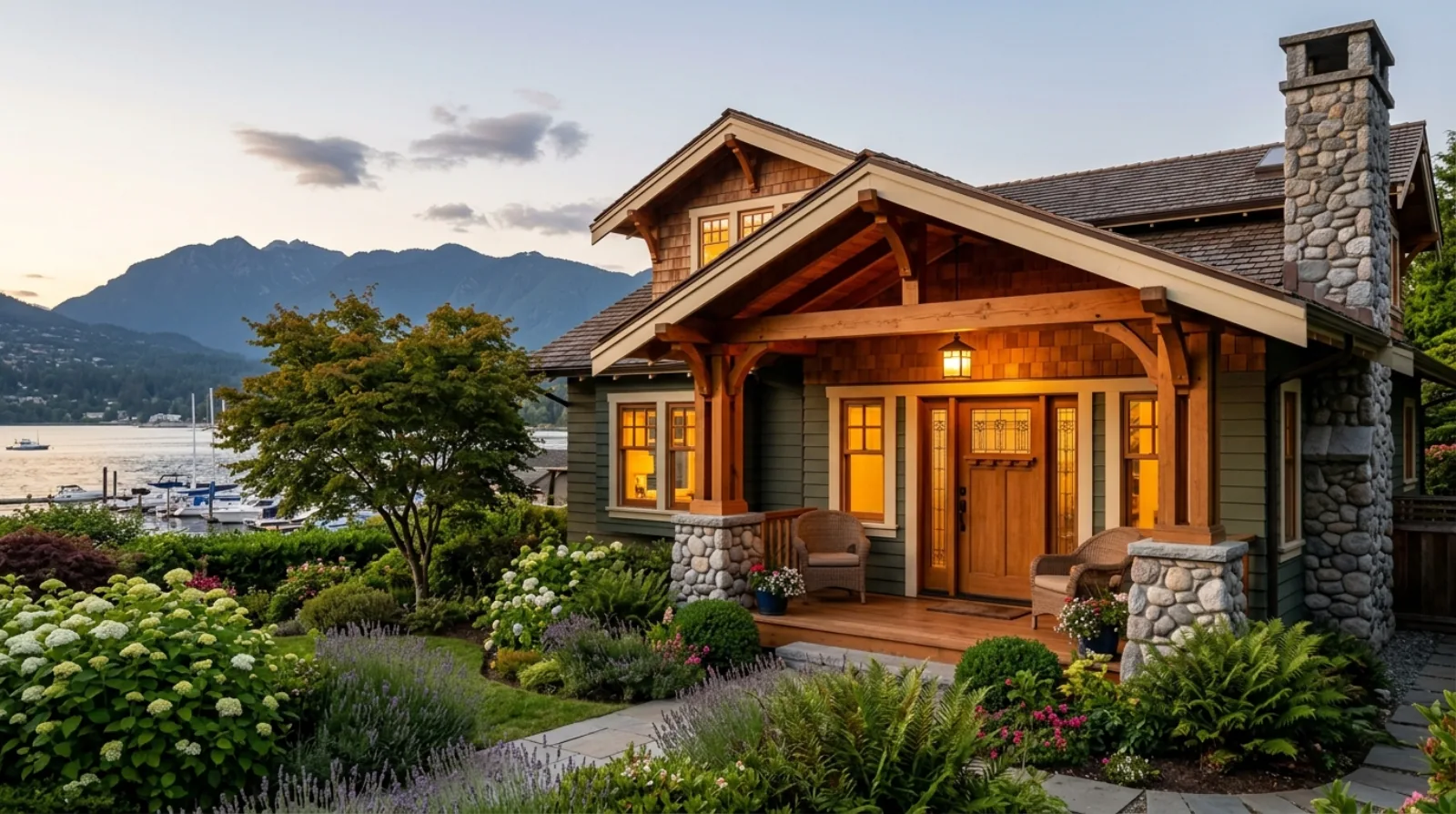
Knob-and-tube, galvanized pipe, and the insurance problem
Pre-1950 homes almost always carry knob-and-tube wiring, sometimes patched with newer circuits over the decades. It is not automatically dangerous, but it cannot be buried in insulation, and most insurers will not cover a home with it live, which makes a full rewire effectively mandatory on any serious renovation. Budget $15,000 to $30,000 for a typical home depending on size and access.
Plumbing follows the same story. Galvanized steel supply lines corrode from the inside until the bore is a fraction of its original size, and cast iron drains crack at the joints. A full replumb with PEX or copper supply and ABS drainage runs $10,000 to $20,000. And because this vintage predates any hazard awareness, test before demolition: asbestos in flooring, pipe wrap, and drywall compound, and lead paint on the older trim layers, are near-certain findings. Abatement adds $5,000 to $15,000 on most projects of this age.
None of this shows in a walkthrough, which is why we open targeted test areas before quoting a character home rather than pricing from the sidewalk.
Moisture: a hundred winters near the sea
West Vancouver gets over 1,500 millimetres of rain a year in most neighbourhoods, and Ambleside and Dundarave add salt air to the equation. The original wall assemblies here have no rain screen, no house wrap, and often no building paper at all, just cladding over board sheathing. That these houses survived is a credit to old-growth lumber and generous roof overhangs, not to the assembly.
When we open these walls we routinely find sills rotted where grade has crept up over decades, rot at window corners, and framing stained by a century of small leaks that each dried out before doing fatal damage. The renovation is the one chance to fix the assembly properly: flashing, drainage plane, rain screen, and insulation done as a system. On a character home the trick is doing that from the outside or inside without destroying the details worth keeping, and that decision, wall by wall, is where an experienced builder earns their fee.
What character retention actually means on site
Character retention is not embalming the house. In practice, the elements that carry the character are a short list: the roof form, the front porch, the window pattern and proportions on the street-facing sides, the cladding type, and the trim profiles. Protect those and you can renovate nearly everything else. Interiors, rear elevations, and all the systems are typically fair game even on formally protected properties.
Windows are the hardest conversation. Original single-glazed wood sashes perform badly, and the heritage-appropriate answers cost real money: restoring original sashes with weatherstripping and interior storm panels runs $1,200 to $2,800 per window, while custom wood replacements matching the original profiles run $2,500 to $6,000 each. Standard vinyl replacements are the cheap route and the fastest way to strip the value out of a character facade, and on a designated property they are generally not an option at all.
The rear addition is the standard playbook, and it works: keep the street face intact, build the modern kitchen, family room, and primary suite behind it, visually subordinate to the original. Most of the character homes we admire in Ambleside got their function back exactly this way.
What it costs, and the honest premium
Character work costs more than conventional renovation. Matching trim profiles means custom millwork at $45 to $140 per linear foot. Restoration is slower than replacement. Trades that do this work well are scarce. As a planning figure, expect a 25 to 45 percent premium over the same scope on a conventional house, on top of West Vancouver's already-high baseline of $250 to $350 per square foot for substantial whole-home work.
Set against that, the alternative is not free. A teardown and rebuild in these neighbourhoods starts around $1.2 million and climbs, while a deep renovation of a structurally sound older home often lands in the $400,000 to $600,000 range. Add what an HRA can unlock on the right property, and keeping the character home is frequently the stronger financial decision, not just the sentimental one.
Carry a 20 percent contingency on anything pre-1950. That is not padding. A century of undocumented modifications means the drawings, where they exist, describe a building that no longer exists.
How we approach these houses
First, establish what the property actually is: on the register, designated, under an agreement, or simply old. A call to the District's planning department settles it quickly, and the answer changes the permit path, the timeline, and sometimes the budget.
Then investigate before scoping. We open test areas at the foundation, a wall, and the roof structure, and we test for hazardous materials, before the quote, not after demolition day. On a 1920s Dundarave cottage, an afternoon of investigation is worth more than any amount of estimating experience.
And decide early what the house is worth keeping for. Some old houses are character homes. Some are just old. The honest assessment of which one you own is the most valuable thing a builder can give you, and it should come before anyone draws a floor plan.
Frequently asked questions
Does being on West Vancouver's Community Heritage Register stop me from renovating?
No. The Community Heritage Register formally recognizes a property's heritage value and makes it eligible for conservation incentives, but it carries limited legal restrictions on its own. Legal protection only comes with municipal heritage designation or a Heritage Revitalization Agreement, so the first step on any older Ambleside or Dundarave house is confirming with the District which status, if any, actually applies.
What is a Heritage Revitalization Agreement in West Vancouver?
It is a negotiated deal where the owner accepts legal protection of a heritage building and the District grants something the zoning would not otherwise allow, such as extra units. The Vinson House at 1425 Gordon Avenue in Ambleside is the local example: built in 1913, registered in 2008, and legally protected in 2016 through a designation bylaw and HRA that permitted a suite in the house plus two infill residences on the lot.
What does foundation work cost on a pre-war Ambleside or Dundarave house?
Waterproofing a sound foundation runs $15,000 to $30,000 for excavation, membrane, and drainage. Structural repair or underpinning runs $30,000 to $60,000, and a full replacement, lifting the house and pouring new below it, runs $80,000 to $150,000 or more. A $500 structural engineer's assessment before committing a budget is the cheapest insurance in this housing stock.
Do I have to remove knob-and-tube wiring in a character home?
Effectively yes on any serious renovation, because most insurers will not cover a home with live knob-and-tube and it cannot be buried in insulation. A full rewire runs $15,000 to $30,000 for a typical home. Galvanized supply plumbing usually goes at the same time, at $10,000 to $20,000 for a full replumb, since the walls are already open.
How much extra does character retention add to a renovation budget?
Plan on a 25 to 45 percent premium over the same scope on a conventional house. The premium comes from custom millwork to match existing profiles at $45 to $140 per linear foot, restoration being slower than replacement, and the scarcity of trades who do this work well. It sits on top of West Vancouver's baseline of $250 to $350 per square foot for substantial whole-home renovation.
What do heritage-appropriate windows cost in West Vancouver?
Restoring original wood sashes with weatherstripping and fitted interior storm panels runs $1,200 to $2,800 per window and gets close to double-glazed performance. Custom wood replacements matching the original profile with insulated glass run $2,500 to $6,000 per window. Standard vinyl replacements are cheaper but strip the value from a character facade, and on a designated property they are generally not permitted.
Is it cheaper to renovate or tear down an old house in Ambleside?
A deep renovation of a structurally sound older Ambleside home often lands in the $400,000 to $600,000 range, against $1.2 million or more for a teardown and rebuild. The renovation only wins if the foundation and frame are worth keeping, which is why we open test areas and get an engineer's assessment before recommending either path. On register-worthy properties, a Heritage Revitalization Agreement can add density that shifts the math further toward keeping the house.
What is the Survey of Significant Architecture 1945 to 1975?
It is West Vancouver's inventory of its post-war West Coast Modern buildings, compiled in the early 1990s, which identified 24 primary and 101 secondary buildings across the municipality. Inclusion records a building's architectural importance but does not by itself impose legal protection. If you own a listed mid-century house, confirm its actual legal status with the District before planning exterior changes.
What turns up behind the walls of a 1920s West Vancouver cottage?
The usual findings are knob-and-tube wiring, galvanized supply lines corroded nearly shut, cast iron drains cracked at the joints, no rain screen or building paper behind the cladding, rot at sills and window corners, and asbestos or lead paint in the original materials. Hazardous material abatement alone adds $5,000 to $15,000 on most projects of this age, which is why we test and open investigation areas before quoting.
Can I add a modern addition to a character home in Dundarave?
Yes, and the rear addition is the standard approach: keep the street-facing roof form, porch, windows, and cladding intact, and build the modern kitchen, family room, and primary suite behind, visually subordinate to the original. Character protection generally applies to the street-facing elements, so interiors, rear elevations, and all the mechanical systems can usually be fully modernized.
How much contingency should a pre-1950 West Vancouver renovation carry?
Carry 20 percent on anything pre-1950, rather than the 10 to 15 percent that suits newer houses. A century of undocumented modifications means any existing drawings describe a building that no longer exists, and the foundation, wiring, plumbing, and hidden rot each have the potential to move the budget. Targeted investigation before quoting narrows the risk but never removes it.
Why do Ambleside and Dundarave have so many old cottages?
Both neighbourhoods began as summer cottage communities served by ferries from Vancouver, before West Vancouver became a year-round municipality. Some of those buildings survive, including a 1923 cottage on Haywood Avenue near Dundarave and the 1925 Argyle Avenue waterfront cottage in Ambleside that now houses the Silk Purse Arts Centre, both recorded in the District's heritage program.
Related service
Renovating in West Vancouver
See how we handle renovating in west vancouver projects across the North Shore.
Learn about renovating in west vancouver