




The short answer
Under BC's Standard Bylaws, an owner needs the strata's written approval before altering the building's structure or exterior, balconies and their railings, exterior windows and doors, doors that face the hallway, common property inside the unit, and the flooring, wall coverings, plumbing fixtures and electrical fixtures the original developer installed. Appliances that can be removed without damage are outside the list. A building's own bylaws can add more.
The limit of this list: it describes the Standard Bylaws
The Standard Bylaws are the default set printed as a schedule to the Strata Property Act. Section 120 of the Act says they are a strata's bylaws "except to the extent that different bylaws are filed in the land title office".
The Province's strata housing page says stratas often have bylaws that differ from the Standard Bylaws, and it names renovation as one subject: bylaws may require owners to get written permission before "moving walls, changing flooring or making plumbing or electrical changes".
So use this page in two steps: find the item of the Standard Bylaws your work falls under, then read your building's filed bylaws for anything added.
Bylaw 5(1), items (a) to (f): parts of the building
Standard Bylaw 5(1) says an owner must obtain the written approval of the strata corporation before making an alteration to a strata lot that involves any of seven things. A strata lot is the Act's name for your unit. The first six items name parts of the building.
Item (a) is "the structure of a building". The bylaw gives no list of structural parts. Section 68(1) of the Act speaks of "the structural portion of the wall, floor or ceiling", so the concrete or wood that holds up a floor, a wall or a ceiling is structure. We treat cutting an opening in a wall that carries load, and cutting into a floor to move a drain, as item (a) work.
Item (b) is "the exterior of a building". A new hole through an outside wall for a vent or a pipe changes the exterior.
Item (c) is "chimneys, stairs, balconies or other things attached to the exterior of a building". Item (e) is "fences, railings or similar structures that enclose a patio, balcony or yard". Together they cover the balcony and what surrounds it.
Item (d) is "doors, windows or skylights on the exterior of a building, or that front on the common property". The second half of that sentence covers the door between your unit and the hallway, because the hallway is common property. The Province's page lists hallways among the usual common property of a condominium.
Item (f) is "common property located within the boundaries of a strata lot". The Act's definition of common property has two tests for pipes, wires, cables, chutes and ducts. Under the first test they are common property when they sit inside a wall, floor or ceiling that forms a boundary of the unit. The first test applies whichever unit they serve. Under the second test they are common property when they run inside the unit and are capable of being used, and intended to be used, by another unit or the common property.
A water pipe inside the wall you share with a neighbour meets the first test even if it feeds only your kitchen.
Item (g): what the original developer installed
Item (g) covers "those parts of the strata lot which the strata corporation must insure under section 149 of the Act". It is the item that covers most kitchen, bathroom and flooring work.
Section 149(1)(d) makes the strata insure "fixtures built or installed on a strata lot, if the fixtures are built or installed by the owner developer as part of the original construction on the strata lot". Owner developer is the Act's term for the developer that created the strata.
Section 9.1(1) of the Strata Property Regulation defines fixtures as "items attached to a building, including floor and wall coverings and electrical and plumbing fixtures". The word "including" matters. The four named things are examples, and the test is whether an item is attached to the building. Original kitchen cabinets and bathroom vanities are attached to the building.
Those texts contain two limits. The first is the word "original". Fixtures that an owner added later are in a different section: section 152(b) says the strata may insure them, as a choice. Item (g) refers to section 149 only.
The second limit is the list of things the definition leaves out. Section 9.1(1) excludes refrigerators, stoves, dishwashers, microwaves, washers, dryers "or other items" if they can be removed without damage to the building.
Bylaw 6: common property and limited common property
Standard Bylaw 6(1) says an owner must obtain written approval before making an alteration to common property, including limited common property, or common assets. The Act defines limited common property as common property designated for the exclusive use of the owners of one or more strata lots. The Province's page gives balconies and parking spaces as examples of what may be designated.
Bylaw 6 differs from Bylaw 5 in one sentence. Only Bylaw 5 says the strata "must not unreasonably withhold its approval". Work on a balcony that is limited common property, or on a pipe that serves other units, is decided under Bylaw 6.
The strata plan, the registered drawing of the building, shows which parts are limited common property. Read it before you decide which bylaw a balcony or patio falls under.
Room by room: the bylaw item for each type of work
The table applies the eight items to the work owners ask us about most. The right-hand column shows what the Standard Bylaws leave to the owner.
| Room or system | Work that needs written approval | Bylaw item | Owner's free choice under the Standard Bylaws |
|---|---|---|---|
| Kitchen | Replacing original cabinets, counters, wall tile, sink, tap and attached lights. Changing a drain or exhaust duct that serves other units | 5(1)(g). 5(1)(f) and 6(1) for shared pipes and ducts | Refrigerator, stove, dishwasher and microwave that can be removed without damage to the building |
| Bathroom | Replacing the original tub, shower, toilet, sink, taps, tile and exhaust fan. Changing a shared drain or water pipe | 5(1)(g). 5(1)(f) and 6(1) for shared pipes | Items that can be removed without damage to the building |
| Flooring | Replacing original floor coverings. Cutting into the structural floor beneath | 5(1)(g). 5(1)(a) for the structural floor | Rugs and other coverings that lie loose on the floor |
| Walls | Replacing original wall coverings. Removing a wall that carries load. Changing pipes or wires inside a boundary wall | 5(1)(g), 5(1)(a), 5(1)(f) | Furniture and shelving that stand free of the wall |
| Windows and unit entry door | Replacing or changing exterior windows, skylights, exterior doors and the door to the hallway | 5(1)(d) | None named in the bylaw |
| Balcony or patio | Changing the balcony, its railing, or a fence around a patio or yard | 5(1)(c) and (e). 6(1) where it is limited common property | Furniture and planters that can be carried away |
| Electrical panel and wiring | Replacing original electrical fixtures. Changing wires inside a boundary wall, floor or ceiling, or wires that serve other units | 5(1)(g), 5(1)(f), 6(1) | Lamps and appliances that plug in |
| Heating and cooling | Replacing original attached heaters. Changing shared heating or cooling pipes and ducts. Mounting equipment on the exterior or a balcony | 5(1)(g), 5(1)(f), 5(1)(b) and (c), 6(1) | Portable units that can be removed without damage to the building |
Kitchen, bathroom and flooring
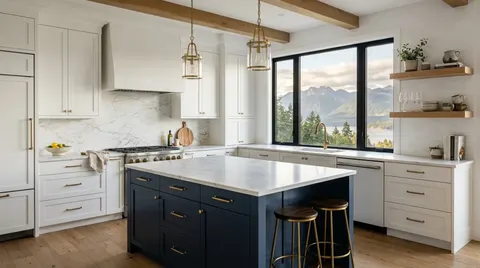
In a kitchen, the cabinets, counters, sink, tap, wall tile and ceiling lights that the developer installed are all items attached to the building. Replacing them is item (g) work. The appliances are the exception when they can be removed without damage to the building.
Moving the sink is a second question. The new position needs a drain and two water lines. If the pipe you connect to also serves other units, or sits inside a boundary wall, it is common property and the work falls under item (f) and Bylaw 6. The same test applies to a range hood duct that joins a shared exhaust shaft.
A bathroom follows the same pattern with more plumbing. The tub, toilet, sink and taps are plumbing fixtures, which section 9.1(1) names. The vertical drain that passes through the room and serves the units above and below is common property under the second test in the Act's definition.
Floor coverings are named in section 9.1(1), so replacing an original floor is item (g) work. Your building may have its own bylaw about the layer under the flooring that reduces sound. The structural floor beneath is a separate matter: cutting or coring it is item (a) work.
Walls, windows, balcony, wiring, heating and cooling
For a wall, ask three questions. Is the covering original? Then item (g) applies. Does the wall carry load? Then item (a) applies, and a structural engineer is the person who can confirm it. Is it a boundary wall? Section 68(1) puts the edge of your unit midway through the structural part of a boundary wall, and every pipe and wire inside that wall is common property.
Windows, skylights and exterior doors are item (d) work whatever the size of the change. So is the door from your unit to the hallway. A balcony is item (c), its railing is item (e), and where the strata plan marks the balcony as limited common property, Bylaw 6 applies as well.
For electrical work, section 9.1(1) names "electrical fixtures" and gives no list of them. We treat the original panel, the attached lights and the attached heaters as inside item (g) and name each one in the request. A wire that runs inside your own interior walls and serves only your unit falls outside both tests in the definition of common property. A wire inside a boundary wall, floor or ceiling meets the first test.
Heating and cooling are in the Act's definition by name: it lists facilities for "heating and cooling systems". Pipes or ducts that carry heat to other units are common property. Equipment fixed to the outside of the building or standing on a balcony involves items (b) and (c), and Bylaw 6 where the balcony is limited common property.
What the Standard Bylaws leave to the owner
Three groups of things are outside the approval list. The first is the appliances and other items that section 9.1(1) excludes because they can be removed without damage to the building. The second is anything that is unattached: furniture, rugs, lamps. The third, on the words of section 149(1)(d), is a fixture that an earlier owner installed in place of the original, as long as the work touches none of items (a) to (f).
Treat the third group with care. Your building's own bylaws may require approval for every flooring or plumbing change, whoever installed the current one. Ask the strata in writing before relying on it.
Work outside the approval list is still covered by Standard Bylaw 3. It forbids using a unit in a way that causes unreasonable noise or a nuisance to another person, and it forbids damage to the common property.
How we use this list before we quote
We read the building's bylaws first, then sort each part of the planned work under its bylaw item.
For each sink, toilet, tub or vent that will move, we find out which pipe or duct it connects to and whether that pipe serves other units. The answer decides whether the request falls under Bylaw 5, with its rule against unreasonable refusal, or under Bylaw 6.
Sources
- Strata Property Act, SBC 1998, c. 43 (sections 1, 68, 120, 149 and 152), read October 4, 2026
- Strata Property Act, Schedule of Standard Bylaws (Bylaws 3, 5 and 6), read October 4, 2026
- Strata Property Regulation, B.C. Reg. 43/2000 (section 9.1), read October 4, 2026
- Province of BC, Strata bylaws and rules explained (published July 16, 2024), read October 4, 2026
- Province of BC, Common property and limited common property (published July 10, 2024), read October 4, 2026
Frequently asked questions
Does painting the walls of a condo need strata approval in BC?
The Standard Bylaws give no plain answer on painting the inside walls of a condo. Section 9.1(1) of the Strata Property Regulation names "wall coverings" as fixtures, and Standard Bylaw 5(1)(g) requires written approval to alter original fixtures, but the regulation leaves "wall coverings" undefined and says nothing about paint. Ask your strata in writing how it reads the term, and check your building's own bylaws for a painting or decorating clause.
Do I need strata approval to replace kitchen cabinets and countertops in BC?
Under the Standard Bylaws, replacing the original kitchen cabinets and countertops of a BC condo needs the strata's written approval. Section 9.1(1) of the Strata Property Regulation defines fixtures as "items attached to a building", and original cabinets and counters are attached. Standard Bylaw 5(1)(g) requires approval before altering fixtures the developer installed. Your building's own bylaws may add conditions for the work, so read them too.
Does Standard Bylaw 5(1)(g) cover a floor that a previous owner installed?
On its wording, Standard Bylaw 5(1)(g) covers only the parts of a unit the strata must insure under section 149 of the Strata Property Act. Section 149(1)(d) names fixtures the developer built or installed as part of the original construction. Fixtures an owner added later fall under section 152(b), which lets the strata insure them by choice. Many buildings have their own flooring bylaw, so ask your strata in writing before replacing any floor.
Do I need strata approval to replace a toilet or a tap in the same place?
Under the Standard Bylaws, replacing an original toilet or tap in a BC strata unit needs written approval, even in the same place. Section 9.1(1) of the Strata Property Regulation names plumbing fixtures as fixtures, and Standard Bylaw 5(1)(g) requires approval before altering fixtures the developer installed. When the position stays the same and the shared drain and water pipes are left as they are, the request falls under Bylaw 5 alone.
Do I need strata approval to replace light fixtures in a condo?
Under the Standard Bylaws, replacing the original attached light fixtures in a BC condo needs the strata's written approval. Section 9.1(1) of the Strata Property Regulation names electrical fixtures in its definition of fixtures, and Standard Bylaw 5(1)(g) covers fixtures the developer installed. A lamp that plugs in and can be carried away is unattached, so it is outside the definition. Check your building's bylaws for added electrical conditions.
Does replacing the door between my condo and the hallway need strata approval?
Yes, under the Standard Bylaws the door between a condo and the hallway needs the strata's written approval before it is altered. Standard Bylaw 5(1)(d) covers doors, windows and skylights on the exterior of a building "or that front on the common property", and a shared hallway is common property. The same item covers exterior windows. Doors between rooms inside the unit are outside item (d).
Can I install an air conditioner in my BC condo without strata approval?
Under the Standard Bylaws, the answer for an air conditioner in a BC condo depends on how it is installed. Equipment fixed to the outside wall or placed on a balcony involves Standard Bylaw 5(1)(b) and (c), and a new opening through an outside wall changes the exterior, so written approval is needed. A portable unit that can be removed without damage to the building falls within the exclusion in section 9.1(1) of the regulation.
Is a pipe or wire that serves only my unit common property?
A pipe or wire that serves only one unit is common property in BC when it sits inside a wall, floor or ceiling that forms a boundary of that unit. Section 1 of the Strata Property Act sets that test with no condition about which unit is served. A pipe or wire that runs inside the unit's own interior walls is common property only if it is capable of being used, and intended to be used, by another unit or the common property.
Do blinds and curtains need strata approval in BC?
The Standard Bylaws do not name blinds or curtains among the things that need strata approval in BC. A building's own bylaws can set requirements for them: the Province's strata housing page says bylaws can "even specify the type of window coverings". The same page says a requirement about window coverings inside a unit has to be a bylaw, because rules can govern only the common property. Read your building's filed bylaws before ordering.
Does removing an interior wall inside one condo need strata approval?
Under the Standard Bylaws, removing an interior wall inside a BC condo needs written approval when the wall is part of the building's structure, which is Standard Bylaw 5(1)(a). Approval is also needed when the wall holds pipes, wires or ducts that serve other units, which are common property under item (f), and when it carries original wall coverings under item (g). The Province's page says a building's bylaws may require permission for "moving walls" in every case.
Related service
Home Renovation
See how we handle home renovation projects across the North Shore.
Learn about home renovationWhere this applies
Related articles