
The short answer
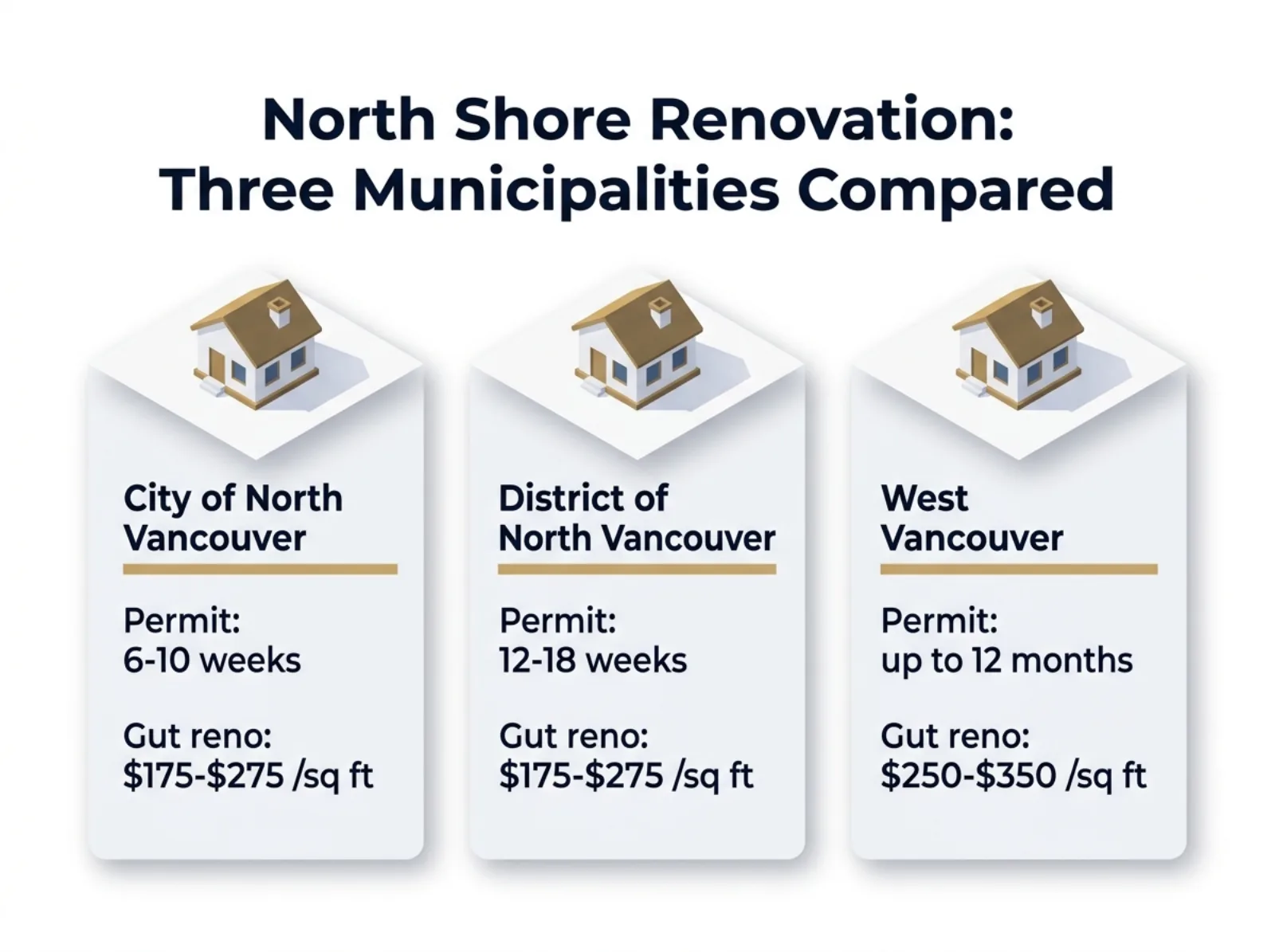
North Vancouver is generally cheaper and faster to renovate in. A full gut renovation runs $175 to $275 per square foot there versus $250 to $350 in West Vancouver, and permits clear in 6 to 10 weeks in the City of North Vancouver, 12 to 18 weeks in the District, and can take months to a year in West Vancouver depending on slope, trees, and shoreline rules.
Three municipalities, thirty seconds of geography
The City of North Vancouver is the small, urban one: the Lonsdale corridor from the waterfront to roughly 29th Street, flat-to-gentle grid lots, mostly 33 and 50 feet wide. The District of North Vancouver wraps around it on three sides, from Edgemont and Canyon Heights across Lynn Valley out to Deep Cove, with bigger lots, real slopes, creeks, and trees. West Vancouver sits west of the Capilano River, from Ambleside to Horseshoe Bay, with the steepest terrain, the largest homes, and the most layered approval process on the shore.
Which one you're in is a property tax notice away: the notice names the municipality. People get this wrong surprisingly often, because the boundary between the City and the District runs through what feels like continuous neighbourhood, and the postal address says North Vancouver either way.
Permits and review times: the biggest practical difference
The City of North Vancouver is the fastest of the three for routine work. Minor alterations clear in 4 to 6 weeks, and a straightforward single-family renovation permit runs 6 to 10 weeks from application to approval. The lots are simpler, fewer studies are triggered, and the department moves.
The District of North Vancouver runs slower because its projects carry more layers. Once a renovation scope includes structural work, a secondary suite, or an addition, expect 12 to 18 weeks of review. New home permits routinely take 5 to 8 months, and complex files in Lynn Valley or Upper Capilano have run closer to 10. The District also effectively requires a preliminary plan review before full submission on anything substantial, which adds 4 to 8 weeks up front but saves redesign later.
West Vancouver is the slowest and most demanding. Design review, view corridor protections, environmental development permit areas, and the tree bylaw can all apply to a single property. Straightforward interior renovation permits move reasonably, but anything touching the building envelope, footprint, or a slope can sit in review for several months, and complex projects have waited a year. On West Vancouver projects we run design, engineering, and tendering in parallel with the permit review, which routinely claws back two to three months.
Fees and soft costs: where the District and West Van pull ahead
Base permit fees are the least of it. All three municipalities charge on construction value, and for a typical renovation the fee difference between them is a few hundred dollars. The real money is in the studies and consultants each jurisdiction triggers.
A sloped, treed District of North Vancouver lot carries $30,000 to $80,000 or more in soft costs that a comparable flat City lot never sees: geotechnical investigation at $8,000 to $15,000 on steep lots, arborist report and tree protection at $5,000 to $15,000, stormwater management plan and engineering, and a soil permit for any meaningful excavation. West Vancouver stacks its own layers, and on hillside projects there we have seen retaining and drainage scopes alone add $30,000 to $100,000 before interior work started. For new construction and major additions, development cost charges add $30,000 to $80,000 or more in both North Vancouver municipalities, with the District trending higher.
Tree bylaws: three very different thresholds
Trees are a genuinely underestimated budget line on the North Shore, and the three rule sets differ sharply. The District of North Vancouver protects trees with a trunk diameter of 30 centimetres or more, and construction within a protected tree's root zone needs an arborist assessment, protection fencing, and sometimes design changes. On a typical treed District lot that means 3 to 6 protected trees and $5,000 to $15,000 in arborist fees and protection measures, before counting design compromises.
West Vancouver's Tree Bylaw, made permanent in November 2020, draws its protected line at 75 centimetres diameter at breast height, including combined stems on multi-stem trees. Fewer trees cross that bar, but the ones that do are the big cedars and firs that define these lots, removal requires a permit with accepted rationale, and the District does not grant permits to cut protected trees just to improve a view. If your renovation plan assumes a sightline opens up, check the bylaw before you buy the drawings.
The City of North Vancouver is the lightest touch of the three. Rules exist for significant trees, but City lots are smaller and more developed, with fewer large trees, so the construction impact is usually modest. Replacement planting requirements apply in all three jurisdictions when removals are approved.
Lot conditions: the ground writes the budget
Strip away the bylaws and the ground itself prices differently. City of North Vancouver lots are mostly flat, well-documented glacial till, buildable with conventional footings and a standard drainage connection at $3,000 to $8,000. This is the closest the North Shore gets to easy.
The District of North Vancouver brings slope and water. Lots at 20 percent grade or more trigger geotechnical review, engineered stormwater systems on sloped lots run $15,000 to $40,000, and creek-adjacent properties can add riparian assessments. When the geotech calls for drilled piles instead of footings, that is $50,000 to $100,000 of foundation premium.
West Vancouver adds rock to all of the above. Much of the municipality sits on granite, so excavation means drilling and breaking rather than digging, steep access adds 5 to 10 percent for staging and scaffolding alone, and older hillside homes carry aluminum wiring, galvanized or poly-b plumbing, and thin insulation behind the walls. We tell West Vancouver clients with pre-1980 homes to carry 15 to 20 percent contingency, and District clients on older homes 20 to 25 percent, not out of pessimism but pattern recognition.
What the same renovation costs in each
Here are the 2026 planning bands, side by side. They overlap, and the overlap is honest: a flat Ambleside lot can price like North Vancouver, and a steep Braemar lot can price like West Van. But the centres of gravity are real.
- Full gut renovation, mid-range finishes: $175 to $275 per square foot in North Vancouver; $250 to $350 per square foot in West Vancouver
- Cosmetic refresh, no structural work: $80 to $140 per square foot across the shore, with West Vancouver in the upper half
- Kitchen, mid-range: $65,000 to $110,000 in North Vancouver; $90,000 to $150,000 in West Vancouver
- Bathroom, full gut: $28,000 to $55,000 in North Vancouver; $35,000 to $70,000 in West Vancouver
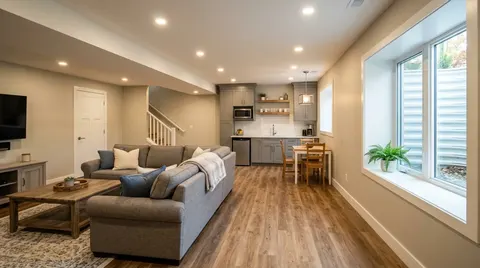
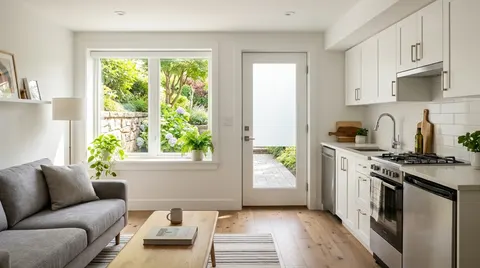
- Basement suite conversion: $70,000 to $120,000 North Shore standard, with West Vancouver conversions landing in the upper half and beyond when rock is involved
- Whole-home renovation with some structural change: $350,000 to $550,000 for a 2,000 to 3,000 square foot North Vancouver home; $1.0M to $1.4M for a 4,000 square foot West Vancouver home
Trades logistics: everyone pays the bridge tax, West Van pays twice
Skilled trades on the North Shore bill 10 to 15 percent above the same trade in Vancouver proper, because the Lions Gate or Ironworkers crossing adds 45 to 90 minutes to a round trip and that time is real cost. That premium applies across all three municipalities, and the good trades book 3 to 5 months out for major renovation work regardless of which side of the Capilano they're working.
West Vancouver adds a second layer: the site itself. Narrow switchback driveways that stage one delivery at a time, concrete pumps with longer booms, materials craned or carried where trucks can't reach, and scaffolding on the downhill side that costs multiples of flat-ground setup. None of this is contractor markup. It is minutes and equipment, multiplied across every trade day of an eight-month project. It is also why an experienced West Vancouver quote can look 20 percent higher than a North Vancouver quote for the same drawings and still be the accurate one.
Suites and density: three speeds of change
If your renovation plans include a rental suite or a future second unit, the municipal split matters again. Both North Vancouver municipalities now allow a secondary suite plus a detached unit on most RS-zoned lots under BC's housing legislation, with the City the more permissive on coach houses and the District tying eligibility to lot size, generally at least 557 square metres.
West Vancouver has moved slowest. Suites are legal and licensed, detached units are rental-only coach houses on the same title, and the District's small-scale multi-unit implementation covered just 222 parcels, about 1.6 percent of its residential lots, the most restrictive in BC. Provincial legislation passed in November 2025 set a June 30, 2026 compliance deadline, and as of mid-2026 the District was still working through it. For a buyer, that means a West Vancouver lot's density potential is the least certain of the three right now: possibly more tomorrow than today, but not bankable yet.
Deciding scope, or deciding where to buy
If you already own, the municipality is fixed and the useful move is calibrating scope to it. In the City, permits are quick and the ground is forgiving, so phasing work or pushing scope is low-friction. In the District, bundle everything needing review into one application, because each trip through a 12 to 18 week queue costs a season. In West Vancouver, the approval timeline is the project's spine: start it first, run everything else in parallel, and budget carrying costs for the wait.
If you're buying with renovation plans, price the municipality into the offer. A District fixer on a steep, treed lot carries five figures of soft costs and months of review the listing doesn't mention. A West Vancouver house with a dated interior but a sound envelope is a better renovation bet than one needing envelope or slope work, because interior-only scope is the one thing West Van approves quickly. And two otherwise identical houses on either side of 29th Street are not identical projects. Ask which building department owns the address before you fall in love with the plan. It's a 30-second check that reshapes everything after it.
Sources
Frequently asked questions
Is it cheaper to renovate in North Vancouver or West Vancouver?
North Vancouver. A full gut renovation with mid-range finishes runs $175 to $275 per square foot in North Vancouver against $250 to $350 in West Vancouver, and the gap repeats room by room: kitchens run $65,000 to $110,000 versus $90,000 to $150,000, bathrooms $28,000 to $55,000 versus $35,000 to $70,000. The difference is terrain, access, and finish expectations rather than contractor markup.
Which North Shore municipality has the fastest renovation permits?
The City of North Vancouver. Minor alterations clear in 4 to 6 weeks and straightforward renovation permits run 6 to 10 weeks. The District of North Vancouver takes 12 to 18 weeks once scope includes structural work or a suite, and West Vancouver is slowest: envelope, footprint, or slope-related projects can sit for several months, and complex files have waited a year.
How do tree bylaws differ across the three North Shore municipalities?
The District of North Vancouver protects trees from 30 centimetres trunk diameter, which catches 3 to 6 trees on a typical treed lot and adds $5,000 to $15,000 in arborist and protection costs. West Vancouver's Tree Bylaw, permanent since November 2020, protects trees from 75 centimetres diameter including combined multi-stem measurements, and does not grant removal permits just to improve a view. The City of North Vancouver has the lightest rules of the three.
What extra soft costs does a District of North Vancouver renovation carry?
A sloped, treed District lot can carry $30,000 to $80,000 or more in soft costs a flat City lot avoids: geotechnical investigation at $8,000 to $15,000 on steep lots, arborist reports and tree protection at $5,000 to $15,000, engineered stormwater at $15,000 to $40,000, and a soil permit for meaningful excavation. These arrive before construction pricing even starts.
Why do West Vancouver renovation quotes run higher for the same drawings?
The site does it. Much of West Vancouver sits on granite, so excavation is drilling and breaking rather than digging, steep access adds 5 to 10 percent for staging and scaffolding, and hillside retaining and drainage scopes have added $30,000 to $100,000 before interior work began. An experienced West Vancouver quote can run 20 percent above a North Vancouver quote for identical drawings and be the accurate one.
How much contingency should I carry by municipality and home age?
On pre-1980 West Vancouver homes we recommend 15 to 20 percent, because opening walls routinely reveals aluminum wiring, galvanized or poly-b plumbing, and insulation far below code. On older North Vancouver homes, where pre-1975 houses hit at least one hidden condition on roughly 7 or 8 of 10 projects, budget 20 to 25 percent. Newer homes in any municipality can run tighter.
How do I know if a North Vancouver address is in the City or the District?
Check the property tax notice, which names the issuing municipality. The boundary runs through continuous-feeling neighbourhoods around the upper 20s blocks off Lonsdale, postal addresses read North Vancouver on both sides, and postal codes overlap, so the notice or a call to either building department is the only reliable check. It matters, because permit timelines and required studies differ significantly between the two.
Do trades cost more on the North Shore, and does it vary by municipality?
Trades bill 10 to 15 percent above Vancouver-proper rates across all three North Shore municipalities, reflecting the Lions Gate or Ironworkers crossing that adds 45 to 90 minutes per round trip. The premium is shore-wide, but West Vancouver sites add staging costs on top: single-delivery driveways, longer pump booms, and craned materials that multiply trade time on steep lots. Good trades book 3 to 5 months out everywhere on the shore.
Which municipality is best if I want a rental suite as part of my renovation?
The North Vancouver municipalities are the settled choice: both allow a secondary suite plus a detached unit on most RS-zoned lots, with the City more permissive on coach houses and the District requiring generally at least 557 square metres of lot for one. West Vancouver allows licensed suites and rental-only coach houses, but its broader density rules were still in motion in mid-2026 under a provincial compliance deadline, so its future potential is the least certain.
Should the municipality affect what I offer on a North Shore fixer-upper?
Yes, concretely. A District of North Vancouver fixer on a steep, treed lot carries tens of thousands in consultant soft costs and 12 to 18 week reviews the listing never mentions, and a West Vancouver project touching the envelope or slope can wait months to a year for approval, with carrying costs through the wait. Price those into the offer, and favour houses whose needed work is interior-only in the slower jurisdictions.
How should I sequence a West Vancouver renovation to protect the schedule?
Start the permit application first and treat it as the project's spine, then run design development, engineering, and contractor tendering in parallel with the review rather than after it. That parallel approach routinely saves two to three months on West Vancouver projects, where envelope or slope-related reviews take several months. Budget the carrying costs of the review window into the project from day one.
What do development cost charges add on the North Shore?
For new construction, significant additions, and secondary dwelling units, development cost charges add $30,000 to $80,000 or more in both North Vancouver municipalities, with the District trending higher because servicing hillside lots costs more. For a typical renovation without added units, base permit fees differ between the three municipalities by only a few hundred dollars, so DCCs are the number to check when scope grows.
Related service
Home Renovation
See how we handle home renovation projects across the North Shore.
Learn about home renovationRelated articles