


The short answer
At its July 24, 2026 meeting the Metro Vancouver Board rolled the 2026 development cost charge increases back to 2025 rates, reduced the planned 2027 increases, and pushed the move to a 1% assist factor from 2027 to 2029. This created three rate periods in one year. The amended rates apply going forward only, and there are no rebates for permits issued before July 24, 2026.
What the Board changed on July 24, 2026
At its July 24, 2026 meeting, the Metro Vancouver Board did three things at once. It rolled the 2026 development cost charge increases back to the 2025 rates. It reduced the increases that had been planned for 2027. And it extended the move to a 1% assist factor from 2027 out to 2029.
Each of those three decisions pulls in the same direction, which is downward pressure on what a new development pays in the short term. The first two are direct cuts to the rate. The third changes the speed at which the rate climbs over the next few years.
The practical result is that 2026 contains two different sets of regional rates, split at July 24. A third set starts on January 1, 2027. Most people assume a fee schedule changes once a year on January 1, so a mid-year split catches out anyone working from a budget prepared in the spring.
The change applies to the regional charge only. Your municipality sets its own development cost charges through its own bylaw, on its own schedule, and a Metro Vancouver decision does nothing to those.
The three rate periods, and one example of the scale
The clearest way to see the size of the swing is to follow one line of the regional schedule through all three periods. The example below is the Metro Vancouver regional development cost charge for a single-family residential lot in the Vancouver Sewerage Area. A sewerage area is the region's way of grouping which set of sewer pipes and treatment plants serves a property, and the rate differs between areas.
For that one line, the charge was $29,196 under the original 2026 rates. Effective July 24, 2026 it became $21,941. On January 1, 2027 it rises to $28,322. The gap between the first and second figure is $7,255 on a single lot.
The North Shore sits in different sewerage and drainage areas, so a North Shore property does not pay the Vancouver Sewerage Area line. On top of that, the City of North Vancouver, the District of North Vancouver, and West Vancouver each levy their own municipal development cost charges through their own bylaws, and those are separate money. A North Shore owner's total will be a different number.
Read the table as a picture of direction and scale. The lesson to take from it is that a mid-year board decision moved one line by thousands of dollars, and that the same thing is happening across the whole schedule.
| Rate period | Dates | Rate for that one example line | What changed |
|---|---|---|---|
| Original 2026 rates | January 1 to July 23, 2026 | $29,196 | The rates adopted before the rollback |
| Reduced rates | July 24 to December 31, 2026 | $21,941 | Rolled back to 2025 rates by the Board on July 24, 2026 |
| Modified 2027 rates | January 1, 2027 onward | $28,322 | The 2027 increase, reduced from what had been planned |
In-stream protection and the written agreement most people will miss
In-stream protection is the rule that decides what happens to an application that was already in the system when the rates changed. Developments with a complete application submitted before July 24, 2026 receive in-stream protection under specific conditions.
Here is the part that costs money. To have the amended, lower rates applied, the applicant must provide written agreement. If no written agreement is provided, the original rates apply. Silence keeps you on the higher schedule.
That is the opposite of what most people expect. When a fee goes down, the natural assumption is that everyone pays the new lower number automatically. In this case the lower number has to be asked for and signed for, by the applicant, on their own file.
The window is not open forever. This protection expires July 24, 2027. If you have an application that was complete before July 24, 2026 and has not yet reached permit issuance, the single most useful thing you can do this week is find out whether your file carries a signed written agreement for the amended rates.
If a designer, an architect, or a project manager filed on your behalf, ask them directly and ask for a copy of what was signed. The person whose name is on the application is the one who has to provide the agreement, and on a family project that is often not the person tracking the budget.
- Confirm the exact date your application was deemed complete, which is the date that matters, rather than the date you first submitted something.
- Ask in writing whether written agreement to apply the amended rates has been provided on your file, and request a copy.
- Ask what the charge would be under the original rates and under the amended rates, so you can see the difference on your own file.
- Diarise July 24, 2027. The in-stream protection expires on that date.
- Keep the written answer. A verbal confirmation from a counter conversation is not something you can rely on months later.
There are no rebates for what you already paid
The amended rates apply going forward. There is no mechanism for rebates or retroactive adjustments for permits or approvals issued before July 24, 2026.
So if your building permit was issued in March 2026 and you paid the original 2026 rate, that money is settled. Nobody is going to send a cheque for the difference, and there is no form to fill in.
This is worth saying plainly because it changes what is useful to spend time on. Looking backward at a permit already issued produces nothing. Looking at a file still in progress, where the written agreement question is live, can be worth thousands.
It also means the calendar has real financial weight on the next project. The January 1, 2027 step up is published in advance, so anyone deciding whether to push an application through this autumn or start it in the new year now has a number attached to that choice on the regional side.
When the money is actually due
Development cost charges are collected at the time of building permit issuance, or at subdivision approval where the project is a subdivision. Subdivision approval is the point where a local government signs off on splitting one legal lot into more than one.
That timing is the part that hurts small builders and homeowners. The charge is a lump sum owed on one day, before a single shovel goes in the ground, and at that moment you have already paid for design, survey, and permit fees and have not yet spent anything on construction.
Construction lending does not always cover it cleanly. A draw-based construction loan releases money against work completed on site, and there is no completed work on the day a permit is issued. Owners who have budgeted the build carefully can still be short on the day the charge comes due.
The fix is ordinary planning. Ask your municipality early what the charge will be for your project, treat it as a cash item due at permit issuance rather than as part of the construction budget, and tell your lender the number before you arrange financing.
If a project is adding a dwelling unit, this sits alongside the other one-time items that land at the same stage, such as utility connection costs and permit fees. Grouping them into one line on your cash plan makes the day visible.
What actually triggers a development cost charge
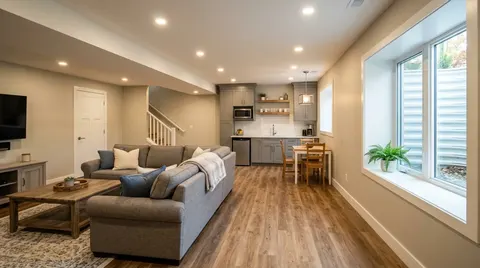
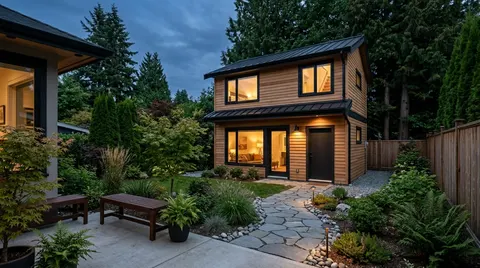
These charges are applied to new development that adds dwelling units or adds demand on shared services. A project that adds a unit is squarely in that territory. Building a laneway house, converting a basement into a self-contained suite, or splitting a house into a duplex all add a unit.
An interior renovation that adds no dwelling unit is usually in a different situation. Replacing a kitchen, opening up a wall between a living room and a dining room, or renovating two bathrooms adds no unit and no new demand on the sewer system.
The word usually is doing real work in that sentence, and here is why. The trigger is defined by each municipality's own development cost charge bylaw. The City of North Vancouver, the District of North Vancouver, and West Vancouver each wrote their own, and the definitions, exemptions, and thresholds inside them are not identical.
So confirm it for the specific project rather than assuming. Ask your municipality whether your scope of work triggers a development cost charge under their current bylaw, describe the work honestly when you ask, and get the answer in writing. Asking takes one email. Finding out at permit issuance costs you the surprise.
Suites and laneway houses get no exemption at the regional level
Two categories qualify for full waivers on certain development cost charges: affordable rental housing, and agricultural developments with low environmental impact.
Secondary suites, accessory dwelling units, and small units are not on that list. There is no exemption for them. This surprises people, because government messaging for several years has encouraged homeowners to add a suite or a laneway house, and it is easy to assume that encouragement came with a fee break.
For a homeowner adding one unit on their own lot, the charge lands on a project with a small total budget, so it takes up a larger share of the money than it would on a large development. That makes it worth pricing before design, rather than discovering it after you have paid for drawings.
Put it in the first version of your budget. If you are comparing a basement suite against a laneway house, get the charge for each option from your municipality and from Metro Vancouver, because the two paths can land differently and the difference belongs in the comparison.
- Affordable rental housing qualifies for full waivers on certain development cost charges.
- Agricultural developments with low environmental impact qualify for full waivers on certain development cost charges.
- Secondary suites have no exemption.
- Accessory dwelling units, including laneway and coach houses, have no exemption.
- Small units have no exemption based on their size.
The assist factor, and why your rate keeps moving
The assist factor is the share of growth-related infrastructure costs that gets paid through utility fees rather than through development cost charges. A high assist factor means existing ratepayers carry more of the cost through their bills. A low assist factor means new development carries more of it through the charge.
As of July 24, 2026 the assist factor varies by service, in a range of 8% to 75%. The plan is to move it toward 1% by 2029, a target date extended from the original 2027.
That single sentence explains why these rates keep climbing. As the assist factor falls toward 1%, a larger share of the same infrastructure bill is collected from new development, so the charge on a new unit rises even when the underlying project cost stays flat.
The July 2026 decision pushed that end point two years further out, which spreads the increases over a longer period. The direction of travel has not changed. Anyone planning a project across several years should expect the regional charge to keep rising and should re-check the number each time the budget is revised.
How to get the real numbers for your own address
There is no single lookup that gives a North Shore owner one total. The number is assembled from two sources, and you have to ask both.
Start with your municipality. Call or email the permits department for the City of North Vancouver, the District of North Vancouver, or West Vancouver, depending on where the property sits. Ask for the current development cost charge rate schedule from their bylaw for your zone and your project type, and ask them to confirm that the schedule they send you is the one in force today.
Then ask Metro Vancouver separately about the regional charge, and give them your address so they can tell you which sewerage and drainage area applies. The regional charge and the municipal charge are different money collected under different bylaws, and asking one office about the other wastes a week.
Do this before design work starts. Once you have drawings and a unit count, the charge is a consequence of decisions already made. Before that, knowing the number can change the plan.
- Ask your municipality's permits department for the current development cost charge rate schedule from their bylaw, for your zone and your project type.
- Ask them, in writing, whether your specific scope of work triggers a charge at all under their current bylaw.
- Ask Metro Vancouver separately about the regional charge and give them your address, so the correct sewerage and drainage area is applied.
- If you already have an application in progress, ask the date it was deemed complete and whether written agreement for the amended rates has been provided.
- Ask when payment is due and in what form, so the cash is ready on permit issuance day.
- Re-check every figure before you sign a construction contract, because the 2026 rates moved mid-year and the next step happens on January 1, 2027.
Sources
- Metro Vancouver, Development Cost Charges. Establishes the July 24, 2026 Board decision to roll back the 2026 DCC increases to 2025 rates, reduce the planned 2027 increases, and extend the move to a 1% assist factor from 2027 to 2029; the three resulting rate periods; the single-family Vancouver Sewerage Area rates of $29,196, $21,941 and $28,322; that amended rates apply going forward with no rebates or retroactive adjustments before July 24, 2026; the in-stream protection conditions including the written agreement requirement and its July 24, 2027 expiry; the 8% to 75% assist factor range as of July 24, 2026; and the full waivers for affordable rental housing and low environmental impact agricultural developments.
- Province of British Columbia, Development Cost Charges. Establishes that local governments can collect development cost charges on new development to help pay for the infrastructure needed to service that development, including water, sewer, drainage and roads.
Frequently asked questions
What is a development cost charge?
It is a one-time fee that a local government collects from new development to help pay for growth-related infrastructure such as sewer, water, drainage, roads, and parks. On the North Shore two levels can charge you. Metro Vancouver levies a regional charge, and your own municipality levies its own charge on top under its own bylaw.
What did Metro Vancouver decide on July 24, 2026?
At that Board meeting, Metro Vancouver rolled the 2026 development cost charge increases back to 2025 rates, reduced the increases planned for 2027, and extended the move to a 1% assist factor from 2027 to 2029. The result is three rate periods: January 1 to July 23, 2026, then July 24 to December 31, 2026, then January 1, 2027 onward.
Are the dollar figures in this post what I will pay on the North Shore?
No. The $29,196, $21,941, and $28,322 figures are Metro Vancouver regional rates for a single-family residential lot in the Vancouver Sewerage Area, shown to illustrate the scale of the change. North Shore properties sit in different sewerage and drainage areas and also pay separate municipal charges. Get your own figures from your municipality and from Metro Vancouver.
My application was complete before July 24, 2026. Do I get the lower rate?
Only if you ask for it. Developments with a complete application submitted before July 24, 2026 receive in-stream protection under specific conditions, and applicants must provide written agreement to apply the amended rates. Without that written agreement, the original higher rates apply to your file. The protection expires July 24, 2027.
What happens if I do nothing about the written agreement?
The original rates apply. That is the default outcome for an in-stream application where no written agreement has been provided. Since the amended rates are lower, doing nothing leaves money on the table. Contact whoever filed your application, confirm whether the agreement has been signed, and ask for a copy in writing.
Can I get a refund if my permit was issued before the rollback?
No. The amended rates apply going forward, and there is no mechanism for rebates or retroactive adjustments for permits or approvals issued before July 24, 2026. If you paid under the original 2026 rates on a permit already issued, that amount is settled. The rollback only affects what is charged from July 24, 2026 onward.
When do I actually have to pay?
Development cost charges are collected at building permit issuance, or at subdivision approval where the project involves splitting a lot. It is a lump sum due on one day, before construction starts. Plan for it as a cash requirement at that moment rather than as part of the construction budget, and tell your lender the figure before you arrange financing.
Does a kitchen or bathroom renovation trigger a development cost charge?
A straightforward interior renovation that adds no dwelling unit is generally a different situation from a project that adds one. The trigger is defined by each municipality's own development cost charge bylaw, and the three North Shore municipalities each wrote their own. Describe your scope to your permits department and get the answer in writing rather than assuming.
Is there an exemption for a secondary suite or a laneway house?
There is no exemption for secondary suites, accessory dwelling units, or small units. Full waivers on certain development cost charges are available for affordable rental housing and for agricultural developments with low environmental impact. A homeowner adding one suite or one laneway house should budget for the charge from the first version of the plan.
What is the assist factor and why should I care?
The assist factor is the share of growth costs funded through utility fees instead of through development cost charges. As of July 24, 2026 it varies by service, in a range of 8% to 75%, and it is moving toward 1% by 2029. As it falls, new development carries more of the cost, so the charge on a new unit keeps rising.
Will rates go up again on January 1, 2027?
Yes, on the regional side. The July 2026 decision reduced the planned 2027 increases without removing them. On the one example line used in this post, the Vancouver Sewerage Area single-family rate goes from $21,941 to $28,322 on January 1, 2027. Confirm what the step means for your own sewerage area and your own municipality.
Who do I contact to get the exact number for my project?
Two offices. Ask your municipality's permits department for the current development cost charge rate schedule from their bylaw for your zone and project type. Then ask Metro Vancouver separately about the regional charge, giving them your address so the correct sewerage and drainage area is applied. Ask both before design work starts.
Related service
Home renovation
See how we handle home renovation projects across the North Shore.
Learn about home renovationWhere this applies
Related articles