





The short answer
BC Plumbing Code Article 2.4.6.4 requires a gate valve or backwater valve on fixture drains located below the level of the adjoining street, which covers most basement plumbing fixtures on the North Shore. A sump pump is required separately, under the code's drainage provisions, wherever gravity drainage from the foundation is not practical, which is common on sloped North Shore lots. Neither the City of North Vancouver, the District of North Vancouver, nor West Vancouver currently publishes a backwater valve or sump pump rebate program, so budget the full installed cost rather than counting on a subsidy.
Two different problems, two different code sections
A backwater valve and a sump pump solve two different water problems, and treating them as the same thing is where a lot of basement renovation planning goes wrong. A backwater valve stops water from coming in the wrong direction through your own drain pipe, when the municipal sewer system gets overloaded during heavy rain and pushes water back up toward your house instead of away from it. A sump pump moves water that is already in the ground around your foundation, groundwater and perimeter drain water, out and away before it can get into the basement in the first place.
BC Plumbing Code Article 2.4.6.4 addresses the backwater valve side. Where a building drain or a branch may be subject to backflow, a gate valve or a backwater valve is required on every fixture drain connected to it when the fixture sits below the level of the adjoining street. In practice, this means any fixture you install in a basement, a floor drain, a laundry sink, a bathroom, sits below street level on most North Shore lots and falls under this requirement.
The code allows the valve to be installed on the building drain itself rather than on each individual fixture, provided it is a normally open design, meaning it sits open by default and only closes when water tries to flow backward into the house. There is a limit worth knowing if you are planning a basement suite: a normally open backwater valve installed this way is only permitted to serve one dwelling unit. The moment a legal secondary suite exists in the basement, that basement becomes a second dwelling unit sharing the same drain, and the single normally open valve arrangement no longer satisfies the code on its own.
When a sump pump is actually required
A sump pump is not automatically required on every basement renovation. The BC Building Code's drainage provisions in Section 9.14, which we covered in detail in our perimeter drain guide, require an automatic sump pump specifically where gravity drainage from the foundation is not practical. Where a lot slopes away from the house enough that a gravity-fed connection to the storm system works, gravity is the answer, and a system with no motor and nothing to fail is the simpler, more reliable choice.
The reason sump pumps show up so often in North Shore basement renovations is that a meaningful share of the region's lots do not offer that gravity option. Flat sections of a lot, houses set below street grade, and foundations sitting in soil with a high seasonal water table all push toward a pump-dependent system rather than a gravity one. This is a site-specific determination rather than a neighbourhood-wide rule, so it needs to be confirmed for your actual lot rather than assumed from what a neighbour's house has.
Where a pump is required, the code sets physical minimums for the pit itself: not less than 750 mm deep and not less than 0.25 square metres in area, fitted with a cover. The discharge side of the system also has a required sequence, with the pipe leaving the pump equipped with a union, a backwater valve, and a shut-off valve installed in that order in the direction the water flows. That sequence exists so a plumber can service or replace the pump later without shutting down the whole drainage line, and so the discharge line itself is protected against the same backflow risk the fixture-level backwater valve addresses.
| System | What it stops | When it is required |
|---|---|---|
| Backwater valve | Municipal sewer backing up into your own drain during an overloaded storm event | Any fixture drain below the level of the adjoining street, per BC Plumbing Code 2.4.6.4 |
| Sump pump | Groundwater or perimeter drain water accumulating around the foundation | Where gravity drainage from the foundation is not practical for the specific lot |
Sizing a sump pump for a finished basement
A sump pump sized for an unfinished basement with a concrete floor and no real consequence if it runs behind for an hour is a different decision than one protecting a finished basement with flooring, drywall, and a bathroom. Get the sizing conversation right before the renovation is finished, because retrofitting a larger pump or a backup system after the drywall is up and the floor is down is far more disruptive than planning it during construction.
Pump capacity is measured in gallons per minute at a given lift height, and the right size depends on the volume of water your specific site's perimeter drain and groundwater conditions can produce during a heavy, sustained North Shore rain event, not a single storm. A pump sized only for an average rain year will fall behind during the multi-day soaking rain that this coast gets several times each winter, which is exactly the condition a finished basement needs protection against the most.
A second, independent pump as backup is worth the modest extra cost on any basement with finished space and real belongings in it. A primary pump failing silently, from a stuck float switch, a jammed impeller, or simple mechanical wear, is common enough that relying on a single pump with no backup is a real risk on a renovation where the downside of failure is a flooded, finished living space rather than an empty concrete floor.
Battery backup: the part that matters most during a North Shore storm
The failure mode that actually floods finished North Shore basements is not usually the pump itself. It is losing power during the exact storm that is generating the water the pump needs to move. Heavy rain events on this coast often arrive with wind, and wind on the North Shore regularly means tree-related power outages, sometimes lasting hours, sometimes longer on a bad storm. A sump pump with no backup power is a pump that stops working at precisely the moment it is needed most.
A battery backup system runs the pump off a charged battery bank when grid power drops, and a properly sized system should be able to run through a multi-hour outage during active rain, not just cycle a few times before it dies. Battery backup systems for a residential sump pump generally add a modest cost to the installation compared to the pump alone, and that cost is small next to the cost of cleanup and remediation after even a partial basement flood.
Some backup systems use a water-powered ejector as an alternative to a battery, which uses municipal water pressure to move water out without any electricity at all, working as long as the municipal water supply itself is unaffected. Either approach solves the same core problem: making sure the pump keeps working through the exact conditions, storm plus power outage, that a basement is actually at risk during.
Rebate programs: what actually exists right now
Homeowners often ask whether the City of North Vancouver, the District of North Vancouver, or West Vancouver offers a rebate for installing a backwater valve or a sump pump, since several Ontario municipalities run well-publicized programs of exactly this kind. We checked directly, and none of the three North Shore municipalities currently publishes a backwater valve or sump pump rebate or subsidy program.
This is worth budgeting around honestly rather than assuming a program exists because it exists elsewhere in Canada. If your municipality introduces a program after this post is published, that changes the math on any project, so confirm directly with your municipality's engineering or utilities department before finalizing a budget, rather than relying on what a search engine or a general contractor assumes based on programs in other provinces.
What does exist, separate from a direct rebate, is the City of North Vancouver's broader stormwater utility fee and credit system, which we covered in our drainage compliance guide. That system credits property owners for on-site stormwater management features like detention systems, which is a different mechanism than a backwater valve rebate and applies to surface water management rather than to the fixture-level backflow protection this post covers.
How this fits into a basement renovation project
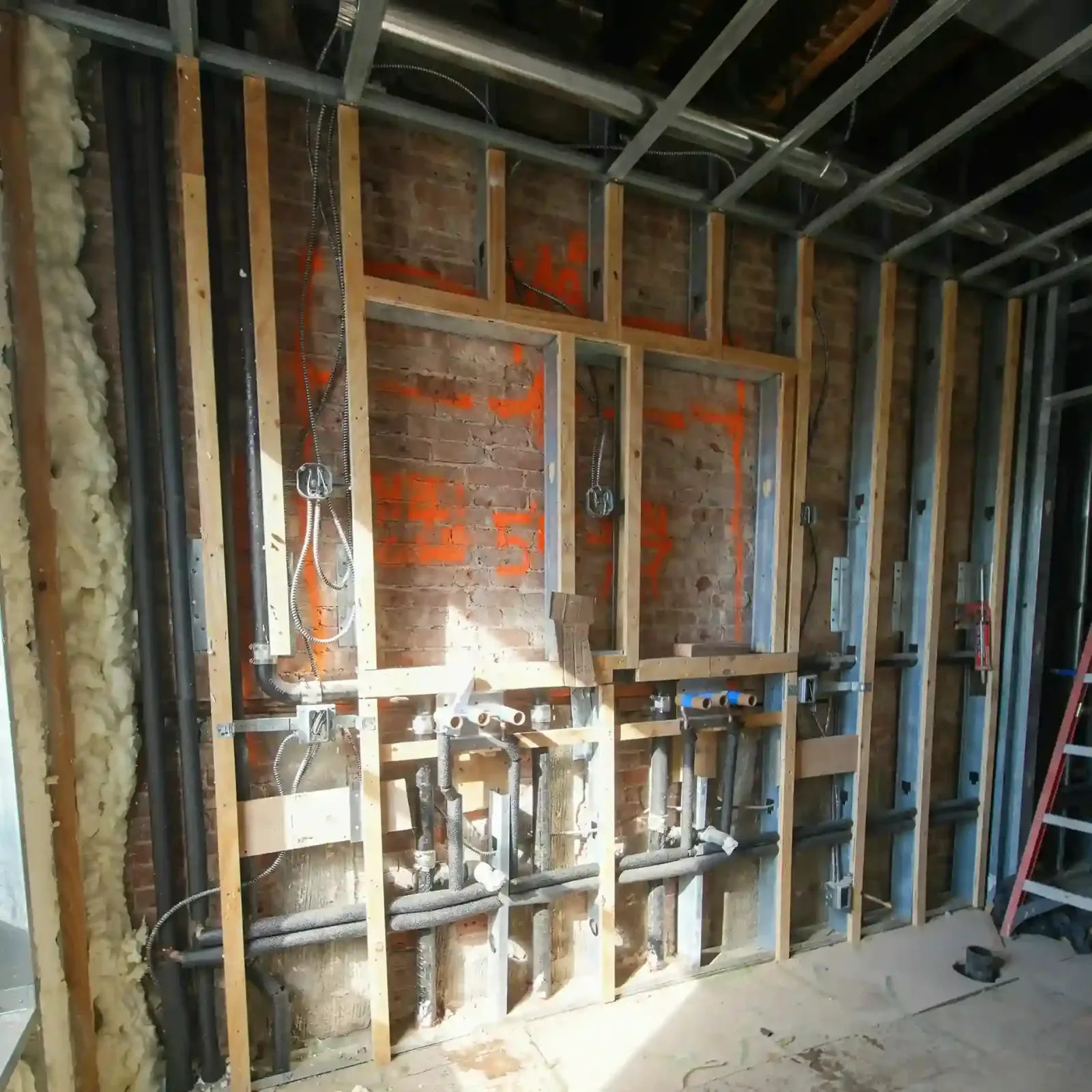
On a basement renovation that adds plumbing fixtures, whether a bathroom, a laundry room, or a wet bar, the backwater valve question is not optional and belongs in the plumbing rough-in scope from the start, not as a decision made after the drywall is up. Confirming whether the existing house already has one, and whether it is correctly installed and sized for the fixtures you are adding, is one of the first things worth checking before pricing the rest of the project.
The sump pump question depends on the specific lot, and it is exactly the kind of site condition a pre-renovation walkthrough should identify before the design is finalized. A lot that drains well by gravity does not need the expense and complexity of a pump system. A lot that does not need one gets that complexity built into the plumbing scope and the electrical scope together, since a properly backed-up pump needs both a reliable circuit and a battery or water-powered backup wired in.
We treat drainage and backflow protection as a site-specific engineering question rather than a standard line item copied from house to house, because on the North Shore the difference between a lot that drains by gravity and a lot that needs a pump-dependent system is real and it changes the whole plumbing scope of a basement renovation.
Sources
- BC Plumbing Code, Division B, Section 2.4, Drainage Systems. Article 2.4.6.4 requires a gate valve or backwater valve on fixture drains subject to backflow and located below the level of the adjoining street, and sets requirements for sump pit dimensions and the discharge pipe sequence of union, backwater valve, and shut-off valve.
- BC Building Code, Division B, Section 9.14, Drainage. Establishes the conditional requirement for an automatic sump pump where gravity drainage is not practical.
Frequently asked questions
Do I need a backwater valve for a basement renovation on the North Shore?
Almost certainly yes if you are adding or connecting plumbing fixtures below street level, which describes most North Shore basements. BC Plumbing Code Article 2.4.6.4 requires a gate valve or backwater valve on fixture drains located below the level of the adjoining street, and a floor drain, laundry sink, or bathroom in a below-grade basement falls under this requirement.
What is the difference between a backwater valve and a sump pump?
A backwater valve stops municipal sewer water from flowing backward into your house during an overloaded storm event. A sump pump moves groundwater and perimeter drain water out from around your foundation before it can get into the basement. They solve two different water problems and are required under different circumstances, and a finished basement on the North Shore often needs both.
Is a sump pump required on every North Shore basement renovation?
No. A sump pump is required specifically where gravity drainage from the foundation is not practical for that lot. Some North Shore lots slope enough to drain by gravity to the storm system and do not need a pump. This is a site-specific determination that should be confirmed for your actual lot rather than assumed from a neighbouring property.
Can one backwater valve serve a basement with a secondary suite?
Not under the normally-open, single-valve arrangement most houses use. A normally open backwater valve installed on the building drain is only permitted to serve one dwelling unit. Once a legal secondary suite exists in the basement, that creates a second dwelling unit on the same drain system, and the plumbing needs to be designed to meet the code requirement for that situation rather than relying on the single-family arrangement.
Does the City or District of North Vancouver offer a rebate for backwater valves or sump pumps?
No. As of this post's publication, none of the City of North Vancouver, the District of North Vancouver, or West Vancouver publishes a backwater valve or sump pump rebate or subsidy program, unlike several Ontario municipalities that run well-known programs of this kind. Confirm directly with your municipality before assuming a rebate exists, since this could change after publication.
Why does a sump pump need battery backup on the North Shore?
The failure that actually floods finished North Shore basements is usually a power outage during the exact storm generating the water, since heavy rain here often arrives with wind that causes tree-related outages. A sump pump with no backup power stops working at the moment it is needed most. A properly sized battery backup, or a water-powered backup system, keeps the pump running through a multi-hour outage during active rain.
How deep does a sump pit have to be under BC Building Code?
Not less than 750 mm deep and not less than 0.25 square metres in area, fitted with a cover, under the BC Building Code's drainage provisions. The discharge pipe leaving the pump must be fitted with a union, a backwater valve, and a shut-off valve in that order in the direction of discharge, a sequence that allows the pump to be serviced later without shutting down the whole line.
How do I know if my lot needs a sump pump or can drain by gravity?
This depends on the elevation of your foundation relative to the storm sewer connection and the slope of your specific lot, and it needs a site walkthrough to confirm rather than a general rule. A lot that slopes away from the house toward the street can often drain by gravity, with no motor and nothing to fail, while a flat lot or a foundation sitting below street grade more often needs a pump-dependent system.
What happens if I skip the backwater valve and my basement floods from sewer backup?
Sewage backing up through a floor drain or fixture without a backwater valve in place is a contamination event, not just a water event, and the cleanup and remediation cost is significantly higher than installing the valve would have been during construction. It is also a plumbing code requirement on fixtures below street level, so skipping it on a permitted renovation risks a failed inspection in addition to the flood risk itself.
Should I add a second sump pump as backup to my primary pump?
On any basement with finished space, real flooring, drywall, and belongings, a second independent pump is worth the modest added cost. A primary pump can fail silently from a stuck float switch or a worn impeller, and relying on a single pump with no backup is a real risk when the downside of failure is a flooded, finished living space rather than an empty concrete floor.
Does a sump pump discharge into the sanitary sewer or the storm sewer?
The storm sewer, not the sanitary sewer. Connecting sump pump or foundation drainage discharge to the sanitary sewer system is prohibited under municipal sewer bylaws on the North Shore, and this connection sometimes turns up as an illegal legacy setup in older homes during a renovation. If your renovation opens up the plumbing and finds this connection, correcting it becomes part of the project scope.
Related service
Basement renovation
See how we handle basement renovation projects across the North Shore.
Learn about basement renovationWhere this applies
Related articles