


The short answer
The Canadian guideline for radon is 200 becquerels per cubic metre, and Health Canada recommends corrective action within one year for homes above it. Areas west of the Coast Mountains, including the North Shore, have generally tested low. Radon accumulation still varies widely between buildings in the same neighbourhood, so a regional average cannot tell you what is in your basement. Health Canada recommends a long-term test of 3 to 12 months with at least 91 days during the heating season.
The regional picture, and why it does not settle anything
Radon is a radioactive gas that comes from uranium breaking down in soil and rock. It seeps into buildings through whatever is in contact with the ground, accumulates indoors, and is a known cause of lung cancer. Outdoors it disperses to nothing. Indoors it can build.
Testing across BC has shown that areas west of the Coast Mountains, which takes in the Lower Mainland, Vancouver Island, the Fraser Valley and the Sunshine Coast, tend to have low residential radon levels, meaning below the Canadian guideline of 200 becquerels per cubic metre. The interior and the north of the province are a different story.
So far so reassuring. Here is the qualifier that comes attached to that finding in the source material itself: indoor radon accumulation can vary widely from building to building, even in the same neighbourhood, so individual testing is still recommended.
That sentence is doing more work than it looks like. Two houses on the same Lynn Valley street, built the same decade on the same soil, can produce different radon readings, because the number depends on the specific path the gas takes into that specific building and how that building handles air. A crack in one slab and not the other. A sump with a lid and one without. A basement that gets used and one that gets sealed up. The geology sets the supply; the building decides how much gets in and stays.
The number that matters
The Canadian guideline for radon is 200 becquerels per cubic metre. Health Canada recommends taking corrective action to lower the level within one year where the annual average in the normal occupancy area exceeds it, and states that the higher the concentration, the sooner action should be taken.
One honest caveat comes directly from Health Canada rather than from us: while the health risk below the guideline is small, there is no level considered risk free. The guideline is a decision threshold, not a line between safe and dangerous.
That framing changes how you should read a result. A house at 210 does not need panic and a house at 190 is not sealed against physics. What the guideline gives you is a point at which the cost of fixing it is clearly worth paying.
| Annual average result | What Health Canada advises | Practical response |
|---|---|---|
| Above 200 Bq/m³ | Take corrective action within one year | Get a mitigation quote; higher readings warrant faster action |
| Well below 200 Bq/m³ | No corrective action recommended | Retest after major renovation or if basement use changes |
| Near the guideline | No level is considered risk free | Your call on cost versus reduction; retest to confirm |
| Short-term test result | Not appropriate for mitigation decisions | Run a long-term test before spending money |
How to test so the result means something
This is where most homeowners go wrong, and it costs them either money or false comfort.
Health Canada recommends conducting radon tests over a period of 3 to 12 months, with a minimum of 91 days of the test falling during the heating season. All measurements should be made in a normal occupancy area of the lowest lived-in level of the home. And on device choice, the guidance is direct: long-term devices are recommended, and short-term measurements are not appropriate for informing mitigation decisions.
Three things follow from that. Radon levels swing with weather, season and how the house is being run, so a weekend reading captures a moment rather than an average. The heating season matters because a closed-up house in January behaves nothing like the same house with the windows open in July. And lowest lived-in level means the finished basement where the family watches television, not the crawlspace nobody enters and not the main floor.
The practical version: buy a long-term alpha track detector, put it in the lowest room you actually use, start it in the fall, and leave it alone until spring. It is the cheapest test in home ownership and the only one that produces a number worth acting on.
If you are buying a house and need an answer in weeks rather than months, a short-term test can flag an obviously high result. Just understand what you have. A short-term number is a screening signal, and Health Canada is explicit that it should not be the basis for a mitigation decision.
- Test for 3 to 12 months, with at least 91 days in the heating season
- Place the detector in the lowest lived-in level, in a normal occupancy area
- Use a long-term device; short-term results should not drive mitigation decisions
- Start in autumn so the test spans the closed-up months
- Retest after work that changes the basement, the slab, or the ventilation
What the BC Building Code already requires
The code approaches radon by geography. Table C-3 of the BC Building Code lists locations in British Columbia requiring radon rough-ins, classifying places demonstrated to have elevated risk of indoor radon above 200 Bq/m³ as Radon Area 1. Rough-ins are required in those Radon Area 1 locations.
A rough-in is not a mitigation system. It is the plumbing for one. Current provisions for a subfloor depressurization rough-in require a radon vent pipe that extends through and terminates outside the building, so the designer has to account for routing that pipe at the design stage rather than discovering later that there is no path from the slab to the roof.
The reason that detail matters to a renovating homeowner has nothing to do with whether your municipality appears on the list. It is that installing the pipe route is cheap while the slab is open and expensive afterwards. If you are pouring a new slab, underpinning a basement, or doing a full basement renovation down to the ground, running the rough-in is a small line item at that moment and a genuinely disruptive retrofit at any other.
We treat it the way we treat blocking behind a future grab bar. The cost of doing it during construction is close to nothing. The cost of wishing you had is measured in demolition.
If the number comes back high
The standard fix is active subslab depressurization. A pipe is set into the material below the slab, a fan draws soil gas out and vents it above the roofline, and the slight negative pressure under the floor means radon goes up the pipe instead of into the house. It is a well-understood system and it works.
The work that makes it effective is the sealing that goes with it. Slab cracks, the gap around the perimeter, service penetrations, and above all the sump: an open sump pit is a direct opening into the soil, and a sealed lid on it is often the single highest-value item on the list.
Retest afterwards. A mitigation system that is not verified is a hopeful piece of pipe. And keep in mind the fan runs continuously, so it draws power and eventually needs replacing, which is a small ongoing cost rather than a one-time purchase.
One North Shore specific note. Plenty of houses here sit on slopes with basements dug into the hillside, which means more below-grade wall in contact with soil than a flat-lot house has. That is a factor in how soil gas can enter, and another argument for testing rather than assuming, particularly on the steeper lots through Canyon Heights, Delbrook and the upper slopes.
When to bother
Honest guidance rather than a sales pitch: for most North Shore homeowners this is a long-term test kit and a season of waiting, and the result is very likely to be reassuring. That is worth doing precisely because it is cheap and it ends the question.
The moments that genuinely warrant attention are the ones where something changes. Finishing a basement turns a space nobody occupied into a bedroom or a suite, which changes both exposure and airflow. A new heating system or a tighter building envelope changes how the house moves air. Underpinning or a new slab changes the ground contact entirely.
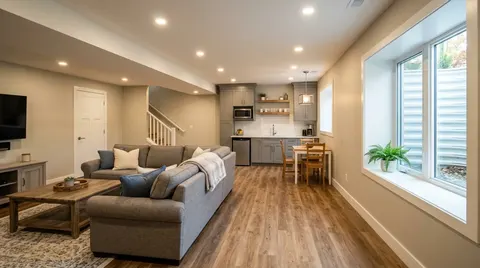
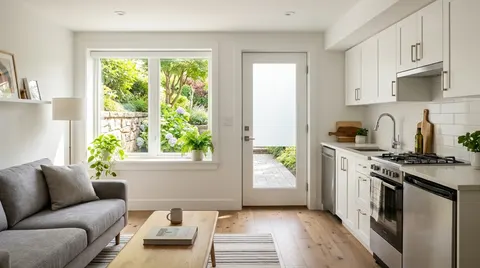
If you are converting a basement into a secondary suite, the case is strongest of all. You are creating a lowest-level living space that someone will occupy full time, and it is worth knowing the number before a tenant is in there rather than after.
Sources
- Health Canada, Government of Canada radon guideline. The 200 Bq/m³ guideline, the one-year corrective action recommendation, and the statement that no level is considered risk free.
- Health Canada, Guide for radon measurements in residential dwellings (homes). Test duration of 3 to 12 months, the 91-day heating season minimum, lowest lived-in level placement, and the recommendation against short-term devices for mitigation decisions.
- BC Building and Safety Standards Branch, information bulletin B14-07, new radon rough-in requirements. Table C-3 Radon Area 1 classification and the subfloor depressurization vent pipe requirement.
- BC Centre for Disease Control, Radon. Regional testing patterns west of the Coast Mountains and the recommendation for individual home testing.
- Province of British Columbia, Radon. Provincial overview of radon risk and testing guidance.
Frequently asked questions
Is radon a problem on the North Shore?
Generally, no. Testing has shown that areas west of the Coast Mountains, including the Lower Mainland, tend to have residential radon levels below the Canadian guideline of 200 becquerels per cubic metre. The important qualifier attached to that finding is that indoor radon accumulation varies widely from building to building even within the same neighbourhood, so the regional average does not tell you what is in your specific basement.
What is the radon level that requires action in Canada?
The Canadian guideline is 200 becquerels per cubic metre. Health Canada recommends taking corrective action to lower the level within one year where the annual average in the normal occupancy area of the home exceeds that figure, and advises acting sooner as concentrations rise. Health Canada also notes that while risk below the guideline is small, no level is considered risk free.
How long should a radon test run?
Health Canada recommends testing over a period of 3 to 12 months, with a minimum of 91 days of the test occurring during the heating season. The reason is that radon levels swing with weather and with how the house is being operated, so a short reading captures a moment rather than an annual average. Starting a test in the autumn is the simplest way to satisfy the heating season requirement.
Can I use a short-term radon test instead?
Only as a screening tool. Health Canada recommends long-term devices and states directly that short-term measurements are not appropriate for informing mitigation decisions. A short-term test during a real estate transaction can flag an obviously high result worth investigating, but before spending money on a mitigation system you want a long-term number that reflects the annual average.
Where in the house should the radon detector go?
Health Canada advises that all measurements be made in a normal occupancy area of the lowest lived-in level of the home. On a North Shore house that usually means the finished basement family room or bedroom, not the crawlspace and not the main floor. The distinction matters because an unoccupied crawlspace will typically read higher than the space where people actually spend time.
Does the BC Building Code require radon mitigation in North Vancouver?
The code requires radon rough-ins in locations listed in Table C-3 as Radon Area 1, which are places demonstrated to have elevated risk of indoor levels above 200 Bq/m³. A rough-in is the pipe route for a future system rather than a working mitigation system. Confirm the current Table C-3 listing for your municipality with the building department, since these classifications are updated over time.
Should I install a radon rough-in during a basement renovation?
If the slab is open or being replaced, it is worth doing regardless of what your municipality's radon classification says. The rough-in requires a vent pipe routed from below the slab through to outside the building, which is a small cost while walls and floors are open and a genuinely disruptive retrofit afterwards. It is the same logic as installing blocking for future grab bars during a bathroom renovation.
How is high radon fixed in an existing house?
The standard approach is active subslab depressurization: a pipe set into the material beneath the slab, with a fan that draws soil gas out and vents it above the roofline. Sealing work goes with it, covering slab cracks, the perimeter gap, service penetrations and especially the sump pit, since an open sump is a direct opening into the soil. Always retest after installation to confirm the system is working.
Does a basement suite change the radon question?
It strengthens the case for testing. Converting a basement into a secondary suite turns a lightly used space into a full-time living area on the lowest level of the house, which is exactly where radon concentrates. Testing before a tenant moves in is far simpler than addressing it afterwards, and it fits naturally into a renovation timeline that already has the basement open.
Do steep North Shore lots affect radon levels?
Houses built into a slope typically have more below-grade wall in contact with soil than a flat-lot house of the same size, which is a factor in how soil gas can enter a building. That is not a prediction that hillside homes in Canyon Heights or Delbrook will test high, since entry paths and building airtightness matter as much as ground contact. It is another reason to test rather than reason from the regional average.
How much does a radon test cost compared to fixing it?
A long-term alpha track detector is among the least expensive things a homeowner can buy, which is the strongest argument for simply running one. Mitigation costs are a different order of magnitude, since a subslab depressurization system involves coring the slab, running vent pipe to above the roofline, installing a fan, and sealing entry points. Because the fan runs continuously, a mitigation system also carries a small ongoing power cost.
Should I retest for radon after a renovation?
Yes, when the work changes ground contact or airflow. Finishing a basement, replacing or underpinning a slab, installing a new heating system, or tightening the building envelope can all change how a house handles soil gas. A tighter house exchanges less air with the outside, so a result measured before an energy retrofit does not necessarily hold afterwards.
Related service
Basement renovation
See how we handle basement renovation projects across the North Shore.
Learn about basement renovationWhere this applies
Related articles