

The short answer
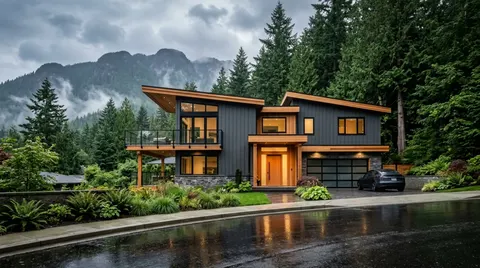
A substantial whole-home renovation in Dundarave runs $250 to $350 per square foot in 2026, consistent with the broader West Vancouver range. Dundarave's defining features for a renovation are its village-scale commercial strip along Marine Drive, its close proximity to the seawalk and Dundarave Beach, a housing stock that mixes pre-1940s cottages with a larger share of 1950s through 1970s infill than neighbouring Ambleside, and a District of West Vancouver permit process that adds heritage review time only for the small number of properties actually on the Community Heritage Register or under a designation.
A village that stayed a village
Dundarave takes its name from the beach and the small commercial node that grew up around the ferry dock that once ran from here to Vancouver. The commercial strip along 25th Street and Marine Drive still reads as a village centre rather than a strip mall: independent shops, cafes, and a scale of building that has stayed low while other parts of the region built up around it.
That scale matters for a renovation in a way that is easy to underestimate. Streets in the residential blocks surrounding the village core are narrower and more heavily used for street parking than in newer West Vancouver subdivisions, which means staging a renovation here, a dumpster, a material delivery, six trade vehicles, takes more planning than the same job would on a wider suburban street. We plan deliveries and parking in Dundarave the way we do in Ambleside and Caulfeild: smaller loads, earlier time slots, and a staging plan worked out before demolition starts rather than improvised on delivery day.
The housing stock is more mixed than the postcard suggests
Dundarave's oldest housing dates to the same summer-cottage era as neighbouring Ambleside, before West Vancouver became a year-round municipality, and a number of those pre-1940s cottages and Craftsman houses still stand near the village core and along the streets closest to the water. Our character homes guide covers what that vintage of house actually hides behind its walls: knob-and-tube wiring, galvanized plumbing, and foundations that were never built to current standards.
What gets less attention is how much of Dundarave is not that vintage at all. A meaningful share of the neighbourhood, particularly moving up the hill away from the water and toward Marine Drive's eastern stretch, is 1950s through 1970s construction, built during West Vancouver's postwar growth in the same wave that filled in much of Ambleside, Sentinel Hill, and the lower slopes above. These houses do not carry the same foundation and wiring risk as the pre-war cottages, but they bring their own renovation list: original single-glazed or early double-glazed windows, cladding that predates rain screen construction, and electrical panels sized for a 1960s household rather than a modern one with induction cooking, a heat pump, and an EV charger all drawing from the same service.
Reading a Dundarave house's actual era before assuming its scope of work matters more here than in a neighbourhood with more uniform housing stock. A 1913 cottage two streets from a 1968 infill house can sit on the same block, and the renovation risk profile for each is different enough that a generic per-square-foot number without a site visit is close to useless.
The seawalk and beach proximity: what it actually changes
Being close to the water is the reason people buy in Dundarave, and it also introduces specific conditions worth planning for. Properties near the waterfront and the seawalk corridor are exposed to more direct wind-driven rain and salt air than houses further up the hill, which accelerates wear on exterior metal, fasteners, and finishes. We specify stainless steel or hot-dip galvanized hardware as the default on exterior work for Dundarave houses within a few blocks of the water, the same practice we use in Deep Cove, and it is worth the modest premium over standard hardware given how much faster ordinary fasteners corrode this close to salt water.
Drainage is the second seawater-adjacent consideration, though it plays out differently than on a sloped lot. Many Dundarave properties near the water sit on relatively flat terrain, which means the concern is less about water arriving under pressure from an uphill neighbour and more about ensuring perimeter drainage and grading actually move water away from the foundation rather than letting it pool. On any renovation that changes footprint or hard surface area near the waterfront, the District of West Vancouver routinely requires a review of how the change affects drainage, so this is worth raising with the building department early rather than discovering it as a permit condition partway through design.
How the District of West Vancouver permit process actually applies here
The most common misconception we hear from Dundarave homeowners is that the whole neighbourhood carries some form of heritage protection because of its village character. It does not. Heritage review in West Vancouver applies specifically to properties on the Community Heritage Register, under municipal designation, or subject to a Heritage Revitalization Agreement, the same three-tier system covered in our Ambleside and Dundarave character homes guide. A Dundarave house not on any of those lists goes through the District's standard permit process, the same one that applies to a renovation anywhere else in West Vancouver.
That said, the number of Dundarave properties actually on the register is not trivial given the neighbourhood's age, so it is worth confirming a specific address's status with the District's planning department before assuming either way. Getting this wrong in either direction costs time: assuming heritage review applies when it doesn't adds unnecessary design caution, and assuming it doesn't apply when it does means a design that has to be redone once the review flags it.
For properties without any heritage designation, permit timelines in West Vancouver generally run in line with the rest of the District: interior renovations move faster than work touching the exterior or the building envelope, and any project expanding footprint or adding significant hard surface triggers the drainage review mentioned above.
What Dundarave renovations tend to cost
A substantial whole-home renovation in Dundarave runs $250 to $350 per square foot in 2026, in line with the broader West Vancouver range and the same band we quote for Caulfeild and Ambleside. Within that range, the two housing stocks we described above land differently. A pre-1940s cottage near the village core carries the character-retention premium detailed in our character homes guide, typically 25 to 45 percent over a conventional renovation of the same scope, because of custom millwork, foundation work, and the slower pace of restoration-grade trades.
A 1950s through 1970s Dundarave house without heritage status renovates more like a standard West Vancouver project: the premium comes from finish level and design involvement rather than from restoration constraints, and full kitchen renovations here commonly land in the $90,000 to $150,000 range, consistent with what we see across West Vancouver's postwar housing stock generally.
Envelope work is a common driver on both housing types given the water and salt exposure discussed above. Rainscreen re-cladding, window replacement, and drainage upgrades on a Dundarave house near the water routinely add $30,000 to $80,000 to a whole-home project, and pricing that scope honestly from the first site visit, rather than discovering it once walls are open, is the difference between a quote that holds and one that doesn't.
What we take on in Dundarave
Whole-home renovations, kitchen and bathroom renovations, envelope and window replacement, and heritage-sensitive work on the character homes near the village core make up most of our Dundarave projects. We confirm a property's actual heritage status at the first site visit rather than assuming it from the neighbourhood's reputation, and we plan staging and deliveries around the village's narrower streets from day one, not as a problem to solve once the trucks show up.
Sources
Frequently asked questions
Does every house in Dundarave have heritage protection?
No. Heritage review in West Vancouver applies specifically to properties on the Community Heritage Register, under municipal designation, or subject to a Heritage Revitalization Agreement, not to the neighbourhood as a whole. A Dundarave house without any of those statuses goes through the District's standard permit process. Confirm a specific address's status with the District's planning department before assuming either way, since guessing wrong costs design time regardless of which direction the guess is wrong in.
How does this guide relate to the existing Ambleside and Dundarave character homes post?
The character homes guide focuses specifically on the pre-1940s cottages and Craftsman houses shared by Ambleside and Dundarave: foundations, knob-and-tube wiring, and the three-tier heritage system. This guide covers Dundarave as a whole neighbourhood, including the 1950s through 1970s housing stock that makes up a meaningful share of the area, the seawalk and village-scale access considerations, and the permit process for properties without heritage status.
What era are most Dundarave homes?
Dundarave holds a mix. Pre-1940s cottages and Craftsman houses stand near the village core and closest to the water, dating to the neighbourhood's origin as a summer-cottage community. A meaningful share of the neighbourhood further from the water and toward Marine Drive's eastern stretch is 1950s through 1970s construction from West Vancouver's postwar growth period, with its own renovation list of outdated windows, pre-rainscreen cladding, and undersized electrical panels.
What does a whole-home renovation cost in Dundarave in 2026?
A substantial whole-home renovation in Dundarave runs $250 to $350 per square foot in 2026, in line with the broader West Vancouver range. A pre-1940s character home near the village core carries an additional 25 to 45 percent premium for restoration-grade work, while a 1950s through 1970s house without heritage status renovates closer to standard West Vancouver pricing, with the premium driven by finish level rather than restoration constraints.
Why does exterior hardware need upgrading on a Dundarave renovation?
Properties near the waterfront and the seawalk corridor face more direct wind-driven rain and salt air than houses further up the hill, which accelerates corrosion on exterior metal and fasteners. We specify stainless steel or hot-dip galvanized hardware as the default on exterior work for Dundarave houses within a few blocks of the water, the same standard used in Deep Cove, since ordinary hardware corrodes noticeably faster this close to salt water.
Does a renovation near Dundarave Beach need special drainage review?
Any renovation expanding footprint or hard surface area near the waterfront routinely triggers a District of West Vancouver review of how the change affects site drainage. Many Dundarave waterfront properties sit on relatively flat terrain, so the concern is less about uphill water pressure and more about confirming grading and perimeter drainage actually move water away from the foundation. Raise this with the building department early in design rather than as a late permit condition.
How does staging a renovation in Dundarave differ from a newer West Vancouver subdivision?
Streets in the residential blocks around the village core are narrower and more heavily used for street parking than in newer subdivisions, which makes staging a dumpster, material deliveries, and trade vehicles more involved. We plan smaller loads, earlier delivery time slots, and a staging plan agreed before demolition starts, the same approach we use in Ambleside and Caulfeild, rather than improvising once trucks are on site.
What does a kitchen renovation cost in a 1960s Dundarave house?
A full kitchen renovation in a 1950s through 1970s Dundarave house without heritage status commonly lands in the $90,000 to $150,000 range, consistent with West Vancouver's postwar housing stock generally. These kitchens usually need an electrical panel upgrade as part of the scope, since original panels from that era were not sized for induction cooking, a heat pump, and an EV charger drawing from the same service simultaneously.
How much does envelope work typically add to a Dundarave renovation?
Rainscreen re-cladding, window replacement, and drainage upgrades on a Dundarave house near the water routinely add $30,000 to $80,000 to a whole-home project budget. Given the water and salt exposure common to the neighbourhood, pricing this scope honestly from the first site visit, rather than as a discovery once walls are open, is what keeps a Dundarave quote holding through construction.
Is Dundarave part of the City or District of West Vancouver?
Dundarave is entirely within the District of West Vancouver, the single municipal government covering all of West Vancouver, unlike North Vancouver which splits into a separate City and District. Permit process, zoning bylaw, and heritage program all fall under the same District of West Vancouver departments regardless of which part of Dundarave a property sits in.
Can I tell a house's construction era just from its location in Dundarave?
Not reliably. Pre-1940s cottages and 1950s through 1970s infill sit on the same blocks in parts of Dundarave, so a generic assumption about a house's age based on the neighbourhood alone is close to useless for scoping a renovation. Confirming a specific property's actual construction era and condition through a site visit, rather than from its address or general neighbourhood reputation, is the first step on every Dundarave project we quote.
Related service
Home Renovation
See how we handle home renovation projects across the North Shore.
Learn about home renovationWhere this applies
Related articles