


The short answer
A substantial renovation in Deep Cove runs $220 to $350 per square foot in 2026, at the top of the North Shore range, because narrow winding roads and short, steep driveways add real cost to nearly every trade. Deep Cove sits in the District of North Vancouver, so permits follow the District's standard timeline of 4 to 8 weeks for interior work and 8 to 14 weeks for additions, but properties near the water or a watercourse can add months for provincial or federal review on top of that.
A cabin town that never got a grid
Deep Cove was, and still is in part, a fishing and clamming area of the Tsleil-Waututh Nation, and it became a popular summer resort for Vancouver residents starting in the 1910s. Small cabins went up along the shoreline and the hillside above it, without the block-and-grid planning that shaped most of North Vancouver's other neighbourhoods. Logging and granite quarrying were also part of the area's working history, which is part of why the terrain around Deep Cove is as rocky and uneven as it is.
That informal cabin-era layout is still visible in the street pattern today. Roads bend around rock outcrops and property lines that were never squared off, driveways are short and steep, and many lots were subdivided long before anyone was thinking about how a modern concrete truck or a 40-foot delivery flatbed would need to turn around. Deep Cove Village at the foot of the community still runs on that same original footprint, which is part of its appeal and part of why access there is genuinely tight.
Why the road is the real cost driver
Access is the single largest factor in a Deep Cove renovation budget, more than finish level or even slope in most cases. Narrow, winding roads with limited street width for parking mean a standard ready-mix concrete truck often cannot get close enough to a foundation to pour directly, which means a pump truck instead. A concrete pump adds $1,500 to $4,000 per pour compared to a direct chute pour, and on a foundation or basement project that cost repeats every time concrete goes in.
Large buses are restricted from entering Deep Cove to manage traffic congestion on the narrow approach roads, and while that rule targets tour buses rather than construction vehicles, it is a useful signal of how the District treats vehicle access into the community generally. Material deliveries, dumpster placement, and even where trade vehicles can park for the day all need planning before the first truck shows up, not improvised on delivery morning.
On the steepest Deep Cove lots, we have moved material to the house by hand or on a track barrow because nothing wheeled could reach the site. That labour cost is real, and it shows up as a 15 to 30 percent premium on labour-intensive scopes compared to the same work on an accessible, flat lot elsewhere on the North Shore.
| Cost item | Typical premium | Why |
|---|---|---|
| Concrete pumping | $1,500 to $4,000 per pour | Truck cannot reach the pour location directly |
| Labour-intensive trades on steep lots | 15 to 30 percent premium | Material moved by hand or track barrow where nothing wheeled fits |
| Material delivery scheduling | Added coordination time, not always a direct dollar cost | Narrow streets and limited parking restrict delivery windows |
| Staging and disposal | Often requires a rented off-site staging spot | Little to no room on most lots for a bin and material stack together |
The housing stock: cabins, 1960s and 70s west coast homes, and newer builds
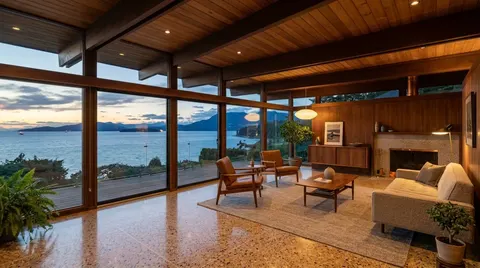
Deep Cove's housing is a real mix, more varied than most North Shore neighbourhoods, because the original cabin lots were built out over several distinct waves rather than one subdivision at one time. Some original cottages from the 1940s and 1950s are still standing, often expanded piecemeal over the decades by owners who added a bedroom here and enclosed a porch there without an architect or, in some cases, without a permit on file. West coast modern houses from the 1960s and 1970s make up a large share of the community, and newer, larger custom builds have filled in gaps over the last two decades.
The older cottages are the trickiest renovation candidates. Foundations, wiring, and plumbing in a house that has been added onto informally over seventy years frequently predate anything we would call adequate by current standards, and a proper renovation of one of these homes is often closer to a rebuild in scope than a typical whole-home renovation elsewhere. We tell clients this early: budget for discovery, because what is behind the walls of a 1948 cabin that has had four owners and three additions is rarely what the listing photos suggest.
Salt air changes what we specify on any exterior work here. Marine exposure corrodes standard fasteners, flashing, and hardware faster than it would inland, so stainless steel or hot-dip galvanized hardware is the default on Deep Cove exterior work, not an upgrade option. It costs more up front and it is worth it against replacing rusted hardware within a handful of years.

Waterfront and watercourse rules that reach beyond the shoreline
A property directly on Indian Arm or near Deep Cove Creek carries additional layers of review beyond the standard District building permit. Where a lot sits within a provincially mapped setback of a fish-bearing watercourse, the Riparian Areas Protection Regulation applies, and a Qualified Environmental Professional assessment is required before the District will approve a drainage or site plan touching that area. That assessment adds real time, typically measured in months rather than weeks, because it can trigger provincial or federal review on top of the municipal process.
This is not limited to homes with a private dock. Several smaller creeks run down through Deep Cove's hillside lots on their way to the inlet, and some are seasonal or partially piped, which means they do not always look like a protected watercourse to an untrained eye. Checking the District's environmental mapping for a specific parcel before finalizing a design is worth doing even on a lot that looks like ordinary hillside, because a creek setback discovered at permit review can force a redesign of a project that already has finished drawings.
Anchorage and foreshore use in the Cove itself are also managed by the District, separate from any building permit process, which is worth knowing if a project includes waterfront structures like a dock repair or replacement rather than the house itself.
The District of North Vancouver permit process
Deep Cove sits entirely within the District of North Vancouver, so the standard District permit process, zoning bylaw, and tree protection rules apply the same way they do in Lynn Valley, Edgemont, or Canyon Heights. Permit review runs 4 to 8 weeks for interior renovation work and 8 to 14 weeks for additions and structural work under normal conditions. Those timelines assume a complete application with no environmental or geotechnical review attached, which is the exception rather than the rule for many Deep Cove waterfront and hillside lots.
The District's Tree Protection Bylaw 7671 sets its general threshold at 75 centimetres of trunk diameter measured at breast height, with a longer list of protected trees regulated at any size, including trees on slopes greater than 20 degrees and trees within a streamside protection area. Deep Cove's forested hillside lots put a meaningful share of the community's mature trees into one of those protected categories regardless of trunk size, so an arborist assessment early in design is standard practice here, not an extra step.
For any project involving foundation work on a sloped Deep Cove lot, confirm with the District whether a geotechnical report is required before permit review. The District's general slope threshold for requiring one is a grade of 20 percent or more, and a meaningful share of Deep Cove's hillside properties clear that threshold well before the lot looks dramatically steep to the eye.
What a Deep Cove renovation costs in 2026
A substantial whole-home renovation in Deep Cove runs $220 to $350 per square foot in 2026, at the top of the general North Shore range. Access accounts for most of that premium over a comparable flat, easily reached lot, and the gap between an accessible Deep Cove property and a genuinely difficult one is wider than in any other North Shore neighbourhood we work in.
Kitchen renovations here follow the same access-driven math. A full kitchen renovation typically runs $90,000 to $150,000, similar to other North Shore neighbourhoods on the material and labour side, but delivery scheduling for cabinetry, appliances, and stone slabs takes longer coordination than a project with a driveway a delivery truck can simply back into.
The line item that surprises people most is staging. On many Deep Cove lots there is nowhere on the property itself to put a waste bin, a material stack, and multiple trade vehicles at the same time. Renting an off-site staging spot, or running a schedule that limits how many trades are on site on a given day, is routine planning here rather than an unusual accommodation.
- Whole-home substantial renovation: $220 to $350 per square foot
- Kitchen renovation, full scope: $90,000 to $150,000
- Concrete pump premium per pour: $1,500 to $4,000
- Qualified Environmental Professional assessment near a watercourse: $3,000 to $6,000
- Labour premium on steep, hand-carry lots: 15 to 30 percent
What we plan for before the first truck arrives
On every Deep Cove project, the road gets planned before the design does. We confirm delivery windows and staging with the client and, where the lot allows for it, with neighbours before demolition starts, because a schedule built around a five-minute truck turnaround somewhere else on the North Shore does not survive contact with Gallant Avenue on a summer weekend.
The second thing we confirm early is what environmental or geotechnical review applies to the specific parcel, checked against the District's mapping rather than assumed from the neighbourhood's general reputation. A lot two doors from the water and a lot on the ridge above the village can carry entirely different review requirements, and finding that out during design costs nothing compared to finding it out at permit submission.
Sources
Frequently asked questions
Why do Deep Cove renovations cost more than other North Vancouver neighbourhoods?
Access is the main driver. Narrow, winding roads, short steep driveways, and limited street parking mean concrete often needs a pump truck at $1,500 to $4,000 per pour instead of a direct chute, deliveries take longer to schedule, and labour-intensive work on the steepest lots carries a 15 to 30 percent premium because material sometimes has to move by hand or track barrow.
What municipality handles building permits in Deep Cove?
Deep Cove sits entirely within the District of North Vancouver, so it follows the District's standard zoning bylaw, tree protection bylaw, and permit process. Review runs 4 to 8 weeks for interior work and 8 to 14 weeks for additions and structural work, though waterfront and watercourse lots can add months for provincial or federal environmental review.
Does a Deep Cove property near the water need special environmental approval?
If the lot sits within the provincially mapped setback of a fish-bearing watercourse, the Riparian Areas Protection Regulation applies and a Qualified Environmental Professional assessment is required before the District approves a drainage or site plan, typically costing $3,000 to $6,000. Some of Deep Cove's smaller creeks are seasonal or partially piped and do not look like protected watercourses to an untrained eye, which is why checking the District's mapping for the specific parcel matters.
How old are the houses in Deep Cove?
The housing stock spans several distinct eras: original cabins and cottages from the 1940s and 1950s, often expanded piecemeal over decades, west coast modern homes from the 1960s and 1970s making up a large share of the community, and newer custom builds filling in over the last two decades. The older cottages frequently have foundations, wiring, and plumbing that predate current standards, making a full renovation closer to a rebuild in scope.
Why does Deep Cove exterior work use different hardware than other North Shore projects?
Marine exposure from Indian Arm corrodes standard fasteners, flashing, and hardware faster than inland locations see. Stainless steel or hot-dip galvanized hardware is the default specification on Deep Cove exterior work rather than an upgrade, since it costs more initially but avoids replacing corroded hardware within a few years.
How much does a whole-home renovation cost in Deep Cove in 2026?
A substantial whole-home renovation in Deep Cove runs $220 to $350 per square foot in 2026, at the top of the general North Shore range. Access accounts for most of the premium over a comparable, easily reached lot elsewhere on the North Shore, and the gap between an accessible Deep Cove property and a difficult one is wider than in any other North Shore neighbourhood we work in.
Do the same tree protection rules apply in Deep Cove as the rest of the District?
Yes. Deep Cove falls under the District of North Vancouver's Tree Protection Bylaw 7671, with a general threshold of 75 centimetres of trunk diameter at breast height, plus a list of protected trees regulated at any size, including trees on slopes over 20 degrees and trees within a streamside protection area. Deep Cove's forested hillside lots put many mature trees into a protected category regardless of trunk size.
Will my Deep Cove renovation need a geotechnical report?
If the lot slopes at 20 percent or more, the District of North Vancouver requires a geotechnical report from a registered professional engineer before it reviews a permit application involving foundation or site work. A meaningful share of Deep Cove's hillside properties clear that threshold well before the grade looks dramatically steep to the eye, so it is worth confirming early in design.
Where do trades park and stage materials on a Deep Cove project?
On many Deep Cove lots there is no room on the property for a waste bin, a material stack, and trade vehicles at the same time. Renting an off-site staging spot or scheduling a limited number of trades on site per day is standard practice here, planned before demolition starts rather than improvised once work begins.
Can large delivery trucks and concrete trucks reach every Deep Cove property?
Not directly on many streets. Narrow, winding roads and short driveways mean a standard concrete truck often cannot position close enough to pour directly, which is why a pump truck is common at $1,500 to $4,000 per pour. Large buses are already restricted from entering Deep Cove to manage traffic, which reflects how tight the approach roads are for any large vehicle.
What does a kitchen renovation cost in Deep Cove?
A full kitchen renovation in Deep Cove typically runs $90,000 to $150,000, similar to material and labour costs elsewhere on the North Shore. The difference is coordination: delivery scheduling for cabinetry, appliances, and stone slabs takes longer planning on Deep Cove's narrow roads than on a property with straightforward truck access.
Related service
Home renovation
See how we handle home renovation projects across the North Shore.
Learn about home renovationWhere this applies
Related articles