


The short answer
An unauthorized secondary suite carries three real risks: an insurer can reduce or deny a claim tied to the suite if a fire or flood starts there and the unit wasn't disclosed, a mortgage lender may discount or exclude its rental income (CMHC-insured mortgages require the suite be legal to count that income at all), and a municipality can order it decommissioned if discovered. Bringing an existing suite up to code costs less than most homeowners assume, since much of the finished interior often stays.
Insurance: the risk is claim time, not premium time
Most homeowners assume the risk with an unauthorized suite is that their insurer will find out and cancel the policy. That's rarely how it plays out. The real exposure shows up if something goes wrong inside the suite itself: if a fire starts there and the unit was never disclosed as a rental, the insurer can reduce or deny the portion of the claim tied to that unit, on the basis that the risk they priced the policy against wasn't the risk that actually existed on the property.
This isn't a hypothetical fine-print clause. It's the specific scenario insurance brokers flag most often with secondary suites: an undisclosed rental unit changes the fire load, the occupancy pattern, and the liability exposure of the property, all of which affect what the policy is actually covering. Disclosing a suite to your insurer, whether it's fully legal or not, at minimum puts the coverage question on the table before a claim rather than during one.
Mortgage lending: it depends on the lender, and it depends on the mortgage type
The common claim that lenders universally reject rental income from an unauthorized suite isn't quite right, and it's worth getting this one precisely correct because it changes what's actually at stake. Many conventional lenders in BC will still count rental income from a non-conforming or unauthorized suite, provided an appraiser confirms the unit is self-contained and safe to occupy. Lenders typically credit 50% of the gross rental income toward your total income for qualification purposes, whether or not the suite is registered.
Where the rule tightens is on insured mortgages. Any mortgage with less than 20% down requires default insurance through CMHC, Sagen, or Canada Guaranty, and these insurers require the suite be legal for its rental income to count toward qualification at all. If you're buying with less than 20% down and the deal depends on suite income to qualify, an unauthorized suite can be the difference between an approval and a decline, not just a smaller number.
The practical takeaway: a legal, registered suite gives you access to every lending path. An unauthorized suite narrows your options to conventional lenders willing to accept it after an appraisal, and removes the insured-mortgage path entirely if the income is what makes the application work.
Municipal exposure: usually discovered by accident, not by inspection sweep
Neither the City nor the District of North Vancouver runs door-to-door enforcement looking for unauthorized suites. In practice, an unpermitted suite most often surfaces when a municipal inspector is already on-site for something unrelated, a permit for a different renovation, a complaint about noise or parking, or a real estate transaction that triggers a property inquiry, and notices the suite in passing.
When that happens, the municipality's options range from requiring the suite be brought up to code within a set timeframe, to requiring it be decommissioned and the space returned to its original use. Which outcome applies depends on how far the suite is from meeting code: a suite missing only paperwork is a very different conversation than one missing fire separation and proper egress.
Resale: it becomes the buyer's problem, priced into the offer
An unauthorized suite doesn't stop a home from selling, but it does change how a buyer's agent and lender treat the listing. A suite described as a mortgage helper in the listing but absent from the property's tax and utility notice, or missing permit history in the City or District's records, tends to get flagged during a buyer's due diligence, and a knowledgeable buyer will price that risk into their offer rather than take the seller's description at face value.
If you're planning to sell within the next few years and currently have an unauthorized suite that's structurally sound, legalizing it before listing is usually the better financial move than letting a buyer discover the gap and negotiate around it.
What it actually takes to legalize an existing suite
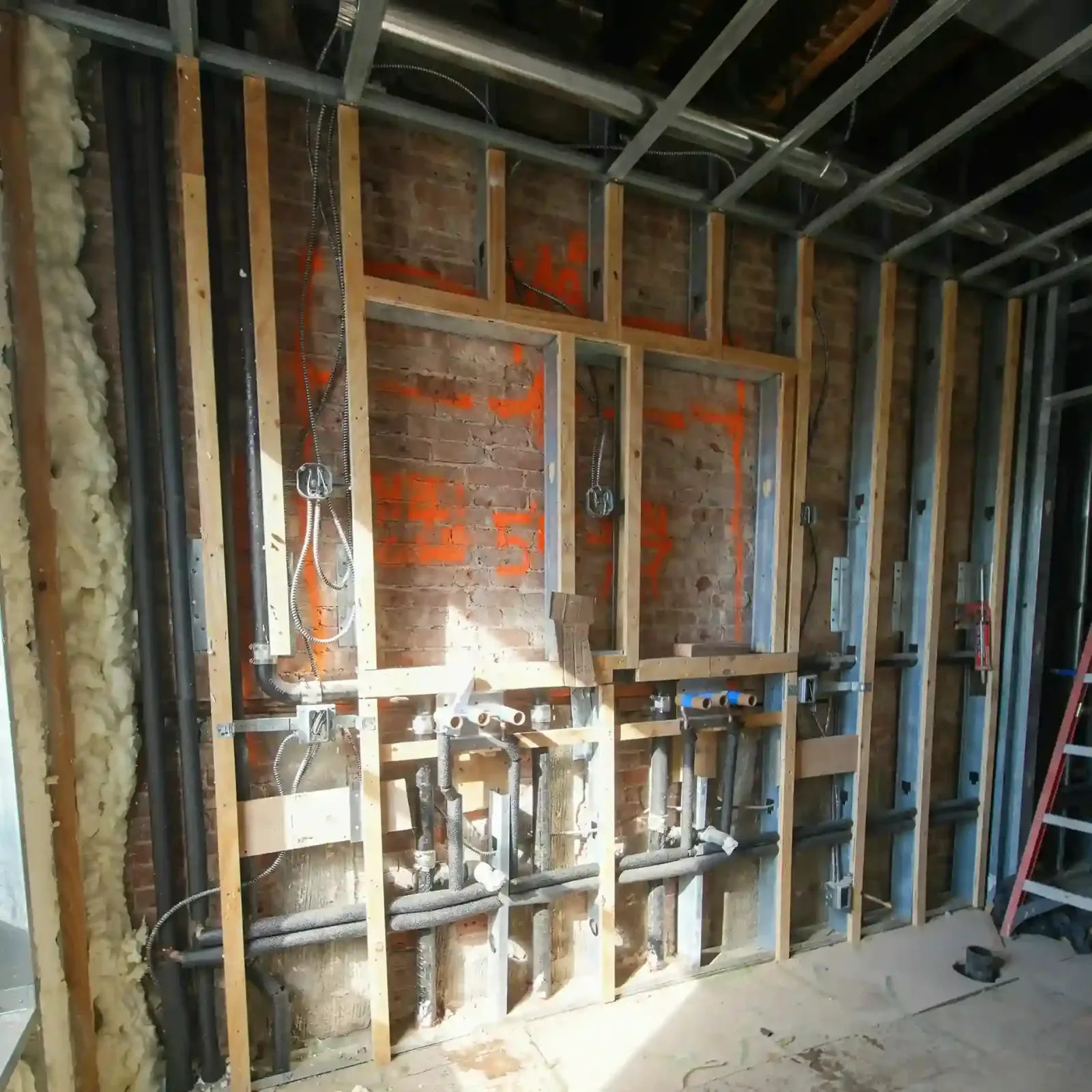
Legalizing an unauthorized suite starts with an assessment against the same checklist that applies to a new build: fire separation, egress window size and clearance, a dedicated electrical subpanel, minimum ceiling height, and a private entrance. The good news for most homeowners is that legalizing an existing suite is rarely a full rebuild. Finishes, cabinetry, and flooring that are already in decent shape typically stay. What usually needs work is what's hidden: the fire-rated assembly in the ceiling, the size of an undersized window, or an electrical panel that was never separated from the main house.
We start every legalization assessment with a site visit specifically checking those hidden items against code, because that's where the real cost lives, not in the parts of the suite you can see. From there the path is the same as a new suite: drawings if structural changes are needed, a building permit, the construction work itself, and the applicable registration step for whichever municipality the property sits in.
Where to start if you're not sure about a suite you own
If you inherited a suite with a home purchase, or built one years ago without pulling a permit, the first useful step isn't a full renovation quote. It's an honest assessment of exactly which code items the suite meets and which it doesn't, so you know whether you're looking at a paperwork gap or a construction gap. That distinction changes both the cost and the timeline, and it's worth knowing before a lender, an insurer, or a buyer forces the question for you.
Sources
Frequently asked questions
Will my insurance deny a claim because of an unauthorized secondary suite?
An insurer can reduce or deny the portion of a claim tied to an unauthorized suite if a fire or flood starts there and the unit was never disclosed, since the undisclosed rental changes the fire load and liability exposure the policy was priced against. Disclosing the suite to your insurer, legal or not, puts the coverage question on the table before a claim rather than during one.
Can I still get a mortgage with an unauthorized secondary suite?
Yes, many conventional lenders in BC will count rental income from an unauthorized suite if an appraiser confirms the unit is self-contained and safe, typically crediting 50% of the gross rental income toward qualification. The exception is any insured mortgage with less than 20% down, since CMHC, Sagen, and Canada Guaranty all require the suite be legal for its rental income to count at all.
Does an unauthorized suite affect a high-ratio mortgage differently than a conventional one?
Yes, significantly. A conventional mortgage with 20% or more down can often still credit unauthorized-suite rental income after an appraisal. A high-ratio mortgage under 20% down requires default insurance through CMHC, Sagen, or Canada Guaranty, and all three require the suite be legal before its rental income can be used to qualify at all.
How does a municipality find out about an unauthorized secondary suite?
Neither the City nor the District of North Vancouver runs proactive inspection sweeps for unauthorized suites. Discovery most often happens when an inspector is already on-site for an unrelated permit, a noise or parking complaint prompts a property inquiry, or a real estate transaction surfaces the property's permit history.
What happens if North Vancouver finds an unauthorized secondary suite?
The municipality can require the suite be brought up to code within a set timeframe or require it be decommissioned and the space returned to its original use. Which outcome applies depends on how far the suite is from meeting code: a suite missing only registration paperwork is treated differently than one missing fire separation or proper egress.
Does an unauthorized suite affect selling my house?
It doesn't stop a sale, but a suite described as a mortgage helper in a listing without matching permit history or tax notice records tends to get flagged during a buyer's due diligence, and a knowledgeable buyer will price that risk into their offer rather than accept the seller's description at face value.
Is it expensive to legalize an existing unauthorized secondary suite?
Often less than homeowners expect, since finishes, cabinetry, and flooring already in decent condition typically stay as-is. The real cost usually sits in hidden items: correcting a fire-rated ceiling assembly, enlarging an undersized egress window, or separating the electrical panel from the main house, which is why an assessment against the code checklist should come before a renovation quote.
What is checked when legalizing an existing secondary suite?
The same checklist that applies to a new suite build: one-hour fire separation from the main house, egress window size and clearance in every bedroom, a dedicated electrical subpanel, a minimum 1.95-metre ceiling height, and a private entrance. Each item that already meets code is one less thing the legalization project needs to touch.
Do all mortgage lenders in BC treat unauthorized suite income the same way?
No. Treatment varies by lender: some conventional lenders accept unauthorized-suite income after an appraisal confirms the unit is self-contained and safe, while others reject it entirely if the suite lacks fire separation or proper egress. This is why confirming a specific lender's policy matters more than relying on a general rule.
Should I disclose an unauthorized suite to my insurance broker even if I'm not renting it out right now?
Yes. The insurance risk comes from the suite's existence and occupancy pattern, not only from active rental income, so disclosing it, even a vacant or family-occupied suite, keeps the coverage question resolved before a claim rather than becoming a dispute during one.
Related service
Secondary Suites
See how we handle secondary suites projects across the North Shore.
Learn about secondary suitesWhere this applies
Related articles