


The short answer
Secondary suite additions return the most, roughly 85% of cost, because they add both living space and rental income. Curb appeal work returns about 78%, windows and doors 74%, kitchens 72%, basement finishing 70%, decks 68%, and home additions the least at around 55%. A renovation with a lower return isn't automatically a bad idea: it depends on whether you're renovating to sell or to live in the house longer.
What ROI actually measures, and what it doesn't
Renovation ROI is the percentage of what you spend that comes back to you in increased home value at resale. Spend $100,000 on a project with 72% ROI, and your home is worth roughly $72,000 more than it was before. You're still $28,000 out of pocket. That's the part people skip over when a contractor or a magazine article throws around an ROI number like it means the renovation pays for itself. It doesn't. It reduces the net cost.
The other thing ROI doesn't capture is how much you use the space. A bathroom with 65% ROI that you use twice a day for the next ten years is doing more for you than the number suggests. An addition with 55% ROI that finally gives your family a functional layout is worth more than the spreadsheet says, if you're not selling next year.
So treat ROI as one input, not the whole decision. It matters most when you're renovating within a year or two of listing. It matters least when you're renovating to stay for a decade or more.
The ranking, from highest return to lowest
These figures come from RealDream's own project data blended with Greater Vancouver resale comparables, and they hold up reasonably well across North Vancouver and West Vancouver, with one caveat: West Vancouver's higher price points compress ROI percentages slightly on cosmetic work, because the dollar cost of premium materials climbs faster than resale value does at that end of the market.
| Renovation type | ROI | Why |
|---|---|---|
| Secondary suite addition | 85% | Adds living space plus a rental income stream buyers value directly |
| Exterior / curb appeal | 78% | First impression work: siding, paint, landscaping, entry updates |
| Windows and doors | 74% | Visible upgrade, lower utility bills, buyers notice immediately |
| Kitchen renovation | 72% | Most scrutinized room in any showing |
| Basement finishing | 70% | Adds square footage at below-average cost per square foot |
| Deck / outdoor living | 68% | Valued in North Shore's outdoor-oriented market |
| Home addition | 55% | New square footage costs more per foot to build than it adds in resale value |
Why secondary suites top the list
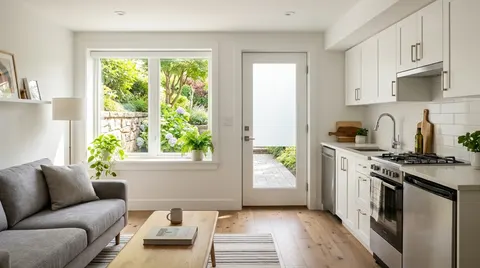
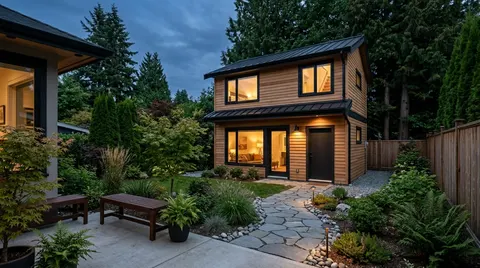
This isn't close. A secondary suite outperforms every other renovation type because it does two things at once: it adds counted living space, and it adds an income stream a buyer can underwrite into their own mortgage qualification. In a market where carrying costs are a real constraint on who can buy your house, a legal suite with a tenant already in place, or even just the potential for one, changes the buyer pool.
The 85% figure assumes a legal, permitted suite that meets BC Building Code requirements for a secondary suite: separate entrance, proper fire separation, egress windows in every bedroom, and its own smoke and CO detection. An unpermitted suite doesn't get this ROI. It gets a discount, because a buyer's lender and insurer both want to see the permit on file, and an unauthorized suite is a liability RealDream sees derail deals at the worst possible time, during subject removal.
North Vancouver and West Vancouver lots vary a lot in whether a suite is even feasible: ceiling height in the existing basement, grade around the foundation, and how much daylight you can get into a bedroom window all matter before cost does.
Curb appeal is the most underrated line item on this list
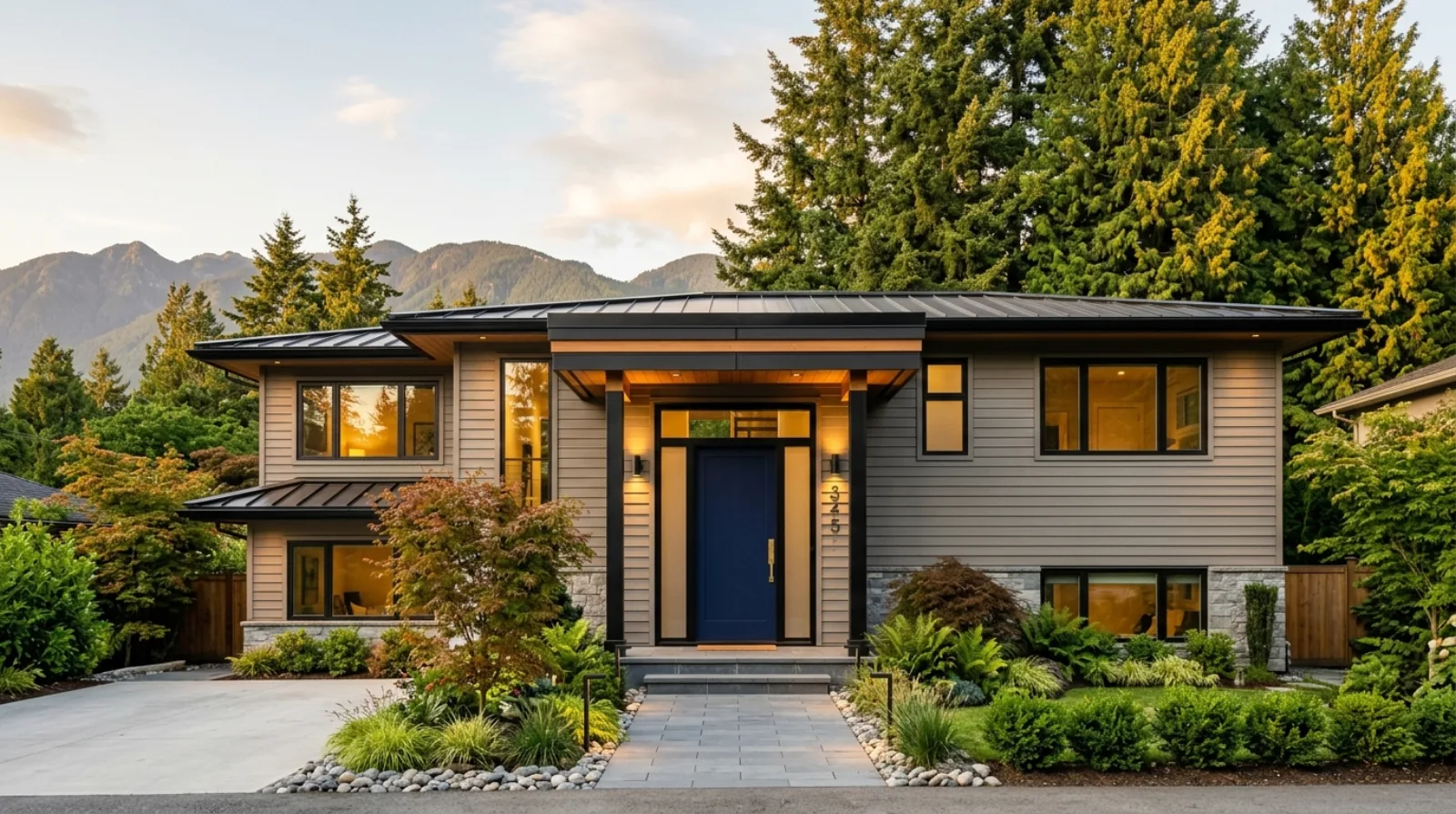
Second place surprises people. Exterior and curb appeal work (new siding, exterior paint, updated entry door, landscaping, sometimes just pressure washing and fixing the gutters) returns 78%, and it's usually the cheapest project on this entire list in absolute dollars.
The reason is straightforward: every single buyer sees the exterior before they see anything else, including a buyer who ultimately doesn't book a showing because the outside told them everything they needed to know. A dated exterior on an otherwise well-kept 1970s North Shore rancher can shave real dollars off the eventual sale price, before anyone has walked through the front door to see the renovated kitchen inside.
This is also the renovation category most homeowners skip, because it doesn't feel like the fun project. A new kitchen is exciting. New Hardie board siding is not. But dollar for dollar, it does more work than almost anything else on this list.
Kitchens: high emotional pull, middling ROI
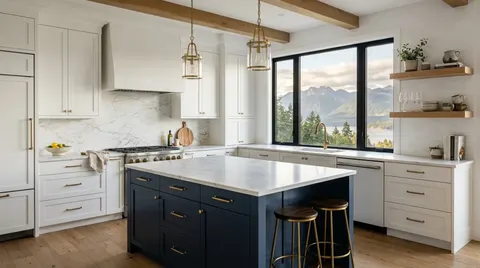
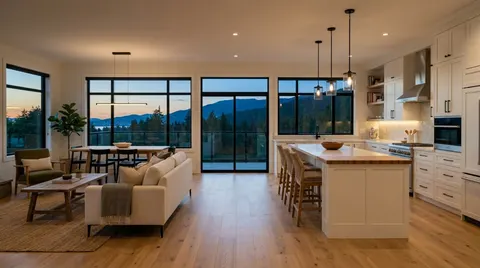
A kitchen renovation returns 72%, which is solid but not the top of the list, and it's worth being honest about why. Kitchens are expensive to renovate well: cabinetry, countertops, appliances, and layout changes add up fast, and the cost per square foot on a kitchen is higher than almost any other room in the house. The 72% ROI is a genuinely good return, but on a $90,000 North Vancouver kitchen, that's still roughly $25,000 that doesn't come back.
Where kitchens earn their reputation is in speed to sale and buyer psychology, not pure dollar return. A dated kitchen is the single most common reason a North Shore listing sits longer than comparable homes nearby, and a renovated kitchen is what gets a house talked about in a multiple-offer situation. If you're renovating specifically to sell within the next year, kitchen work still belongs near the top of the priority list, ROI ranking aside.
Basements and decks: solid, dependable, unglamorous
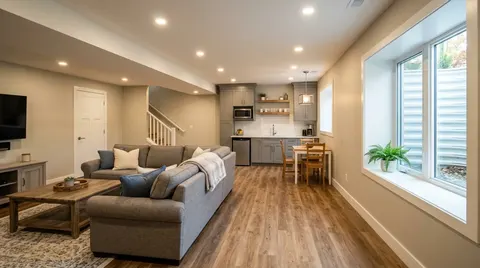
Basement finishing (70% ROI) adds counted square footage at a lower cost per square foot than almost any above-grade renovation, because the shell (foundation, framing, roof) already exists. You're building interior space inside a structure you're not paying to build from scratch. On a North Shore home with an unfinished or partially finished basement, this is often the single most efficient way to add livable square footage.
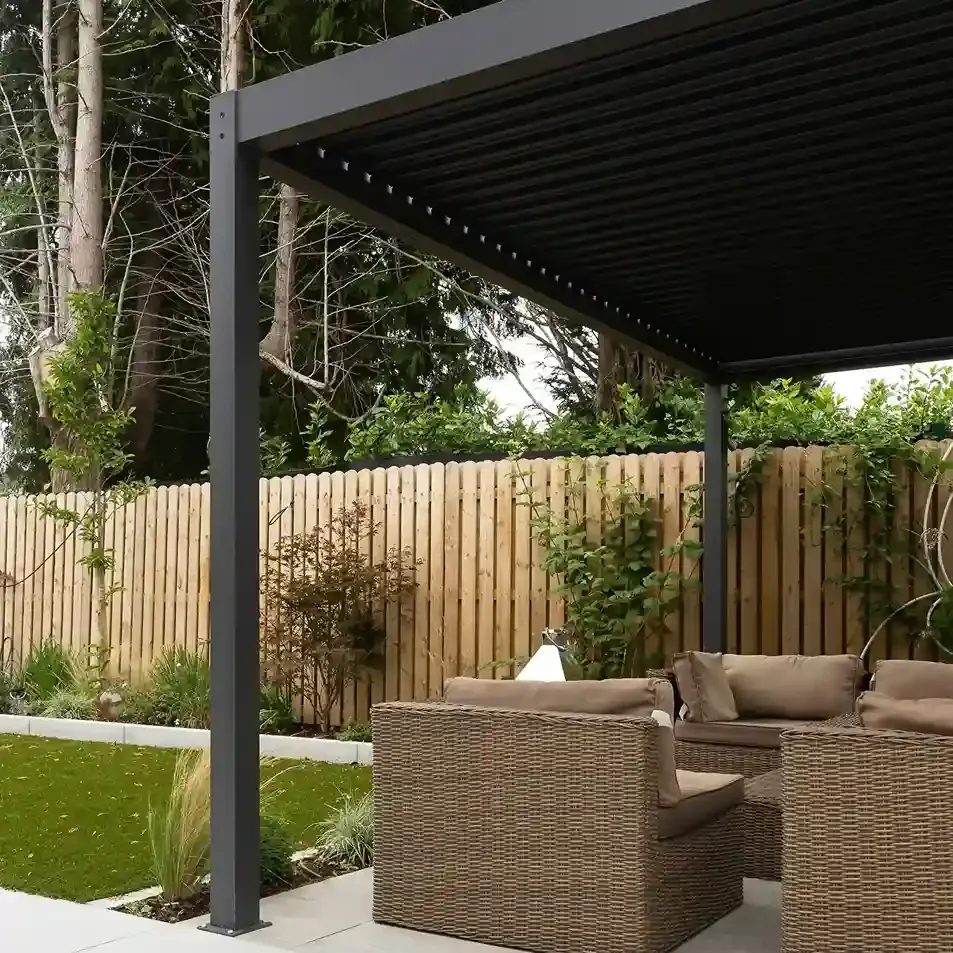
Decks and outdoor living space return 68%, and the North Shore's outdoor-oriented buyer pool pushes that number up compared to other regions. A well-built deck off a kitchen or dining area, especially one that takes advantage of a view lot in Deep Cove, Edgemont, or the British Properties, closes the gap between the indoor and outdoor living space buyers are looking for here.
Additions: the lowest ROI, and why that's often fine
Home additions sit at the bottom of this list at roughly 55% ROI, and the reason is simple math: new construction costs more per square foot than existing space, because you're paying for a new foundation or footings, new framing, a new roofline tie-in, and often new mechanical runs to reach the addition. All of that costs money that doesn't fully show up as resale value, because a buyer values square footage at something closer to the neighbourhood's average price per foot, not at what it cost you to build it.
This is the renovation type where the disconnect between ROI and actual value to you is largest. Families add a second storey or a rear addition because the house doesn't work for how they live, not because the math pencils out at resale. If you plan to stay 10, 15, 20 years, a 55% return on an addition that finally gives your family a functional home is a reasonable trade. If you're planning to sell within 2 to 3 years, an addition is one of the harder renovation types to justify on ROI alone.
How to use this list on your own project
Start with your actual timeline. Selling within a year or two: weight curb appeal and kitchen work heavily, and think hard before committing to an addition. Staying put for a decade or more: ROI still matters, but quality of life and how the space works for your family should carry more weight in the decision.
Then look at what your neighbourhood supports. Over-improving for the area is a real risk on the North Shore's more affordable pockets: a $200,000 kitchen in a neighbourhood of $1M homes won't recover its full cost, because buyers shopping in that price range aren't expecting, or paying for, that level of finish. Match your renovation spend to what comparable homes nearby are actually selling for.
And run the numbers on more than one project. Our Renovation ROI Calculator lets you combine several renovation types (say, a kitchen plus curb appeal plus a basement) and see the blended return across the whole plan, along with your estimated new home value.
Frequently asked questions
What is the highest ROI renovation on the North Shore?
A legal secondary suite addition, at roughly 85% ROI. It's the only common renovation type that adds both counted living space and a rental income stream, which is why it outperforms every other project on the list, including kitchens and additions.
Is a kitchen renovation worth it if the ROI isn't the highest?
Usually yes, because kitchen ROI (72%) undercounts its real effect on how fast a home sells and how it performs in a multiple-offer situation. A dated kitchen is the most common reason a North Shore listing sits longer than comparable homes nearby, so kitchen work earns its keep even without topping the ROI list.
Why does an addition have the lowest ROI of any renovation type?
New construction costs more per square foot than existing space, because you're paying for new foundation work, framing, roofline tie-in, and mechanical runs. That extra cost doesn't fully translate to resale value, since buyers price new square footage closer to the neighbourhood average per-foot price, not what it cost to build. That puts addition ROI around 55%, the lowest of the common renovation types.
Does an unpermitted secondary suite still get 85% ROI?
No. The 85% figure assumes a legal, permitted suite meeting BC Building Code requirements: separate entrance, proper fire separation, egress windows in every bedroom, and its own smoke and CO detection. An unpermitted suite gets discounted at resale because a buyer's lender and insurer both want the permit on file, and it can derail a deal during subject removal.
Why does curb appeal have such a high ROI compared to interior work?
Every buyer sees the exterior first, including buyers who decide not to book a showing based on the outside alone. Exterior work like siding, paint, and landscaping is also usually the cheapest project on the ROI list in absolute dollars, which pushes the percentage return higher even though the dollar impact on sale price is real.
Should I renovate based on ROI if I'm not planning to sell?
ROI matters less the longer you plan to stay. If you're renovating to live in the house for 10 or more years, quality of life and how the space actually functions for your family should weigh more heavily than resale return. A 55% ROI addition that fixes a layout that's never worked for your family is still a reasonable investment under that timeline.
What's the risk of over-improving for my North Shore neighbourhood?
A renovation that's out of proportion to what comparable homes nearby sell for won't recover its full cost. A $200,000 kitchen in a neighbourhood of $1M homes is a common example: buyers shopping that price range aren't expecting or paying for that level of finish, which can drop ROI by 10 to 20 percentage points below the typical range.
Does West Vancouver have different renovation ROI than North Vancouver?
The rankings hold across both municipalities, but West Vancouver's higher price points compress ROI percentages slightly on cosmetic work, because the dollar cost of premium materials rises faster than resale value does at that end of the market. High-return categories like secondary suites and curb appeal still perform well in both municipalities.
How much does a legal secondary suite cost to build on the North Shore?
Most North Shore secondary suite conversions run $60,000 to $150,000 depending on whether the basement needs excavation for ceiling height, how much daylighting the bedroom windows need, and the scope of the kitchen and bathroom fit-out. At 85% ROI, a $100,000 suite adds roughly $85,000 in home value on top of the rental income potential.
Can I combine multiple renovations and still get a good blended ROI?
Yes, and it's often the smartest approach. Pairing a lower-ROI project like an addition with a high-ROI project like curb appeal or a suite conversion raises your blended return across the full renovation budget. RealDream's Renovation ROI Calculator lets you combine project types to see the weighted average return and new estimated home value for your specific plan.
Related service
Home Renovation
See how we handle home renovation projects across the North Shore.
Learn about home renovationWhere this applies
Related articles