


The short answer
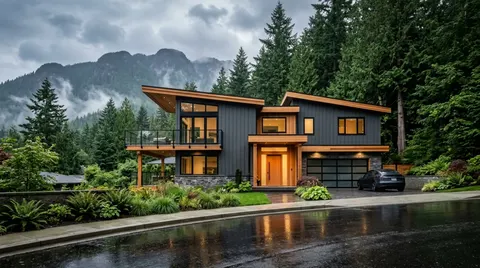
A full-home renovation on a Norgate rancher in North Vancouver typically runs $200,000 to $350,000, since the homes were built between 1949 and 1952 on concrete slab-on-grade foundations that rule out a basement. The first decision on nearly every project is what to do with the original radiant in-floor heating embedded in the slab: repair it, replace it with forced air or mini-splits, or run a hybrid system.
An airfield that never happened
The land Norgate sits on was originally planned to become the Capilano Air Park, an airfield proposed in 1945 with two runways. It never got funded, partly because it was deemed unsafe so close to the Lions Gate Bridge. Developer Norman Hullah of Hullah Construction bought the land instead and built a California-style subdivision: 480 homes constructed between 1949 and 1952 using assembly-line methods, 50 at a time, with the operation running its own local mill.
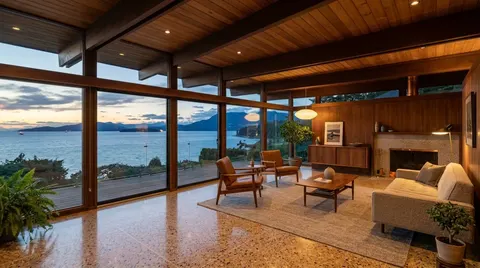
The marketing line was 'Across the Bridge to Modern Living,' and the homes were genuinely modern for the era: one-level ranchers on 6,000 to 7,000 square foot lots, concrete slab-on-grade foundations, radiant in-floor heating powered by gas boilers (a feature usually reserved for more expensive homes at the time), and natural gas instead of oil tanks. They were meant to be temporary housing. Seventy-five years later, they're still here, and they're the most affordable single-family housing stock on the North Shore.
The radiant floor heating decision comes first
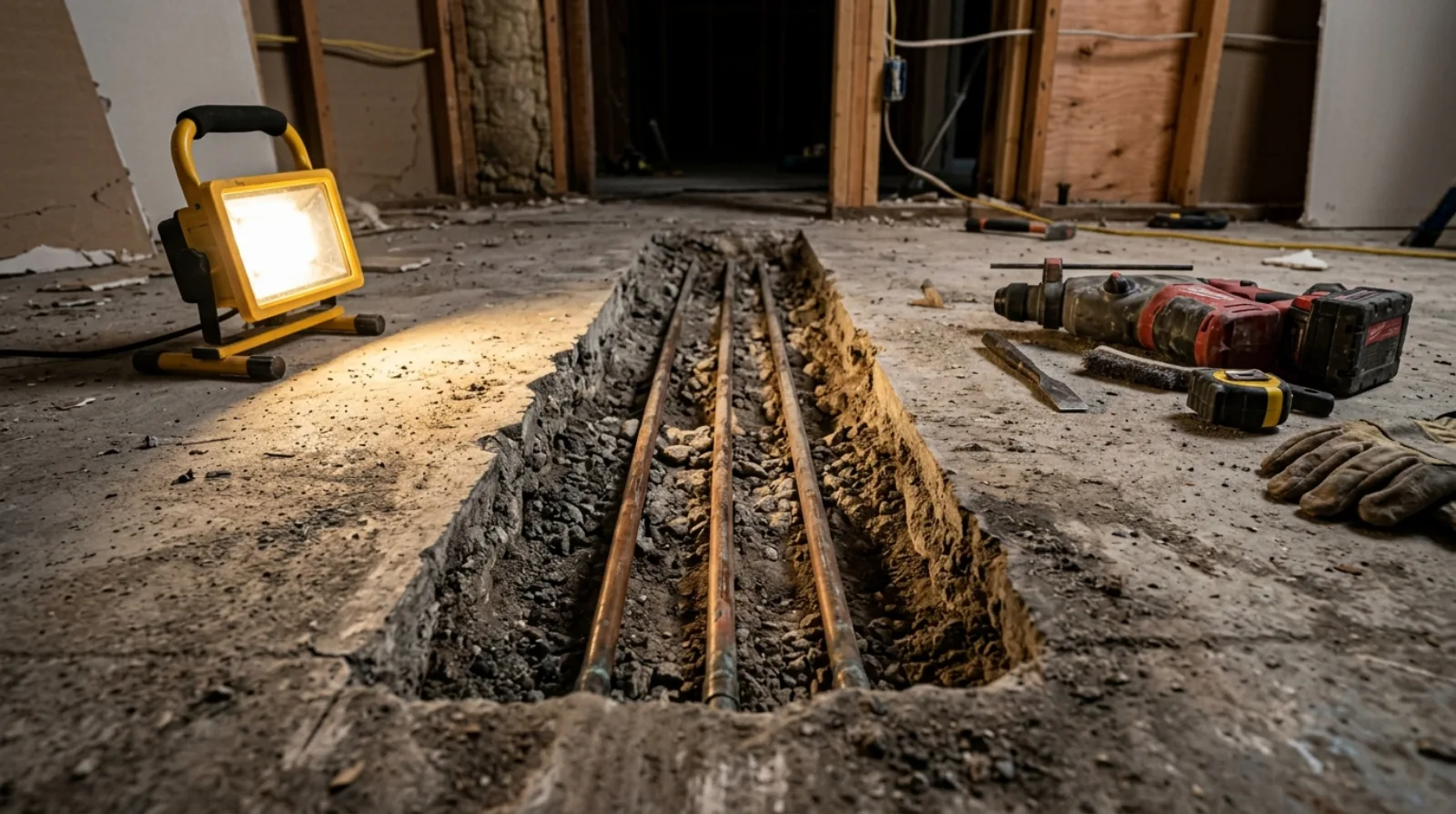
Every Norgate renovation we've done starts with the same question: what's happening with the heating system. The original design ran hot water through pipes embedded directly in the concrete slab, heated by a gas boiler. Some of these systems still work fine 75 years later. Others have failed outright or been patched over the decades with baseboard heaters bolted on as a workaround.
You can't answer this question by looking at the floor. We pressure-test the existing loops before any demolition starts, because the answer changes the rest of the project. Repairing a functioning radiant system keeps the original comfort profile and is usually the cheapest path if the loops test sound. Replacing it with forced air or ductless mini-splits means cutting into a slab that wasn't designed for ductwork, which adds cost but gives you air conditioning and zone control the original system never had. Some homeowners land on a hybrid: mini-splits for cooling, radiant left in place for heat.
This decision has to happen before kitchen and bathroom layouts get finalized, not after, because it affects where floor cuts happen and where new mechanical runs can go.
No basement, so expansion goes lateral or up
The concrete slab-on-grade foundation that made these homes fast and cheap to build in 1950 creates the single biggest constraint on renovating them today: there's no basement. You can't dig one out under an existing slab without essentially rebuilding the foundation, which almost never pencils out against the value of the home.
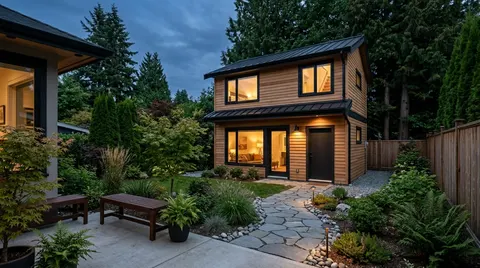
That rules out the basement suite or basement rec room that's the default expansion move almost everywhere else on the North Shore. In Norgate, if a family needs more space, the options are a lateral addition on the lot, a second-storey addition on top of the existing structure, or a laneway home. All three are things we do regularly here, and all three need to be planned around the slab from the start rather than treated as an afterthought once the kitchen renovation is already underway.
Homes here run 900 to 1,600 square feet on 6,000 to 7,000 square foot lots, so there's usually room on the lot itself even when there's no room below it.
The affordability case, and what a renovation actually buys
As of November 2022, Norgate was the lowest-priced neighbourhood for single-family detached homes in North Vancouver. Median household income here sits around $78,000, roughly 9 percent below the BC average. That affordability is exactly why the renovation math works so well: a $200,000 to $350,000 full renovation can turn a 75-year-old rancher into a modern, energy-efficient home at a total cost still well below what a comparable home would cost anywhere else on the North Shore.
Location helps the case too. Norgate sits minutes from the Lions Gate Bridge, close to Park Royal shopping, and served by bus routes 240, 241, 246, 247, 250, 253, 254, 255, and the N24 night bus along Marine Drive. Buses make up just 2 percent of traffic crossing the Lions Gate Bridge but carry 28 percent of the people crossing it during morning rush, which tells you something about how many Norgate residents skip the car for the commute into Vancouver.
Lions Gate Village is changing the neighbourhood next door
The Lions Gate Village development is transforming the area immediately adjacent to Norgate into a pedestrian-oriented neighbourhood with townhomes, apartments, and commercial space. Ebb & Flow (150 townhomes), Belle Isle (88 townhomes), Holland Row (23 townhouses), and a mixed-use condo development at West 3rd Street and Bewicke Avenue are all part of it, with a mixed-use project entering the Norgate area itself. The District approved two additional projects creating 127 more units in 2024.
For existing Norgate homeowners, that means more amenities within walking distance over the next several years, which is worth factoring into a renovation decision on a house you're planning to stay in for a while.
An IB pathway most North Shore neighbourhoods don't have
Norgate Xwemelch'stn Community Elementary at 1295 Sowden Street, established in 1951, is an authorized IB World School offering the International Baccalaureate Primary Years Programme, and it received official designation as a community school in 1996. The school shares the traditional Squamish name Xwemelch'stn, meaning 'place of the Crazy River' or 'Beautiful River,' the same name as the Capilano reserve, and the area was historically blueberry fields cultivated by Squamish ancestors.
The feeder secondary, Carson Graham Secondary, is also an IB World School, offering both the Middle Years Programme for grades 8 to 10 and the Diploma Programme for grades 11 and 12. That's a continuous IB pathway from elementary through graduation, which is unusual for a public school system and a real draw for education-focused families weighing whether to renovate here rather than move.
What we take on in Norgate
Full-home renovation, kitchen and bathroom renovation, home additions, laneway homes, and project management make up our Norgate work. Post-war slab-on-grade homes have specific traits: radiant heating embedded in the concrete, compact layouts, and foundation constraints that rule out basements. Renovating one well means planning around those conditions from the first site visit, not discovering them once the floor is already cut open.
Frequently asked questions
Can I finish a basement in a Norgate home?
Generally no. Norgate homes were built on concrete slab-on-grade foundations in 1949 to 1952, which makes below-grade work like a basement not feasible in most cases without essentially rebuilding the foundation. That shifts expansion toward lateral additions, second-storey additions, or a laneway home instead.
What do I do about the original radiant floor heating in a Norgate house?
This is usually the first decision in a Norgate renovation. The heating pipes are embedded directly in the concrete slab and powered by a gas boiler, and some systems still work fine while others have failed or been supplemented with baseboard heaters. We pressure-test the existing loops before demolition, then choose between repairing the radiant system, replacing it with forced air or mini-splits, or running a hybrid approach.
Is renovating a Norgate rancher a good investment?
Norgate has the most affordable single-family housing on the North Shore, with median household income around $78,000, about 9 percent below the BC average. A $200,000 to $350,000 full renovation can turn a 75-year-old rancher into a modern, energy-efficient home at a total cost still well below what a comparable home would cost elsewhere on the North Shore.
Why were Norgate homes built on concrete slabs instead of basements?
Developer Norman Hullah built 480 homes here between 1949 and 1952 using assembly-line construction methods, 50 homes at a time, with the operation running its own local mill. Slab-on-grade foundations with embedded radiant heating were fast to build and, at the time, a modern feature usually reserved for more expensive homes. The tradeoff, no basement, is what today's renovations have to work around.
Can I add a laneway home or second-storey addition in Norgate?
Yes, and these are the two most common ways Norgate homeowners add space, since a basement addition is generally not feasible on the slab-on-grade foundation. Lots here run 6,000 to 7,000 square feet, which usually leaves room for a lateral addition or a laneway home even when there's no room below the existing structure.
How does Norgate's affordability compare to other North Shore neighbourhoods?
As of November 2022, Norgate was the lowest-priced neighbourhood for single-family detached homes in North Vancouver. That makes a full renovation, typically $200,000 to $350,000, a way to get a modern, energy-efficient home at a total cost still well below what a comparable home costs in most other North Vancouver neighbourhoods.
Are Norgate homes mostly the same age and layout?
Yes. Norgate is dominated by post-war slab-on-grade homes, 900 to 1,600 square feet, built in a fairly compact and consistent layout between 1949 and 1952. That consistency means the radiant heating and foundation questions are similar from house to house, which is why we plan those two issues first on nearly every Norgate project.
What schools serve Norgate, and why do families choose it for education?
Norgate Xwemelch'stn Community Elementary at 1295 Sowden Street is an authorized IB World School offering the International Baccalaureate Primary Years Programme, and the feeder secondary, Carson Graham Secondary, is also an IB World School offering both the Middle Years and Diploma Programmes. That creates a continuous IB pathway from elementary through graduation, which is unusual for a public school system.
What is Lions Gate Village, and how does it affect Norgate?
Lions Gate Village is a development immediately adjacent to Norgate that's adding townhomes, apartments, and commercial space, including Ebb & Flow (150 townhomes), Belle Isle (88 townhomes), and Holland Row (23 townhouses), with a mixed-use project entering the Norgate area itself. The District approved two more projects adding 127 units in 2024, which brings more walkable amenities to existing Norgate homeowners over the coming years.
What does a full renovation cost in Norgate?
A full-home renovation in Norgate typically runs $200,000 to $350,000 over 6 to 10 months. The radiant floor heating decision, repair, replace, or hybrid, comes first and shapes the rest of the budget, since it affects where floor cuts happen and where new mechanical runs can go before kitchen and bathroom layouts get finalized.
What are the most common renovation projects in Norgate?
Full-home renovation, kitchen and bathroom renovation, home additions, and laneway homes are the most common projects we take on in Norgate, generally paired with resolving the radiant heating and foundation constraints that come with the neighbourhood's post-war slab-on-grade housing stock.
How do I get to and from Norgate for a daily commute during a renovation?
Norgate sits minutes from the Lions Gate Bridge and is served by bus routes 240, 241, 246, 247, 250, 253, 254, 255, and the N24 night bus along Marine Drive. Buses represent just 2 percent of traffic crossing the Lions Gate Bridge but carry 28 percent of the people crossing it during morning rush, which matters if you're planning to stay in the home during construction.
Related service
Home Renovation
See how we handle home renovation projects across the North Shore.
Learn about home renovationWhere this applies
Related articles