

The short answer
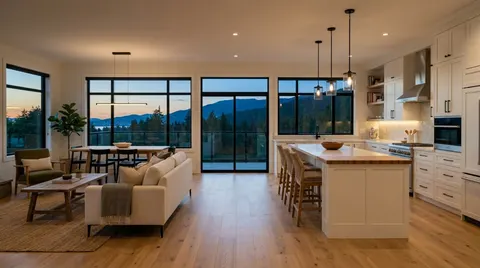
A full-home renovation in Canyon Heights, North Vancouver runs $250 to $400 per square foot, higher than the general North Shore range because grades of 15 to 30 percent are common and site development, retaining walls, stepped foundations, and drainage, can absorb 15 to 20 percent of the budget before framing starts. Renovation permits that skip structural work take 4 to 8 weeks with the District of North Vancouver.
A neighbourhood that exists because of a dam
Before 1951, a suspension bridge called the Grand Canyon Suspension Bridge spanned the Capilano Canyon here, drawing hikers and fishermen decades before anyone built a house nearby. It came down to make way for Cleveland Dam, completed in 1954 at a cost of $10.7 million, which now holds back Capilano Lake and supplies roughly 40 percent of Metro Vancouver's drinking water.
The residential streets followed the dam. Families moved up from the lower elevations through the 1960s and 1970s, and the homes from that period, mostly single-storey ranchers and bungalows on lots of 8,000 to 12,000-plus square feet, are what we're renovating today. They're now 50 to 75 years old, and the terrain that made the views possible is the same terrain that makes the renovation cost what it costs.
What 15 to 30 percent grade actually means for a quote
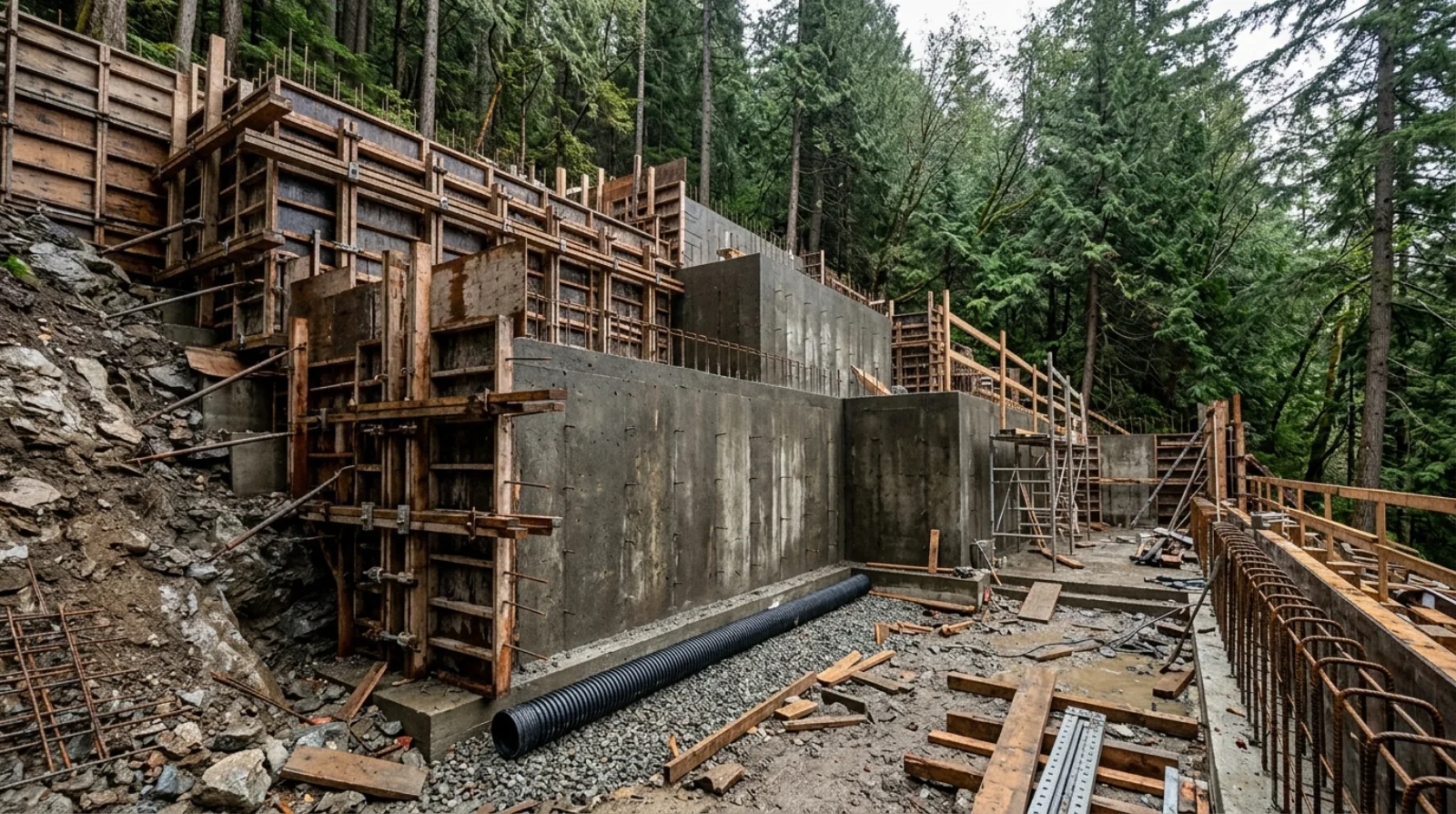
Canyon Heights sits at 150 to 300 metres above sea level, on winding streets where cul-de-sacs back onto forested slopes. Grades of 15 to 30 percent are ordinary here, and some lots drop steeply at the rear. That triggers engineered retaining walls, stepped foundations, and drainage systems built to handle both surface runoff and groundwater moving through the slope.
None of that is optional and none of it is cosmetic. On the steeper lots, site development, the retaining walls, the foundation work, the drainage, can run 15 to 20 percent of the total project budget before a single stud goes up. We tell clients this at the first site visit, not in a change order halfway through demolition.
Access compounds it. Many streets here are narrow with limited turnaround for concrete trucks and crane setups, so material staging has to be planned around whatever road and driveway space actually exists. We sequence deliveries and equipment access as part of pre-construction planning on every upper North Shore build, and Canyon Heights is one of the neighbourhoods where skipping that step costs real money.
What's behind the walls of a 50 to 75-year-old rancher
The original homes were modest single-storey ranchers, bungalows, and a handful of early post-and-beam designs, built when the neighbourhood opened up in the post-war era. They were well-built for the time. They were not built for the electrical load of a modern kitchen, a heat pump, and an EV charger running at once, and most haven't had a full mechanical upgrade since.
Two things are happening in Canyon Heights at the same time: homeowners renovating existing mid-century homes to modern standards, and buyers purchasing older homes for teardown and rebuild. Our work is almost entirely the first path. A full renovation here runs $250 to $400 per square foot, and the number depends heavily on foundation condition and structural scope, not on finish selections.
We say this plainly because it matters: some of these houses are not worth saving, and we tell clients that up front rather than after they've spent money on drawings. The lots, established trees, south-facing inlet views, privacy that lower-elevation developments can't match, are what drive the market. The house on top of the lot is a separate question.
The tree bylaw shapes the design before the design happens
Mature Douglas fir, western red cedar, and hemlock are everywhere in Canyon Heights, and the District of North Vancouver protects trees over 30cm diameter at breast height. Removing a protected tree requires a permit, an arborist assessment, and a replacement plan. On a lot with a mature stand near the buildable envelope, the trees frequently decide where the addition can go, not the other way around.
This is why we bring an arborist into the process before drawings, not after. A design built around where you'd like the addition, then bounced back by the District's tree review, costs more in redrawn plans than an arborist assessment ever would.
Permit timelines reflect the same complexity. New construction in the District runs 4 to 6 months. Renovation permits move faster, typically 4 to 8 weeks for work that doesn't touch structure, but we coordinate arborist reports, geotechnical assessments, and architectural drawings before submission so the package doesn't come back with a request for information that adds another month.
Schools, Edgemont Village, and why families stay
Canyon Heights Elementary at 4501 Highland Blvd is the neighbourhood school, part of the Handsworth Family of Schools with band, strings, and fine arts programs. Cleveland Elementary and Montroyal Elementary also serve parts of the area, and the feeder secondary is Handsworth Secondary, one of the most sought-after high schools on the North Shore. About 61 percent of Canyon Heights families have children at home, and that school pipeline is a real part of why people renovate here instead of moving.
Edgemont Village sits immediately adjacent, one of six designated village centres in the District, with roughly 74 businesses. Nicli Antica Pizzeria, Bufala, BjornBar Bakery, and the Capilano Branch of the North Vancouver District Public Library are all a short walk or drive from most Canyon Heights streets. Closer to home, Capilano Heights Chinese Food has run out of the same corner plaza since 1972.
Capilano River Regional Park borders the neighbourhood to the west, with 26 km of trails including the Capilano Canyon Loop, and Grouse Mountain sits at the northern edge for skiing and hiking. It's a genuinely good place to live. It's also a genuinely demanding place to build, and we plan for both facts on every project.
What we take on in Canyon Heights
Full-home renovation, kitchen and bathroom renovation, home additions, site work, and project management make up most of our Canyon Heights work. We've finished projects on this terrain before, which means the steep-lot conditions, the tree constraints, and the District permit requirements aren't a learning curve on your project. They're Tuesday.
Frequently asked questions
How much does a full renovation cost in Canyon Heights?
A full renovation in Canyon Heights typically runs $250 to $400 per square foot, higher than the general North Shore range, because the final number depends heavily on foundation condition and structural scope rather than finishes alone. Many of the original ranchers and bungalows here are now 50 to 75 years old, so systems and envelope work are usually part of the project.
Why do retaining walls cost so much in Canyon Heights specifically?
Because grades of 15 to 30 percent are common across the neighbourhood, and some lots drop steeply at the rear. That requires engineered retaining walls, stepped foundations, and drainage designed for both surface runoff and groundwater moving through the slope. On the steeper lots, this site development work alone can run 15 to 20 percent of the total project budget before framing starts.
How long does a renovation permit take in Canyon Heights?
Renovation permits that don't involve structural changes typically take 4 to 8 weeks with the District of North Vancouver. New construction runs 4 to 6 months. Because the tree bylaw protects Douglas fir, cedar, and hemlock over 30cm diameter, and Canyon Heights has a lot of mature stands, we coordinate arborist and geotechnical reports before submission so the application doesn't get bounced back for missing information.
Does the District of North Vancouver's tree bylaw affect where I can build an addition in Canyon Heights?
Often, yes. Trees over 30cm diameter at breast height are protected, and removing one requires a permit, an arborist assessment, and a replacement plan. On a lot with a mature stand near the buildable envelope, the trees frequently decide where an addition can go, which is why we bring an arborist into the process before drawings rather than after.
Is it hard to get concrete trucks and cranes onto a Canyon Heights property?
Often, yes. Many streets here are narrow with limited turnaround space for concrete trucks and crane setups, so material staging needs to work around whatever road and driveway space actually exists. We sequence deliveries and equipment access as part of pre-construction planning on every upper North Shore project.
Is it better to renovate or rebuild an older Canyon Heights home?
It depends on the structure. Two things are happening in Canyon Heights at once: homeowners renovating existing mid-century homes to modern standards, and buyers tearing down older homes to rebuild. We assess the actual condition of the house and tell clients honestly when it isn't worth saving, since many original ranchers and bungalows are now 50 to 75 years old.
What schools serve Canyon Heights?
Canyon Heights Elementary at 4501 Highland Blvd is the neighbourhood school, part of the Handsworth Family of Schools with band, strings, and fine arts programs. Cleveland Elementary and Montroyal Elementary also serve parts of the area, and the feeder secondary is Handsworth Secondary, one of the most sought-after high schools on the North Shore.
How close is Canyon Heights to Edgemont Village?
Canyon Heights is immediately adjacent to Edgemont Village, one of six designated village centres in the District of North Vancouver, with about 74 businesses including Nicli Antica Pizzeria, Bufala, and BjornBar Bakery. Most Canyon Heights streets are a short walk or drive from the village core.
Why is Cleveland Dam relevant to Canyon Heights real estate and construction?
The dam, completed in 1954 at a cost of $10.7 million, opened up the upper Capilano Valley for residential development, and the streets in Canyon Heights were built on the slopes above it through the 1960s and 1970s. That history is why the neighbourhood sits at 150 to 300 metres of elevation on grades that define nearly every construction decision made here today.
What does site development typically add to a Canyon Heights renovation budget?
On steeper lots, site development, engineered retaining walls, stepped foundations, and drainage for both surface and subsurface water, can run 15 to 20 percent of the total project budget before framing even starts. This is a direct result of the 15 to 30 percent grades common throughout the neighbourhood, and we scope it at the first site visit rather than discover it during construction.
Can I finish a basement in a Canyon Heights home?
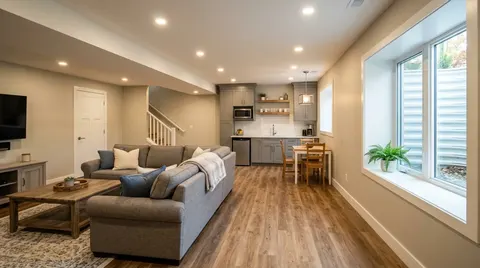
Generally yes, since most of the 1960s and 1970s stock has conventional foundations rather than the slab-on-grade construction found in lower-elevation neighbourhoods like Norgate. The bigger constraint on Canyon Heights lots is usually the slope itself and how it affects excavation and access, which we assess before pricing a basement conversion.
What renovation services does RealDream offer in Canyon Heights?
In Canyon Heights we take on full-home renovation, kitchen and bathroom renovation, home additions, site work, and project management. We've completed projects on this terrain before, which means the steep-lot conditions, tree constraints, and District of North Vancouver permit requirements are familiar rather than a learning curve on a client's project.
Related service
Home Renovation
See how we handle home renovation projects across the North Shore.
Learn about home renovationWhere this applies
Related articles