



The short answer
Three tax credits apply to accessibility renovations in British Columbia. The BC Home Renovation Tax Credit for Seniors and Persons with Disabilities is refundable and worth 10 percent of up to $10,000 in expenses, so $1,000 per tax year. The federal Home Accessibility Tax Credit applies to up to $20,000 of qualifying expenses per year. The Multigenerational Home Renovation Tax Credit is the largest, refunding 15 percent of up to $50,000, so up to $7,500, where the work creates a self-contained secondary unit for a senior or an adult eligible for the disability tax credit.
The provincial credit: $1,000 a year, refundable
The BC Home Renovation Tax Credit for Seniors and Persons with Disabilities is the provincial piece. It is calculated as 10 percent of qualifying renovation expenses up to a maximum of $10,000 in expenses, giving a maximum credit of $1,000 per tax year.
The important feature is that it is refundable. If the credit exceeds the tax you owe, you receive the difference as a refund rather than losing it. That matters a great deal for retired homeowners with modest taxable income, who are often the people doing this work and who would get nothing from a non-refundable credit.
You are eligible if, on the last day of the tax year, you are a BC resident and you are a senior aged 65 or older, or a family member living with a senior, or a person with a disability, or a family member living with a person with a disability. That family member provision is easy to overlook: an adult child who lives with a parent and pays for the work may be able to claim it.
The renovation must be to your principal residence, and the main purpose cannot be to increase the value of the home or land. The province's own examples of qualifying work include walk-in bathtubs, widened doors, grab bars and the reinforcement behind them, wheel-in showers, ramps, stair and wheelchair lifts, elevators, and hand rails in corridors.
It is claimed on your T1 return using Schedule BC(S12), with the amount entered on the BC479 credits form. Keep the receipts from suppliers and contractors, because you must be able to support the claim.
The federal accessibility credit: up to $20,000 of expenses a year
The federal Home Accessibility Tax Credit runs alongside the provincial one and covers a larger expense base. A qualifying individual can claim up to $20,000 per year in eligible expenses.
The credit itself is calculated under section 118.041 of the Income Tax Act as A multiplied by B, where A is the appropriate percentage for the taxation year and B is the lesser of $20,000 and the total of qualifying expenditures. The appropriate percentage is the lowest federal personal income tax rate for that year, which is set annually, so confirm the current rate rather than assuming last year's figure.
A qualifying individual is someone 65 or older at the end of the year, or someone approved for the disability tax credit at any time in the year. The eligible dwelling must be owned by that individual and ordinarily inhabited by them, and a qualifying individual can have only one eligible dwelling at a time.
Eligible expenses include professional labour such as electricians, plumbers, and carpenters, plus building materials, fixtures, equipment rentals, permits, and building plans. Your own labour is not eligible, and work by a family member counts only if they are registered for GST or HST. Routine maintenance, appliances, entertainment devices, financing costs, and renovations done mainly to increase property value are all excluded.
The multigenerational credit: the big one, once per lifetime
The Multigenerational Home Renovation Tax Credit is the largest of the three and the one most often missed, probably because it does not sound like an accessibility program.
It refunds 15 percent of qualifying expenditures up to a maximum of $50,000, giving a maximum credit of $7,500. Like the provincial credit, it is refundable, so it pays out even where little or no tax is owed.
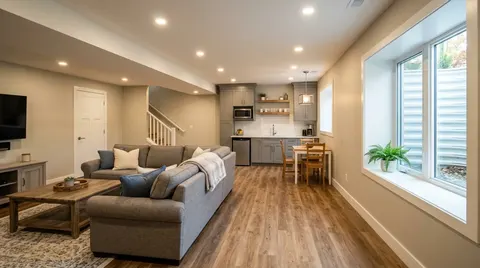
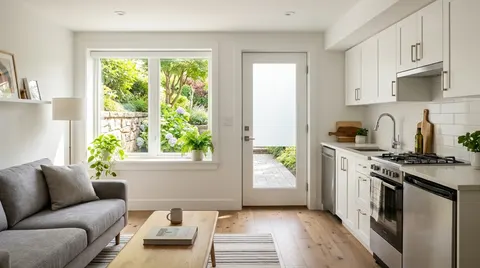
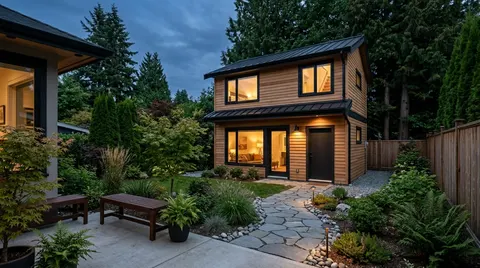
The condition is what makes it distinct: the renovation must create a self-contained secondary unit that allows a senior, or an adult eligible for the disability tax credit, to live with a qualifying relative. A self-contained unit means a private entrance, kitchen, bathroom, and sleeping area. This is the credit for building a suite for a parent, whether inside the house or as a separate unit on the lot where zoning permits.
The limit that shapes planning: only one renovation can be claimed for a qualifying individual during their lifetime. You get one, for that person, ever. That argues strongly for building the unit properly the first time rather than doing a minimal version and a second phase later, because the second phase brings no credit with it.
It is claimed in the tax year when the renovation period ended, even if the work spanned more than one year, using Schedule 12.
| Credit | Rate and cap | Maximum | Frequency |
|---|---|---|---|
| BC Home Renovation Tax Credit | 10% of up to $10,000 | $1,000 | Per tax year |
| Home Accessibility Tax Credit | Appropriate percentage of up to $20,000 | Set by the year's lowest federal rate | Per year |
| Multigenerational Home Renovation Tax Credit | 15% of up to $50,000 | $7,500 | Once per qualifying individual, lifetime |
How they stack, and the two places they collide
These are separate programs with separate rules, and a single renovation can touch more than one. A bathroom conversion for a senior can involve the provincial credit and the federal accessibility credit in the same year. A suite built for a parent, made accessible, potentially engages all three.
The first collision is with the BC RAHA rebate, which is not a tax credit but sits in the same project. Money that came back to you as a rebate was not, in the end, an expense you bore. A dollar reimbursed by BC Housing should not also appear as a qualifying expenditure in a credit claim.
The second collision is between the two federal credits. Work that both creates a secondary unit and makes it accessible has expenses that could arguably sit under the MHRTC or the HATC. The CRA has rules about claiming the same expenditure under more than one credit, and this is the point where the question stops being a renovation question and becomes one for whoever prepares your return.
None of this is a reason to skip any of them. It is a reason to keep the paperwork in a state where the allocation can actually be made: invoices that separate the accessibility work from the general construction, and a clear record of what any rebate covered. Doing that as you go costs nothing. Reconstructing it in April from a box of receipts is where people give up and leave money unclaimed.
- Ask contractors to itemize accessibility work separately on invoices from the start
- Keep a running record of what any BC RAHA rebate reimbursed
- Note the date the renovation period ended, since the MHRTC is claimed in that year
- Confirm the appropriate percentage for the current tax year rather than assuming
- Take advice before filing where a secondary unit puts both federal credits in play
What this means for how you plan the work
Read together, the three credits point at a conclusion that is not obvious from any one of them.
The programs are far more generous toward building a self-contained unit for a family member than toward adapting the house you already live in. Adapting draws on $1,000 a year provincially and a percentage of up to $20,000 of expenses federally. Building a suite adds up to $7,500 on top, refundable, in a single claim.
That does not make building the right answer for everyone. A couple who simply want to stay in their own home do not need a suite, and adapting is cheaper in absolute terms, faster, and needs fewer approvals. But for a household weighing whether a parent moves in, the tax treatment is a real factor in the comparison and it points one way.
The once-per-lifetime limit deserves the last word. Since the MHRTC can be claimed only once for a given person, a minimal suite now and a proper one later means the second project runs with no credit at all. If you are going to build, build the version that works for the next twenty years.
Sources
- Province of British Columbia, Home renovation tax credit for seniors and persons with disabilities. 10 percent of up to $10,000, refundable, eligibility, and qualifying renovation examples.
- Canada Revenue Agency, Line 31285 Home accessibility expenses. The $20,000 annual limit, qualifying individuals, eligible dwellings, and eligible expenses.
- Income Tax Act, section 118.041. The home accessibility tax credit formula, being the appropriate percentage applied to the lesser of $20,000 and total qualifying expenditures.
- Canada Revenue Agency, Multigenerational home renovation tax credit. 15 percent of up to $50,000, refundable, one renovation per qualifying individual per lifetime, claimed in the year the renovation period ended.
- BC Housing, BC Rebate for Accessible Home Adaptations, program overview.
Frequently asked questions
How much is the BC home renovation tax credit for seniors worth?
The BC Home Renovation Tax Credit for Seniors and Persons with Disabilities is worth 10 percent of up to $10,000 in qualifying expenses, giving a maximum of $1,000 per tax year. It is refundable, so you receive the difference as a refund if the credit exceeds the tax you owe. That matters for retired homeowners with modest taxable income, who would gain nothing from a non-refundable credit.
Who can claim the BC home renovation tax credit?
You can claim it if, on the last day of the tax year, you are a resident of British Columbia and you are a senior aged 65 or older, a family member living with a senior, a person with a disability, or a family member living with a person with a disability. The family member provision matters: an adult child living with a parent and paying for the work may be able to claim, which households frequently overlook.
What is the Multigenerational Home Renovation Tax Credit worth?
The Multigenerational Home Renovation Tax Credit refunds 15 percent of qualifying expenditures up to $50,000, giving a maximum credit of $7,500. It is refundable, so it pays out even where little tax is owed. It applies where a renovation creates a self-contained secondary unit letting a senior, or an adult eligible for the disability tax credit, live with a qualifying relative.
Can I claim the multigenerational credit more than once?
No. The Canada Revenue Agency states that only one renovation can be claimed for a qualifying individual during their lifetime. That single claim shapes how the work should be planned: building a minimal suite now and a better one in five years means the second project carries no credit at all. If the decision is to build, build the version that will still work in twenty years.
How much does the federal Home Accessibility Tax Credit cover?
A qualifying individual can claim up to $20,000 per year in eligible expenses. Section 118.041 of the Income Tax Act calculates the credit as the appropriate percentage for the taxation year applied to the lesser of $20,000 and total qualifying expenditures. The appropriate percentage is the lowest federal personal income tax rate, which is set annually, so confirm the current year's rate rather than relying on an older figure.
What expenses qualify for the Home Accessibility Tax Credit?
Eligible expenses include professional labour from electricians, plumbers, and carpenters, along with building materials, fixtures, equipment rentals, permits, and building plans. Your own labour does not qualify, and a family member's work counts only if they are registered for GST or HST. Routine maintenance, appliances, entertainment devices, financing costs, and renovations done mainly to raise property value are excluded.
Can I claim a tax credit on work the BC RAHA rebate paid for?
Money reimbursed through a rebate was not ultimately an expense you bore, so a dollar covered by the BC RAHA rebate should not also appear as a qualifying expenditure in a tax credit claim. Keep rebate-covered and self-paid costs separable on the invoices while the work is happening. Reconstructing that split at filing time from a box of receipts is where households give up and leave credits unclaimed.
Can I claim both federal credits on the same renovation?
A project that builds a secondary unit and makes it accessible has expenses that could arguably fall under either the Multigenerational Home Renovation Tax Credit or the Home Accessibility Tax Credit. The Canada Revenue Agency has rules governing whether the same expenditure can be claimed under more than one credit, so this is the point to involve whoever prepares your return rather than deciding the allocation yourself.
What counts as a self-contained secondary unit?
A self-contained secondary unit is a separate living space with its own private entrance, kitchen, bathroom, and sleeping area, which is what makes it a dwelling rather than a bedroom with a kitchenette. For the Multigenerational Home Renovation Tax Credit the unit must allow a senior, or an adult eligible for the disability tax credit, to live with a qualifying relative. It may be inside the existing house or a separate unit where zoning permits.
When do I claim the multigenerational credit if the work spans two years?
The Canada Revenue Agency states you must claim the qualifying renovation in the tax year when the renovation period ended, even if the renovation took more than one year. So a suite started in one year and finished in the next is claimed in the year of completion. Record the completion date clearly, because on a long project it determines which return the $7,500 belongs on.
Do these credits favour adapting my house or building a suite?
Building a self-contained unit is treated more generously. Adapting an existing home draws on the BC credit worth up to $1,000 a year and the federal accessibility credit on up to $20,000 of expenses. Creating a secondary unit for a senior adds up to $7,500 refundable on top through the multigenerational credit. Adapting is still cheaper in absolute terms and needs fewer approvals, so the tax treatment is one factor rather than the decision.
Related service
Home renovation
See how we handle home renovation projects across the North Shore.
Learn about home renovationWhere this applies
Related articles